
Malinois Waterslager Canary: Characteristics, Song and Scoring
The Malinois canary, also known as the Waterslager, is one of the best-known song canary breeds. It is recognised for its distinctive song, which can resemble bubbling water, flowing streams, little bells and flute-like melodies. Its repertoire consists of different song tours, each assessed according to its clarity, rhythm, structure and execution.
Listen to the Malinois Waterslager Canary's Song
Listen to this audio sample, which lasts approximately one minute, and pay attention to the characteristic water notes, rhythm and changes in melody.
Listen to individual song tours, too: Further down this article, you will find separate audio samples of individual song tours, helping you recognise the differences between the various sounds produced by the Malinois Waterslager.
A good Malinois is therefore much more than a canary that sings loudly or for a long time. Its value depends on the quality of its song as a whole and on how closely its individual tours meet the requirements of the judging standard being used.
In this guide, you will learn about the origins of the Malinois, its main characteristics, what its best-known song tours sound like and how competition judging works. We will also explain the differences between the Malinois Waterslager, the Harz Roller and the Serbian Slavujar song canary, along with what to look for when buying and breeding these birds.
What Is a Malinois Waterslager Canary?
The Malinois is a domestic canary selectively bred primarily for the quality and distinctive character of its song. The breed's development is associated with Flanders, Belgium, where selective breeding helped shape the repertoire for which the Malinois is known today.
According to the specialist document The Criteria of Judgment and Song Theory of the Malinois Waterslager Song Canary, the development of this song line through selective breeding in Flanders dates back to the final quarter of the nineteenth century.
The name Waterslager is associated with the distinctive water-like sounds in the bird's song. Some tours resemble water droplets, bubbling or flowing water, while the repertoire also includes a variety of other sound patterns.
These include flute-like melodies, metallic notes, bell-like sounds and different rhythmically structured phrases. Their traditional names largely originate from Flemish and are often retained in their original form because they are difficult to translate accurately.
The Malinois is bred and judged as a song canary. This means that its quality is not assessed primarily by feather colour or exhibition body shape, but by its song and the criteria of the relevant judging standard.
For breeders aiming to develop a high-quality song line, it is therefore important to understand the different tours, select breeding birds carefully, monitor the development of young birds and understand how their song is judged.
Key Characteristics of the Malinois Waterslager Canary
The breed's main characteristics can be summarised as follows:
- Origin: Flanders, Belgium.
- Type: Domestic canary selectively bred for its song.
- Common names: Malinois, Malino, Waterslager and Belgian Waterslager.
- Main distinguishing feature: Characteristic water tours.
- Other song elements: Flute-like, metallic, bell-like and other distinctive sounds.
- Judging: Based on the quality of individual tours, the overall impression and the rules of the applicable judging standard.
- Breeding goal: To preserve and improve desirable song characteristics across generations.
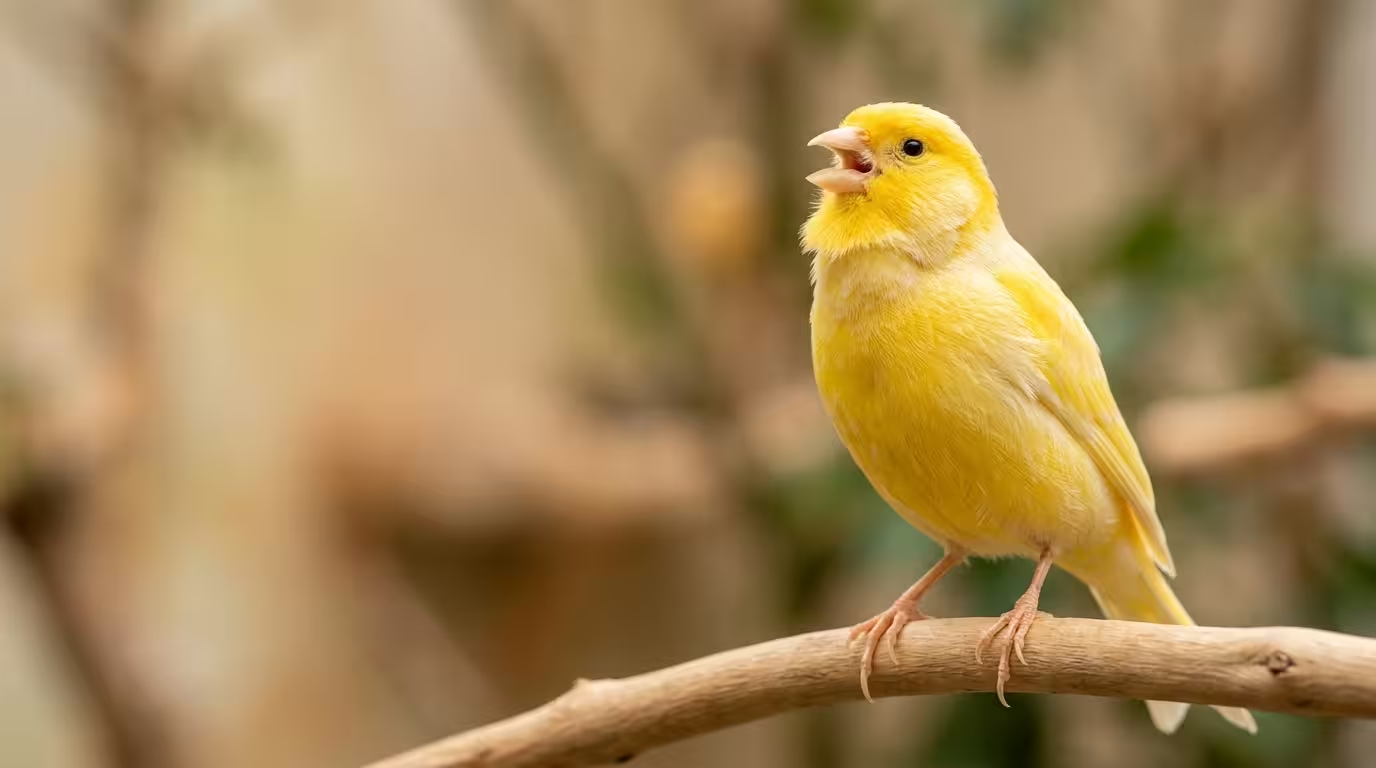
Malinois canaries can have different feather colours. Yellow birds are commonly seen among canary enthusiasts, but colour alone does not establish whether a bird belongs to a high-quality song line or has competition potential.
If you are buying a Malinois primarily for its song, pay much closer attention to its lineage, health, the quality of its song tours and the reliability of the breeder.
What Does a Malinois Waterslager Canary Look Like?
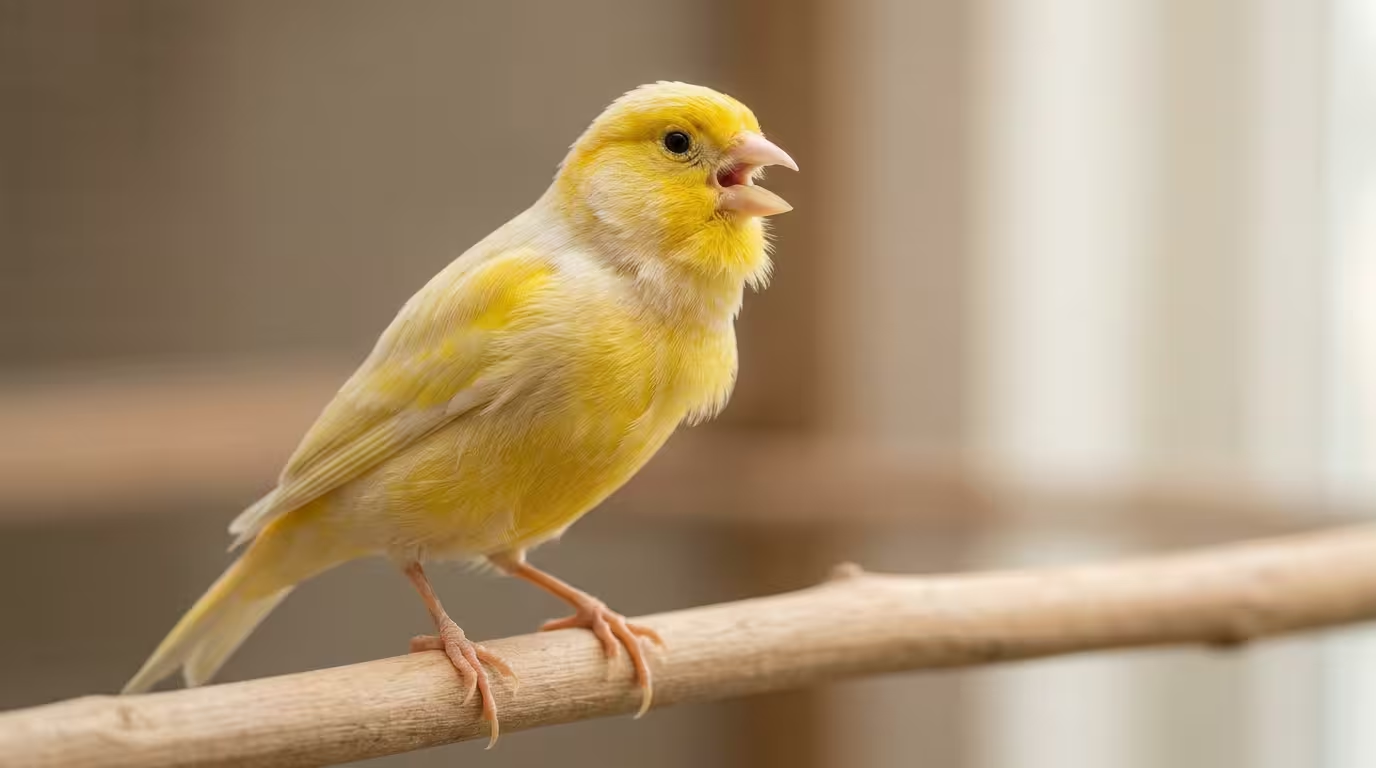
The Malinois does not have the highly distinctive exhibition appearance found in breeds judged mainly on body shape, posture or feather characteristics. With this breed, song is the main criterion.
Malinois canaries come in different colours, and appearance alone cannot reliably indicate the repertoire a bird possesses. Even a photograph or a short video is not enough to assess the quality of its song professionally.
When buying a bird, look for signs of good general health:
- The feathers should be neat and free from obvious damage.
- The eyes should be clear, and the bird should appear alert and responsive to its surroundings.
- Breathing should be calm, without visible effort.
- The bird should move normally and maintain its balance on the perch.
- It should show normal activity and no obvious signs of illness.
If you are buying a bird for competitive breeding, ask about its lineage, parents and show results, if available. Documented competition results can be useful, but they do not guarantee that the bird or its offspring will achieve the same level of success.
The Malinois Waterslager Song: What Makes It Special?
The Malinois song consists of distinct sound sequences known as song tours. Each tour has its own characteristic rhythm, structure and tonal quality.
Traditional Malinois terminology distinguishes between tours with interrupted rhythmic patterns and those with continuous, rolling patterns. This distinction helps explain the structure of the song and forms part of the professional judging process.
In some tours, the notes are clearly separated, while in others they blend into a continuous sequence of sound. However, it is not enough for a song merely to resemble water, a flute or a bell. The sound must have the specific characteristics that define the particular tour.
Depending on the tour, judges consider the following:
- Pitch: The height and character of the notes.
- Timbre: The distinctive tonal quality of the tour.
- Rhythm: The regularity and timing of the notes.
- Structure: The way the phrase is formed.
- Consistency: How well the tour maintains its characteristic quality throughout the performance.
- Interpretation: Variations and modulations that contribute to the quality of the song.
These criteria are described in the specialist document The Criteria of Judgment and Song Theory of the Malinois Waterslager Song Canary, published by the Italian national technical commission for the Malinois.
The Best-Known Malinois Song Tours
The following sections explain the main tours commonly discussed in breed standards and specialist literature. These descriptions are intended to help you become familiar with the song; they do not replace expert listening or the official judging standard.
| Song tour | Sound characteristics | What judges assess |
|---|---|---|
| Klokkende Waterslag | Clear, rhythmic bubbling that resembles water. | Water-like resonance, pitch, rhythm and phrase structure. |
| Bollende Waterslag | A bubbling sound with a characteristic phrase onset. | Clarity of the initial accent, resonance and rhythmic regularity. |
| Rollende Waterslag | A connected, rolling sound reminiscent of continuously flowing water. | Continuity, rhythm, pitch and clarity of execution. |
| Chorr and Knorr | Distinctive resonant phrases that differ in structure and execution. | Recognition of the tour, timbre, pitch and regularity. |
| Staaltonen | Notes with a characteristic metallic resonance. | Clarity, metallic tone quality and the absence of unpleasant harshness. |
| Fluiten | Clear notes resembling the sound of a flute. | Pitch, purity, rhythm and proper phrase formation. |
| Woeten | A distinctive melodic tour in the Malinois repertoire. | Recognisability, pitch and regularity of execution. |
| Bellen | Bell-like notes with a clearly recognisable sound structure. | Clarity, resonance and tonal regularity. |
| Belrol | A rolling variation of the bell-like notes. | Continuity, rhythm and resonance quality. |
| Fluitrol | A rolling variation of flute-like notes. | Purity, pitch and regularity of the rolling phrase. |
| Tjokken and Tjokkenrol | Distinctive rhythmic phrases, with Tjokkenrol having a rolling character. | Rhythm, structure and recognisability. |
| Schokkel | A distinctive rhythmically structured song element. | Character, regularity and quality of execution. |
The names and grouping of individual tours may vary between specialist publications and judging systems. For example, Chorr and Knorr are assessed together in some systems, while Tjokken and Tjokkenrol may be treated as related elements.
1. Klokkende Waterslag – Bubbling Water
Klokkende Waterslag is one of the best-known Malinois song tours and is often considered one of the most highly valued elements of the breed's song.
Its sound resembles clearly defined bubbling water. In a high-quality performance, the notes have recognisable water-like resonance, a well-defined structure and a regular rhythm.
The specialist standard describes desirable execution in terms of tonal purity, appropriate pitch, water-like resonance and clearly structured repeated phrases. It also identifies different variations of Klokkende, including forms described as curved or impact-shaped.
It is important to distinguish genuine Klokkende Waterslag from an ordinary rapid or guttural sound. Resembling bubbling water is not enough on its own; the sound must display the characteristics that define this tour.
In a commonly used international scoring scale, the maximum basic value for this tour is 12 points. The final score on a judging sheet may depend on the calculation method specified by the particular system.
2. Bollende Waterslag – Bubbling Water
Bollende Waterslag also belongs to the group of water tours, but differs from Klokkende in its rhythm and phrase structure.
A recognisable beginning is important for this tour, followed by a sound with a bubbling character. The specialist standard places particular emphasis on a clear initial accent, water-like resonance and a regular cadence.
The difference between Klokkende and Bollende may not be immediately obvious to beginners. Listening to high-quality examples of both tours and comparing their rhythm and structure can help.
In the commonly used international scale, Bollende Waterslag has a maximum basic value of 9 points.
3. Rollende Waterslag – Rolling Water
Rollende Waterslag is characterised by a more connected and continuous sound pattern.
Unlike tours in which the notes are more clearly separated, this tour creates the impression of continuous rolling. However, rapid or uninterrupted singing alone is not enough for a sound to qualify as high-quality Rollende Waterslag.
Judges consider rhythm, structure, pitch, clarity and water-like resonance.
In the international scale referenced here, the maximum basic value for this tour is 6 points.
4. Chorr and Knorr – Two Related Tours
Chorr and Knorr are distinct but related elements of the traditional Malinois repertoire.
In specialist descriptions, Chorr is associated with a particular shaped phrase or repetition, while Knorr has a more pronounced rolling character. Although beginners may perceive them as similar deep notes, expert assessment takes account of differences in their structure and execution.
In some judging systems, these tours receive a combined score rather than being treated as two entirely separate maximum scores.
In the international scale used here as an example, their combined maximum basic value is 6 points.
5. Staaltonen – Metallic Notes
Staaltonen is recognised by its metallic resonance. A high-quality note has a clear, distinctive timbre and an appropriate structure.
However, a sharp or unpleasant sound is not automatically a good metallic note. The metallic resonance should be clearly audible without compromising regularity or overall tonal quality.
This tour can be challenging to assess because its characteristic timbre must be distinguished from undesirable harshness.
In the international scale referenced here, its maximum basic value is 9 points.
6. Fluiten – Flute-Like Notes
Fluiten consists of notes that resemble the sound of a flute. Clarity, pitch, rhythm and phrase formation are important characteristics of this tour.
The specialist standard favours well-shaped, clear phrases performed at an appropriate speed and with the right tonal character. The bird must do more than produce a whistle-like sound: the notes should match the defining characteristics of the tour.
In the international scale referenced here, Fluiten has a maximum basic value of 9 points.
7. Woeten, Bellen, Belrol and Fluitrol
These tours add to the variety of the Malinois repertoire and contribute to its distinctive sound.
Woeten is a traditional melodic element assessed according to its character and regularity. Its description cannot be reduced entirely to an imitation of a single everyday sound.
Bellen is often described as a bell-like tour. Clarity, pitch and a recognisable structure are important.
Belrol is the rolling form of the bell-like element. Compared with Bellen, greater emphasis is placed on the continuity of the sound.
Fluitrol is the rolling variation of the flute-like element. Its assessment considers pitch, purity and how consistently the phrase is sustained.
8. Tjokken, Tjokkenrol and Schokkel
Tjokken and Tjokkenrol belong to the traditional Malinois repertoire and have a distinctive rhythmic structure. Tjokkenrol differs through its rolling pattern, so particular attention is paid to rhythm and regularity.
Schokkel is a separate tour that, in the scoring system referenced here, has a lower maximum basic point value than the main water, metallic and flute-like tours.
For beginners, it is more useful to learn to recognise the main water tours first and then gradually explore the remaining elements. Understanding a few tours through high-quality audio samples is more valuable than memorising many names without having a clear idea of what they sound like.
Important: Not every Malinois is expected to perform every possible tour. Quality is assessed according to the bird's actual repertoire and the rules of the relevant judging standard.
Malinois Song Faults: Which Sounds Can Be Penalised?
Competition judging does not assess desirable tours alone. Traditional systems also identify sounds considered faults.
These include:
- Ophaal-Riet: Undesirable aspirated or harsh inhalation-like sounds.
- Hoge Spitse tonen: Excessively sharp or high-pitched notes.
- Snetter and Snitter: Irregular, rougher sound elements.
- Neuzige: Nasally coloured notes.
- Tjip-Tjep-Tsiet: Certain sharp, chirping sounds.
- Tjap: A serious fault that may result in disqualification under the standard referenced here.
These terms should not be applied arbitrarily. Recognising faults requires familiarity with the relevant terminology and judging standard, because a similar sound in a different context does not automatically represent the same problem.
In the specialist document published by the Italian national technical commission, faults are classified according to their severity, and Tjap is listed as grounds for disqualification. These rules belong to a specific judging system and should not automatically be applied to every competition without checking its regulations.
How Is a Malinois Waterslager Canary Judged?
A judge does not assess a bird solely on volume, song duration or the total number of sounds it produces. Judging is based primarily on the quality of individual tours and how they fit into the song as a whole.
The specialist standard identifies the following general criteria:
- Pitch – The height and quality of the note.
- Timbre – The distinctive tonal character of the tour.
- Rhythm – The regularity and timing of notes.
- Structure – The way the tour is formed.
- Consistency – How well the tour maintains its quality and character.
- Interpretation – Variations and modulations that contribute to the expressiveness of the tour.
Judges also consider the overall impression of the song and any faults. As a result, two birds that sing for roughly the same length of time can achieve very different scores.
One bird may perform several tours with exceptional clarity and regularity, while another may have a more varied repertoire but show weaker quality in individual elements.
How Many Points Can a Malinois Score?
One published international scoring scale uses the following maximum basic values for the main tours:
| Tour or criterion | Audio example | Maximum basic value |
|---|---|---|
| Klokkende Waterslag | 12 | |
| Bollende Waterslag | 9 | |
| Rollende Waterslag | 6 | |
| Chorr and Knorr | 6 | |
| Staaltonen | 9 | |
| Fluiten | 9 | |
| Woeten | 6 | |
| Bellen | 6 | |
| Belrol | 6 | |
| Fluitrol | 6 | |
| Tjokken and Tjokkenrol | 6 | |
| Schokkel | 3 | |
| Overall impression | General quality, harmony and persuasiveness of the song. | 3 |
This table presents one published scoring scale, not a universal rule for every competition. It is particularly important to distinguish the basic values assigned to individual tours from the final values shown on a judging sheet.
In the system described in the specialist document, the basic scores for tours and the overall impression are multiplied by three, whereas points for the harmony of a four-bird team and penalty points are not multiplied in the same way. This is why final results can be considerably higher than the basic values shown in the table.
Note on differences between scoring scales: Some published judging sheets differ in how they treat particular elements, including Woeten and the overall impression. Before publishing results or comparing birds, check the exact scoring sheet used in the competition concerned.
What Do the Basic Points Mean?
In the system described here, judging involves assessing whether a tour is performed at a satisfactory, good or optimal level. The score depends on the quality of the performance and the maximum value assigned to that tour.
For example, hearing a water-like sound is not enough to earn a high score for Klokkende Waterslag. Pitch, clarity, rhythm, structure and resonance all matter. The better these elements are executed, the higher the score may be.
The criteria vary according to the character of each tour. Metallic notes are assessed for their metallic resonance, while flute-like notes are judged on pitch, clarity and phrase formation.
Why a High Score Is Not the Only Measure of Quality
A high score shows that a bird performed well under a particular judging system, but serious breeders also need to understand how that result was achieved.
The quality of individual tours, the consistency of desirable song characteristics and the bird's lineage can all be important when selecting future breeding birds. However, a competition result does not guarantee that the offspring will achieve the same level of quality.
If you are planning to breed Malinois for competition in Serbia, follow the current documents and scoring sheets published by the Serbian Ornithological Federation (SOF). Its 2026 Competition Regulations list the Harz Roller, Malinois and Slavujar as separate competition sections. These regulations govern the competition system and placement scoring, while the song itself is assessed using the relevant judging sheet.
Malinois Waterslager, Harz Roller and Serbian Slavujar: What Is the Difference?
The Malinois Waterslager, Harz Roller and Serbian Slavujar are all part of the world of song canaries, but they are different breeds and should not be judged using a single shared standard.
The Serbian Ornithological Federation's 2026 competition regulations list them as separate sections: Harz Roller in Section A, Malinois in Section B and Slavujar in Section C3.
Malinois Waterslager Canary
The Malinois is recognised for its water tours, particularly Klokkende Waterslag, Bollende Waterslag and Rollende Waterslag.
Its repertoire also includes metallic, flute-like, bell-like and other sound elements. Quality is assessed according to the characteristics of individual tours and the rules of the Malinois judging standard.
Harz Roller Canary
The Harz Roller has its own repertoire and judging standard. Its song is traditionally associated with rounded and rolling sound elements.
This general description is not enough for a professional assessment. To distinguish its song properly, it is necessary to become familiar with the characteristic tours and judging criteria of the Harz Roller.
Serbian Slavujar Song Canary
The Serbian Slavujar is a distinct song canary breed with its own development history, standard and competition rules.
Its song is assessed using specific documents rather than the standards intended for the Malinois or Harz Roller. Further information about the breed and its standard is available through the official SOF website.
| Feature | Malinois Waterslager | Harz Roller | Serbian Slavujar |
|---|---|---|---|
| Main judging criterion | Quality of its characteristic song tours. | Quality of its own song repertoire. | Song quality according to the Slavujar standard. |
| Distinctive features | Prominent water tours, alongside metallic, flute-like and other sounds. | A distinct song repertoire with characteristic rolling elements. | A separate song repertoire characteristic of the Slavujar. |
| Judging standard | Malinois Waterslager standard. | Harz Roller standard. | Serbian Slavujar standard. |
| SOF competition section | Section B. | Section A. | Section C3. |
This table provides a basic overview rather than a complete technical analysis of the songs. Each breed requires separate study of its own standard.
If you would like to learn more about the development and characteristics of canary song in general, read our guide, The Secret Behind the Perfect Canary Song.
How Does a Young Malinois Develop Its Song?
A high-quality song results from a combination of inherited traits, maturation, the bird's acoustic environment and its living conditions. Breeders can influence some of these factors, but they cannot completely control the final repertoire of every bird.
Choosing Breeding Birds
In specialised breeding, attention is paid to a bird's lineage, song characteristics and the quality of previous generations.
The aim is to preserve desirable traits and develop a consistent breeding line. Even so, excellent parents cannot guarantee that every offspring will become an outstanding singer.
The Role of Experienced Singers
In some breeding methods, experienced males are used as song tutors for young birds.
Young canaries may learn elements of the song from the birds around them, but development varies from one individual to another. Having a good tutor can be beneficial, although it does not guarantee an identical repertoire.
Using Recordings
High-quality recordings can help breeders study characteristic tours and become familiar with the differences between them.
If recordings are used, choose clear examples from a known source. Birds should still have adequate rest and should not be exposed to sound continuously. Recordings are not a substitute for proper care, careful selection of breeding birds or the breeder's own experience.
A Calm Environment and Proper Care
Young birds need an appropriate diet, fresh water, good hygiene, sufficient rest and a space where they feel safe.
Excessive noise and frequent disturbance can make it harder to monitor song development. However, unusually limited singing should not automatically be attributed to learning or environmental conditions. Activity is also influenced by age, season and health.
The bird's welfare must always take priority over attempts to influence its song.
How to Choose a Quality Malinois Waterslager Canary
If you want to buy a Malinois, do not base your decision solely on feather colour, appearance or the seller's claims.
Ideally, listen to the bird in a calm environment and ask about its lineage. If your goal is competitive breeding, it is worth speaking to a breeder who understands the judging standard and can explain the characteristics of the particular breeding line.
Pay attention to the following:
- Listen to the song. Focus on the character of the notes, clarity and rhythm rather than volume alone.
- Ask about lineage. Information about the parents and previous generations can be useful.
- Check competition results. If the seller mentions show achievements, ask for information that supports those claims.
- Assess the bird's health. It should be active, have neat feathers and breathe normally.
- Consider its age. A young bird may still be developing its repertoire, so its current song may not represent its final quality.
- Do not focus solely on the number of tours. Correct, high-quality execution matters more than the sheer number of different sounds.
If you are new to keeping canaries, read our guide, Canary Cages: Why Length Matters More Than Height, which explains the basic principles of choosing suitable housing.
How to Listen to Malinois Song and Learn to Recognise the Tours
Written descriptions are useful for learning the terminology, but listening is the most important step in understanding the real differences between song tours.
We recommend that beginners start with the three main water tours:
- Klokkende Waterslag – Listen for clearly shaped notes and the characteristic water-like resonance.
- Bollende Waterslag – Focus on the beginning of the phrase, its rhythm and its bubbling character.
- Rollende Waterslag – Try to recognise the more continuous, rolling sound pattern.
Once you can distinguish these tours, move on to Fluiten, Staaltonen, Bellen and the other elements.
On this page, you can listen to audio examples of the characteristic song tours of the Malinois Waterslager canary. These recordings allow you to hear the differences between individual sounds and better understand what sets this breed apart from other song canaries.
Common Mistakes When Breeding Malinois Canaries
Expecting Every Canary to Sing the Same Way
Every bird has individual characteristics. Inherited traits, development and the acoustic environment all influence the final song, so even birds from the same line may have different repertoires.
Focusing Only on Song Duration
A long song is not automatically a high-quality song. The defining characteristics of the tours, their correct execution and the relevant judging standard matter more.
Assuming More Tours Mean a Better Bird
The number of different sounds is not enough to determine quality. A few correctly performed tours may be more valuable than a large number of poorly executed or difficult-to-recognise elements.
Constantly Changing Your Approach Without a Clear Reason
Consistently monitoring the development of young birds is more useful than continually changing methods without a clear plan. Keeping notes on your observations can help you better understand how a bird's repertoire develops.
Neglecting Health in the Pursuit of Better Song
If a canary becomes unusually quiet, appears lethargic, has difficulty breathing or loses its appetite, do not try to solve the problem by increasing sound stimulation. Such changes may indicate a health problem and are a reason to consult a veterinarian experienced in treating birds.
Song should never be more important than a canary's health and welfare.
Frequently Asked Questions About the Malinois Waterslager Canary
Is the Malinois the Best Song Canary?
The Malinois is a well-known breed of specialised song canary, but the term "best" depends on personal taste and judging criteria. Enthusiasts who appreciate distinctive water-like notes particularly value this breed, while others may prefer the Harz Roller or Serbian Slavujar.
Why Is the Malinois Called a Waterslager?
The name Waterslager is associated with the water-like sounds in its song. Bubbling and flowing-water sounds are among the most recognisable elements of its repertoire.
Is Every Yellow Canary a Malinois?
No. Feather colour alone is not enough to establish whether a bird belongs to a particular song breed or comes from a high-quality breeding line. Lineage and the character of its song are much more significant.
What Are the Main Malinois Song Tours?
The best-known tours include Klokkende Waterslag, Bollende Waterslag, Rollende Waterslag, Staaltonen and Fluiten. The repertoire also includes Chorr, Knorr, Woeten, Bellen, Belrol, Fluitrol, Tjokken, Tjokkenrol and Schokkel.
How Many Points Can a Malinois Score?
In one published international scale, Klokkende Waterslag has a maximum basic value of 12 points, Bollende Waterslag 9 and Rollende Waterslag 6. The final score may depend on the calculation method, additional criteria and the rules of the particular competition.
Can a Young Malinois Learn Its Song from an Older Canary?
Young canaries can learn elements of song by listening to other birds, which is why experienced singers are used in some breeding methods. However, development also depends on inherited traits, maturation and living conditions.
Are the Malinois and Harz Roller the Same Breed?
No. They are separate song canary breeds, each with its own repertoire and judging standards.
Are the Serbian Slavujar and Harz Roller the Same Breed?
No. The Serbian Slavujar and Harz Roller are listed as separate competition sections in the SOF's 2026 regulations. Each is judged according to its relevant standard.
Can Every Malinois Win a Competition?
No. Belonging to the breed does not guarantee competitive quality. Results depend on the individual bird's song, the accuracy of its execution, the scoring system used and the competition.
Is the Malinois Suitable for Beginners?
It can be a good choice for enthusiasts who want to explore the world of song canaries. Those interested in serious competitive breeding should study the standards, learn to recognise the tours and seek advice from an experienced breeder.
Conclusion: What Makes the Malinois Waterslager Special?
The Malinois Waterslager is the result of many years of selective breeding and the careful work of dedicated breeders. Its distinctive character lies in its varied repertoire, especially its characteristic water tours, as well as its metallic, flute-like, bell-like and other sound elements.
Understanding the quality of this breed involves more than listening to a bird sing loudly or for a long time. You need to learn to distinguish its tours, understand what makes their execution correct and become familiar with the standard used to judge the song.
If you are planning to buy a Malinois, listen to several birds, ask about their lineage and speak to a breeder who knows the breed well. If you are interested in competitive breeding, study the specialist standards and use the appropriate judging sheets.
That is where the true value of the Malinois lies: not simply in its ability to sing beautifully, but in its distinctive repertoire, which responsible breeding and careful selection help preserve and develop across generations.
