
Budgie Molting - Everything About Feather Loss and Care
If you've noticed your parrot suddenly losing a large amount of feathers, soft fluffy down accumulating around the cage and room, and your bird becoming irritable or quieter than usual—don't panic. In the vast majority of cases, this is a completely natural, yet physiologically demanding process called molting.
Molting in budgies (Melopsittacus undulatus) is not an illness, but a fascinating biological mechanism for renewing their protective and flight layers. However, even though the process is natural, it places tremendous stress on a small bird's metabolism. During this period, immunity drops, nutrient requirements double, and inadequate care can lead to complications.
In this detailed guide, you will learn all about the stages of molting, how to distinguish normal from pathological feather loss, proper nutrition, and how to help your pet get through this period smoothly.
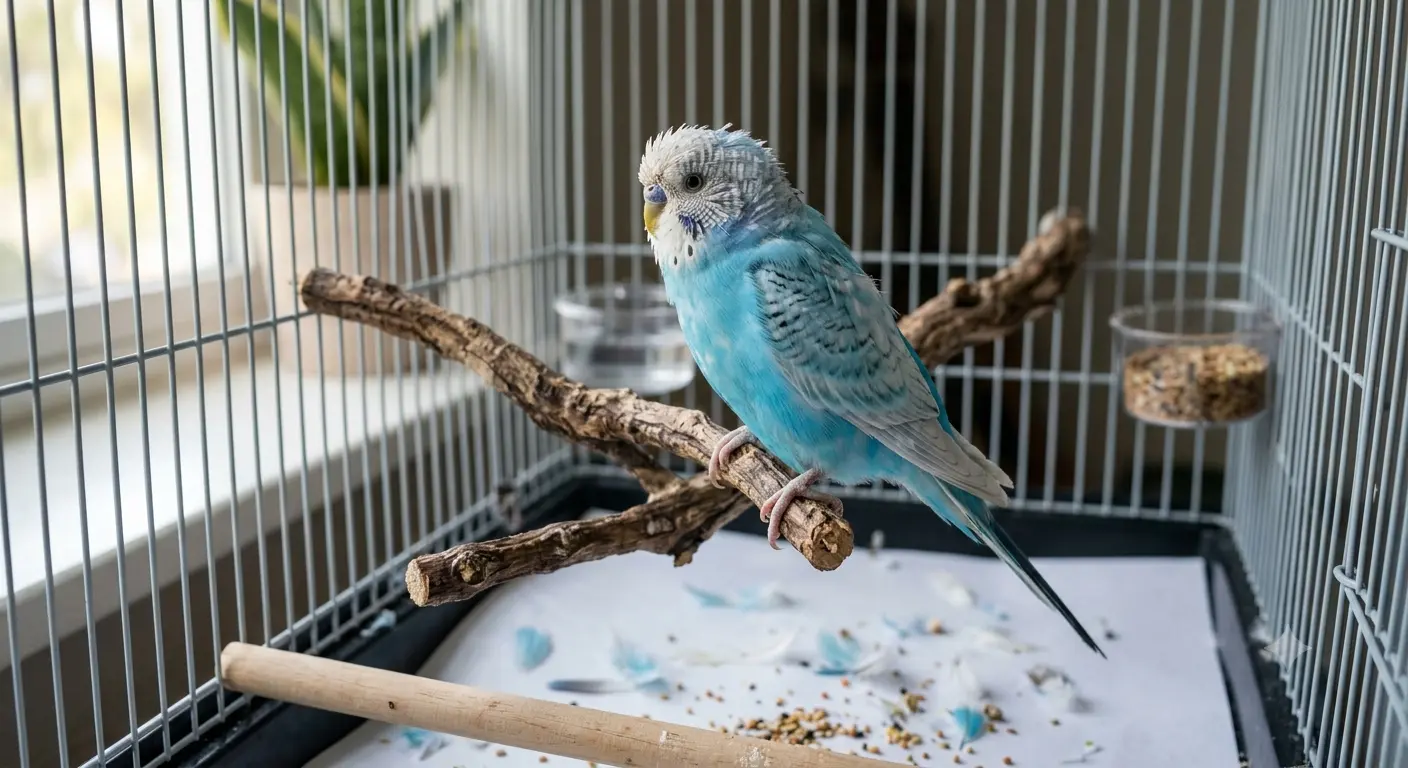
What Is Molting and Why Does It Happen?
A budgie's feathers are not living tissue. They are made of keratin—the same protein that forms human hair and nails. Since feathers cannot self-repair, they wear down over time, break, fade in sunlight, and lose their aerodynamic and insulating properties.
For a parrot to remain capable of flight and maintain a stable body temperature, the old, damaged layer of feathers must be replaced with a new one.
How Does Normal Feather Replacement Work?
The molting process is controlled by the thyroid hormone (thyroxine) and environmental factors such as daylight length (photoperiod) and ambient temperature. In the wild, budgies typically molt after the breeding season or during seasonal changes (spring and autumn).
Key characteristics of healthy molting:
- Symmetry: Budgies never lose all their feathers at once. Feathers fall out symmetrically—if a primary flight feather drops from the left wing, the corresponding feather on the right wing drops shortly after. This allows the bird to retain its ability to fly even during the molt.
- Gradual process: The process takes several weeks (usually 4 to 8 weeks), preventing sudden heat loss.
- Sequence: It typically begins with smaller feathers on the head and neck, moves across the chest and back, and concludes with the large flight and tail feathers.
First Molt in Young Budgies
One of the most important milestones in a young budgie's life is its first (juvenile) molt.
When they hatch and grow their first feathers, young budgies have characteristic transverse black bars extending from their forehead down to the cere (the fleshy area above the beak). Additionally, their eyes are solid black without a visible white ring (sclera).
- When does it start? The first molt usually occurs between 3 and 6 months of age.
- What changes? During this process, the forehead stripes disappear, revealing a solid yellow or white cap (depending on the color mutation). The cere begins to take on its adult color (blue for males, pink/brown for females), and a lighter iris ring starts to appear around the pupil.
Once the first molt is complete, your budgie officially enters adulthood.
Symptoms and Behavior During Molting
Molting is not just a visual transformation—it affects your bird's overall mood and behavior. Growing new feathers consumes a massive amount of energy, which can cause your parrot to act differently than usual.
1. Pinfeathers on the Head and Neck
This is the most recognizable sign. A new feather doesn't emerge fully formed. It pushes through the skin encased in a protective keratin sheath that resembles a white or pinkish-white spike or pin. This tube is filled with blood vessels that nourish the developing feather (known as a blood feather). As the feather grows, the blood recedes, and the keratin sheath cracks open, releasing the soft feather.
2. Itching and Restlessness
The growth of new pinfeathers causes intense itching. Your budgie will frequently rub its head against perches, toys, or cage bars. If you keep a pair of budgies, you'll notice them carefully preening and nibbling away these sheaths from each other's head and neck—areas a bird cannot reach on its own.
3. Lethargy and Reduced Activity
Because the metabolism is working overtime to synthesize new protein, budgies sleep more frequently during the day. They may seem less inclined to play, sing less often, and avoid long flights.
4. Irritability
Due to the pressure and itchiness of developing pinfeathers, the bird can become sensitive to touch. Even tamed budgies might offer a gentle nip to signal they don't want to be touched on the head during this phase.
How to Distinguish Molting from Illness?
Sometimes it is difficult to determine whether feather loss is a natural process or a health disorder. If you notice bare patches without new pinfeathers, altered droppings, or extreme lethargy, the issue may run deeper. Keep in mind that during this period, common budgie diseases can easily trigger, as a weakened immune system leaves the bird more vulnerable to infections.
Here is a side-by-side comparison to help you tell the difference:
| Sign | Normal Molting | Pathological Process / Illness |
|---|---|---|
| Bare Patches (Exposed Skin) | Skin is covered with white pinfeathers (sheaths). | Completely bare spots appear without new pinfeathers. |
| Symmetry | Feathers fall out equally from both sides of the body. | Feathers drop randomly, creating lopsided bald patches. |
| Droppings | Droppings are well-formed, normal in color and consistency. | Droppings are watery, greenish, yellow, or contain undigested seeds. |
| Posture | Bird rests occasionally but remains alert. | Bird constantly sits fluffed up at the bottom of the cage with eyes closed. |
| Behavior | Occasional scratching and preening. | Relentlessly plucks its own feathers to the point of bleeding (self-mutilation). |
If you notice pathological symptoms, consult an avian veterinarian promptly, as underlying causes could include French molt (PBFD/Polyomavirus), skin parasites (mites, lice), or fungal infections.
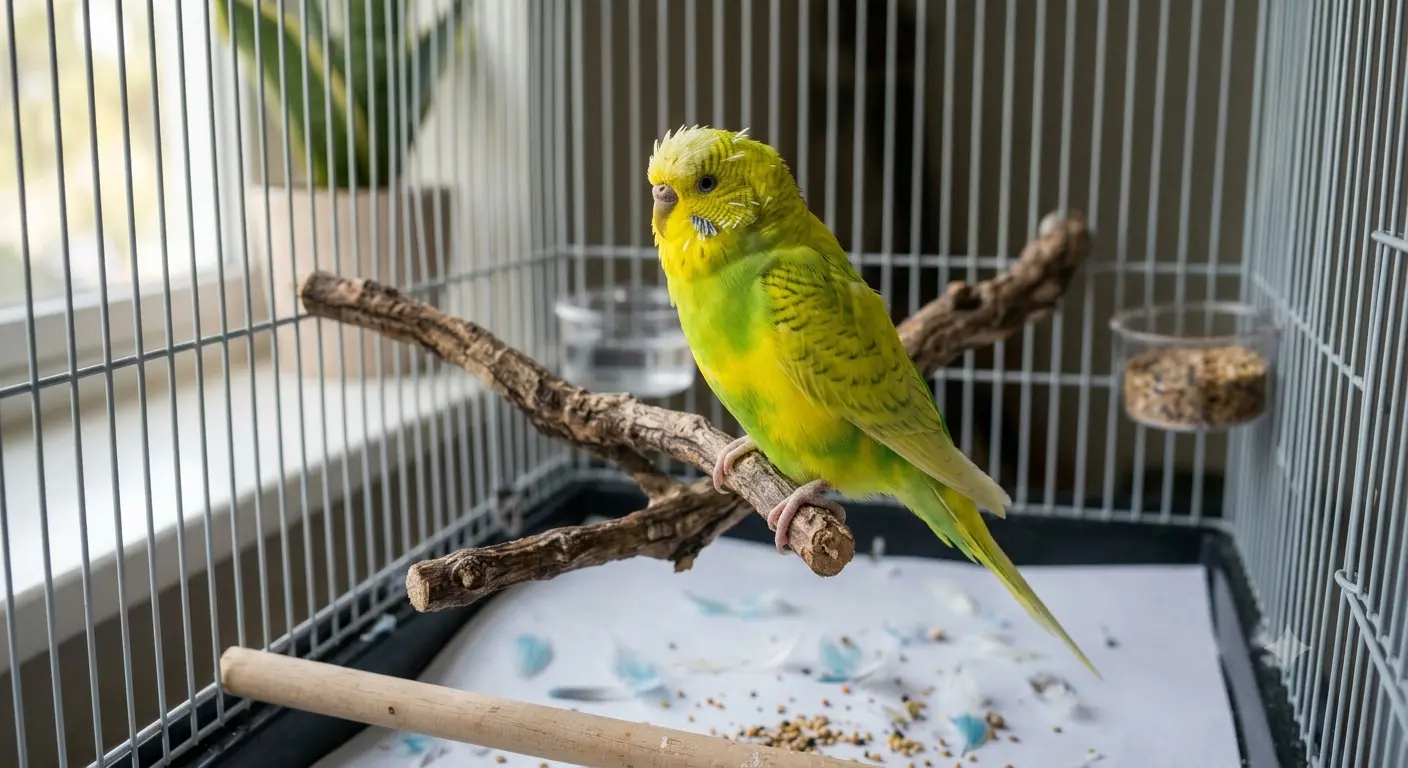
Nutrition During Molting: What Is Essential?
A standard seed mix (millet, canary seed, oats) is insufficient during feather renewal. Keratin is a protein rich in sulfur-containing amino acids (primarily methionine and cysteine). If the diet lacks adequate protein, new feathers will grow in deformed, brittle, or marked with transverse "stress lines."
1. Protein Supplements
- Egg Food: Hard-boiled egg (white and yolk) mashed with a few breadcrumbs or commercial egg food. Feed 2–3 times a week, about one teaspoon per bird.
- Sprouted Seeds: Germinated millet and wheat seeds are rich in easily absorbable enzymes, amino acids, and vitamins.
2. Minerals and Calcium
Feather formation drains mineral reserves from the bones.
- Cuttlebone and Mineral Block: Must be available in the cage at all times.
- Grit (Crushed Shells): Aids digestion and supplies essential minerals.
3. Vitamins and Essential Fatty Acids
- Vitamin & Mineral Supplements: Add water-soluble vitamins (especially vitamins A, D3, E, and B-complex). Vitamin B is crucial for skin health and proper pinfeather development.
- Fresh Vegetables: Carrots (rich in beta-carotene), spinach, dandelion greens, and broccoli offer natural antioxidants.
5 Ways to Ease Your Budgie's Molt
In addition to proper nutrition, there are practical steps you can take in daily care to reduce stress and speed up the process:
1. Provide Regular Bathing
Moisture is your best ally during a molt. Water softens the hard keratin sheath around new pinfeathers, making them break open more easily and reducing itchiness.
- Offer a shallow dish of lukewarm water.
- If your budgie dislikes bathing, gently mist it with a fine spray bottle (use clean, lukewarm water only).
2. Ensure Sufficient Sleep and Quiet
Birds react to day length. Reduce stress by providing 10 to 12 hours of uninterrupted darkness and quiet at night. Cover the cage with a light, breathable cloth so your bird can get adequate rest.
3. Avoid Drafts and Sudden Temperature Shifts
When losing feathers, a budgie retains body heat less effectively. Never place the cage in a draft, next to an open window, or directly in line with air conditioning. Maintain a stable room temperature (between 20°C and 24°C / 68°F and 75°F).
4. Don't Force Handling
If your parrot avoids physical contact, respect its space. Developing blood feathers are extremely sensitive, and accidental pressure can cause severe pain or bleeding.
5. Maintain High Cage Hygiene
During molting, large amounts of keratin dust and fallen feathers collect at the bottom of the cage. Change the liner (paper) regularly to prevent the growth of mites and bacteria that could irritate your bird's sensitive skin.
What to Do in Case of a Broken Blood Feather?
Every new growing feather has an active blood supply flowing through the center of the sheath. If a bird gets startled, flies frantically inside the cage, and breaks a blood feather, heavy bleeding can occur. Because budgies have a very small blood volume, any uncontained bleeding is an emergency.
First Aid for a Broken Blood Feather:
- Stay Calm: Gently wrap the bird in a soft cotton towel to prevent further injury.
- Locate the Bleeding: Identify the damaged sheath oozing blood.
- Stop the Bleeding: Apply a small amount of cornstarch or flour directly to the site and apply gentle pressure with sterile gauze for a few minutes.
- When to Call the Vet: If bleeding does not stop after 5 minutes, or if the feather is snapped at the root, an avian vet must pull the feather shaft out with forceps so the blood vessel can naturally constrict and close.
Frequently Asked Questions
How long does budgie molting last?
Usually several weeks, most often in spring and autumn. Duration depends on age, diet, and environment.
Is it normal for a budgie to be sleepier during a molt?
Some reduced activity is normal. Constant bottom-sitting, appetite loss, or bald patches without pinfeathers are not.
What should I feed during a molt?
Protein-rich foods such as egg food, sprouted seeds, pellets, and fresh vegetables, plus cuttlebone and vitamins.
Should I bathe my budgie more often while molting?
Yes. Bathing helps soften pinfeather sheaths and reduces itchiness.
What should I do if a blood feather breaks?
Apply gentle pressure with gauze or cornstarch. If bleeding continues, seek an avian vet immediately.
Conclusion
Molting is a natural test of endurance for your budgie. Although your pet might look a bit "scruffy," less energetic, and reserved during this time, with your support, proper protein nutrition, vitamins, and regular bathing, it will soon shine in full splendor.
Keep a close eye on your bird's behavior, provide a quiet environment with quality minerals, and you'll soon be enjoying its cheerful chirping and beautiful new plumage once again!
