Budgie Diseases: Symptoms, Treatment, and Prevention
Budgies (Melopsittacus undulatus) are prey animals in the wild. As such, they have evolved to mask pain and illness until the very last moment. By the time an owner notices that their bird "looks a little off," it is often the avian equivalent of a human ER visit. This guide is designed to help you become a "health detective" for your feathered companion.
When monitoring bird health, every small change—from the texture of the droppings to the rhythm of their blinking—serves as vital diagnostic data.
The Anatomy of a Sick Bird: What is the Body Telling Us?
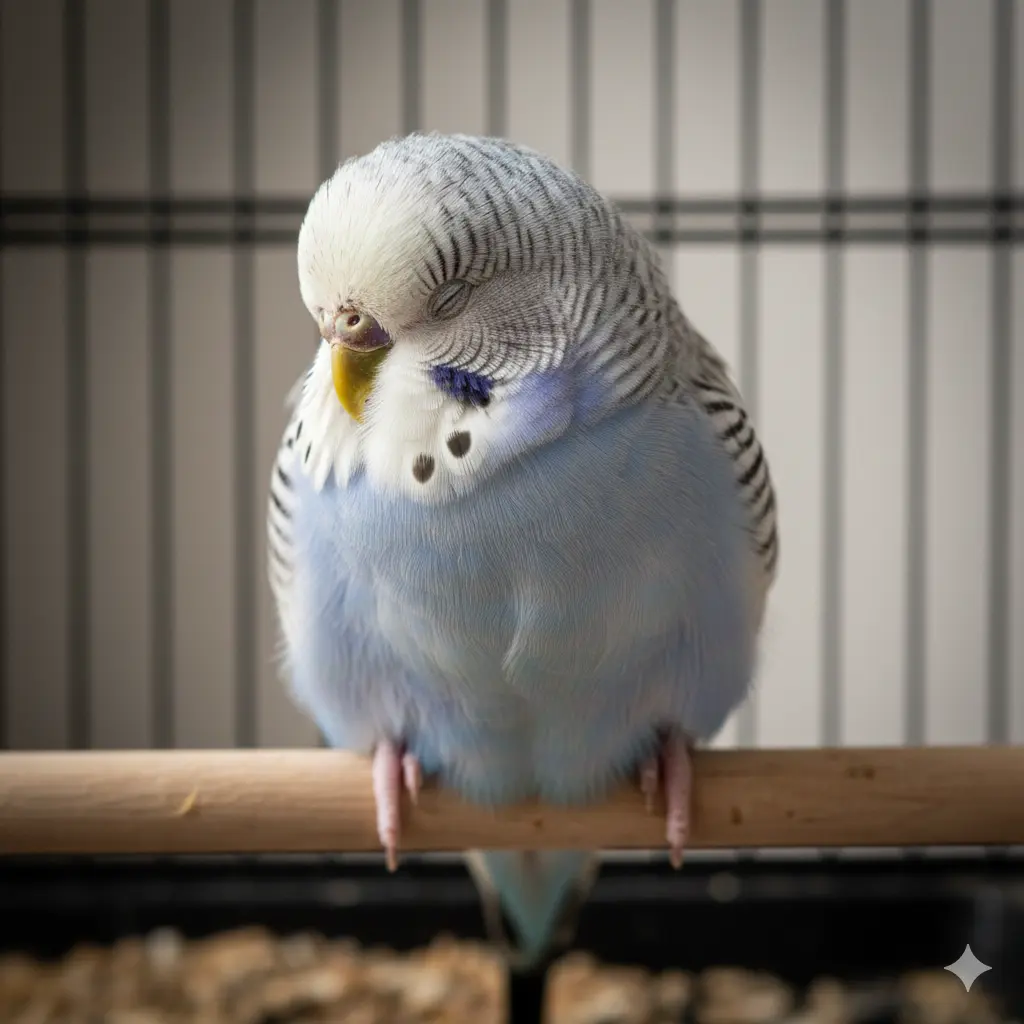
Before diving into specific diseases, we must understand physiological shifts. A sick budgie experiences a metabolic change. Their normal body temperature is quite high, around 106-107°F (41-42°C). When ill, their body consumes massive amounts of energy to maintain this heat, leading to the most common symptom: fluffed feathers.
Why Does a Budgie "Poof Up"?
Fluffed feathers create an air cushion that acts as insulation. If you see a bird looking like a "puffball" for more than 30 minutes (outside of normal nap time), it is a clear sign of fever or a systemic infection.
Respiratory System: Infections and Airborne Dangers
A budgie's respiratory tract is a complex system of lungs and air sacs that extend throughout the body, even into the bones. This makes respiratory infections extremely dangerous.
Bacterial Pneumonia and Air Sacculitis
Often caused by poor hygiene or stress-induced immune suppression.
- Detailed Symptoms: Wheezing, a "clicking" sound coming from the chest, nasal discharge (clear or cloudy), and constant open-beak breathing.
- Tail Bobbing: This is a critical warning sign. The bird uses its tail muscles to mechanically help the lungs expand. If the tail moves up and down in rhythm with breathing while the bird is perched, it is an emergency.
Invisible Hazards: Fumes, Perfumes, and Smoke
Budgies have a respiratory system that is much more efficient—and sensitive—than a human's. They inhale a significantly larger volume of air relative to their body mass. What might be a pleasant scent to us can be fatal to a budgie within minutes.
- Perfumes and Deodorants: Never spray aerosols, perfumes, or hairspray in the same room as a bird. These particles settle in the air sacs, causing instant irritation or suffocation.
- Air Fresheners and Scented Candles: Most contain Volatile Organic Compounds (VOCs) that are toxic to birds. Even "natural" candles can release soot and essential oils that burn sensitive respiratory membranes.
- Tobacco Smoke: Nicotine and tar are deadly. Besides damaging lungs, residue sticks to feathers; when the bird preens, it ingests these toxins, leading to skin inflammation and organ failure.
- Household Cleaners: Bleach or ammonia-based products release strong fumes that cause permanent lung damage in budgies.
Psittacosis (Parrot Fever) – A Danger to Birds and Owners
Psittacosis (Chlamydia psittaci) is known as "the great imitator" because it looks like a common cold, but it is far more dangerous. It is a zoonotic disease, meaning it can spread to humans.
- Pathology: The bacteria attack the liver and spleen.
- Droppings: A classic sign is bright neon-green droppings, indicating liver distress.
- Long-term effects: Without antibiotics (usually Doxycycline), the bird will waste away, losing weight until it is "skin and bone," eventually dying of organ failure.
Gastrointestinal Disorders: From Crop to Cloaca
Crop Infection (Ingluvitis / Sour Crop)
The crop is the pouch at the base of the neck where food is stored. Infections here often stem from spoiled food or dirty water.
- Vomiting vs. Regurgitation: Regurgitation (casting up seeds) is often a sign of affection toward a mirror or mate. Vomiting involves ejecting slimy, sticky fluid that often mats the feathers on the bird's head. If the head feathers look "slicked back" and dirty, the bird is vomiting.
Canker (Trichomoniasis)
The parasite Trichomonas gallinae creates plaques in the throat that can literally suffocate the bird or prevent swallowing.
- Symptoms: Stretching the neck, repeated swallowing motions, bad breath from the beak, and weight loss despite a strong appetite.
Parasites: The Unseen Guests
Budgies are commonly attacked by two types of mites that require completely different treatments.
Scaly Face Mites (Knemidocoptes pilae)
These parasites burrow tunnels into the beak, cere, and legs.
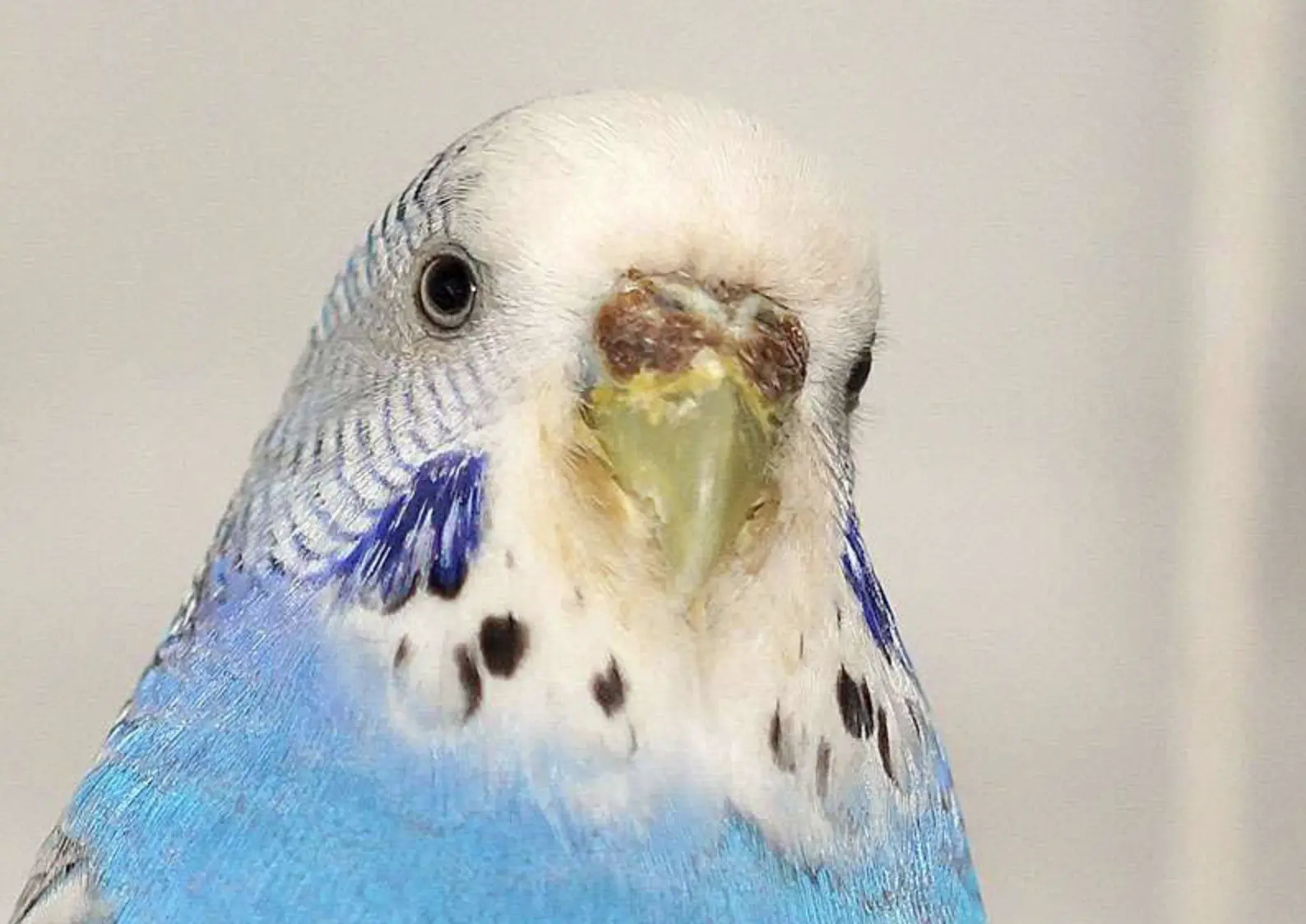
- How to spot them: The beak looks like it has tiny pinholes or white, "crusty" growths that resemble a sponge or honeycomb. Left untreated, the beak can become severely deformed.
Air Sac Mites (Sternostoma tracheacolum)
These mites live deep within the respiratory tract.
- Symptom: The bird stops singing, its voice becomes raspy, and you may hear a faint "wheezing" or "clicking" at night.
Metabolic Diseases and Tumors
Budgies are genetically prone to tumors, particularly fatty tumors (lipomas) caused by high-fat seed-only diets.
Lipomas and Obesity
Obese birds will have yellowish fat deposits under the skin on their chest or abdomen.
- Solution: Transition slowly to a diet with fewer oily seeds and more fresh vegetables. For more info, see our Budgie Nutrition Guide.
Egg Binding
This affects females only. An egg gets stuck in the oviduct, often due to calcium deficiency.
- Symptoms: Sitting on the cage floor, wide-legged stance, heavy tail pulsing, and a visibly swollen abdomen. This is an extreme emergency requiring a vet within hours.
First Aid Protocol: What to Do Now
If your bird is sick and a vet is unavailable (night or weekend), follow this protocol:
I. Heat Therapy
A sick bird stops producing enough body heat.
- Action: Place a heat lamp (not direct) or move the cage near a warm radiator. The target temperature in the bird's corner should be 82-86°F (28-30°C).
II. Restrict Movement
- Action: Remove high perches. Place food and water in low dishes on the cage floor. Line the floor with soft paper towels.
III. Hydration
- Action: Ensure the bird is drinking. You can add a few drops of organic apple cider vinegar to 100ml of water to help acidify the crop, but only if the bird accepts it.
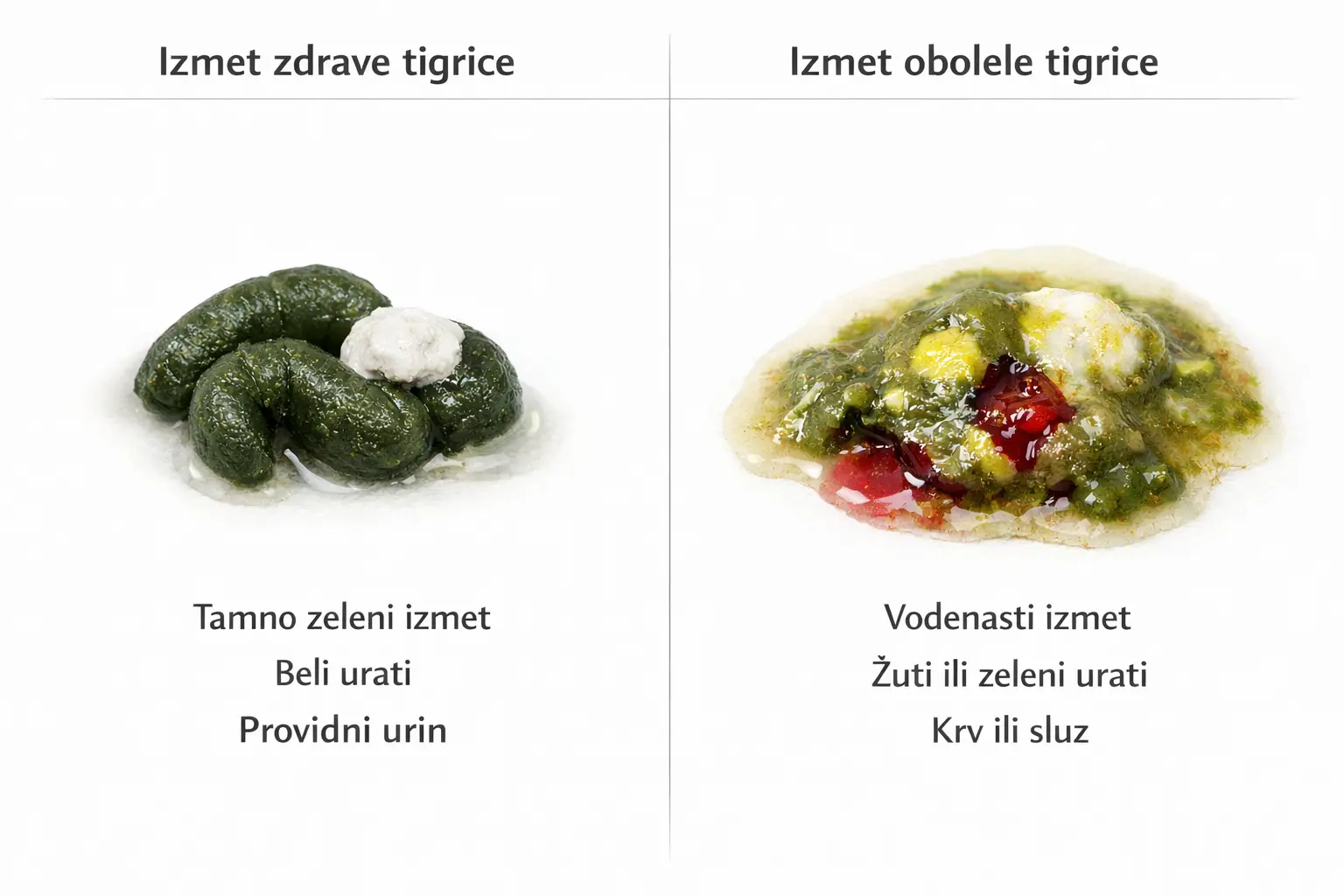
Analyzing Droppings (The Health Window)
Droppings consist of three parts:
- Feces: The solid, usually dark green part.
- Urates: The white, creamy part (kidney byproduct).
- Urine: Clear liquid.
- Yellow/Green Urates: Serious sign of liver infection or Psittacosis.
- Blood in Droppings: Emergency; indicates internal bleeding or heavy metal poisoning (e.g., chewing on cheap zinc-coated toys).
Emergency Guide: When to See a Vet?
CRITICAL (See a vet within 60 minutes)
- Active Bleeding: From a "blood feather" or injury. Birds can bleed out very fast.
- Lying on the cage floor: Sign of complete collapse.
- Seizures or loss of balance: Indicates neurological issues or poisoning.
HIGH PRIORITY (Same day)
- Labored breathing / Tail bobbing.
- Change in urate color (Yellow/Neon Green).
- Vomiting sticky mucus.
FAQs: Budgie Health
Does my budgie have mites?
Look for "honeycomb" crusts on the beak or legs. If the beak looks like it’s covered in "lime" or "chalk," it is likely Scaly Face Mites.
Why is my budgie fluffed up?
This is the number one sign of illness. If your bird looks like a ball for more than 20 minutes during the day, they likely have a fever or infection.
Can stress make a budgie sick?
Yes. Stress (moving, loud noises, loneliness) directly suppresses the immune system, making the bird vulnerable to bacteria that a healthy bird would normally fight off.
Can I give my budgie antibiotics at home?
No. Giving the wrong antibiotic can destroy gut flora, damage the liver, and lead to rapid death. Only use medications prescribed by an avian veterinarian.
