Seasonal Diet for Goldfinches: Feeding Guide
The Goldfinch (Carduelis carduelis) is a synonym for beauty and melodic song in European aviculture. However, every experienced breeder knows that those songs and the bright colors of the mask aren't accidental—they are a direct result of what the bird consumes. Goldfinches have an extremely fast metabolism, and their nutritional needs change drastically with the turning of the seasons.
A proper diet directly impacts goldfinch care, as a mistake in seed selection during winter can lead to a loss of thermal energy, while overly fatty food in summer can permanently damage the bird's liver. In this guide, we will analyze how to create the ideal menu that follows your bird's biological clock.
What Do Goldfinches Eat?
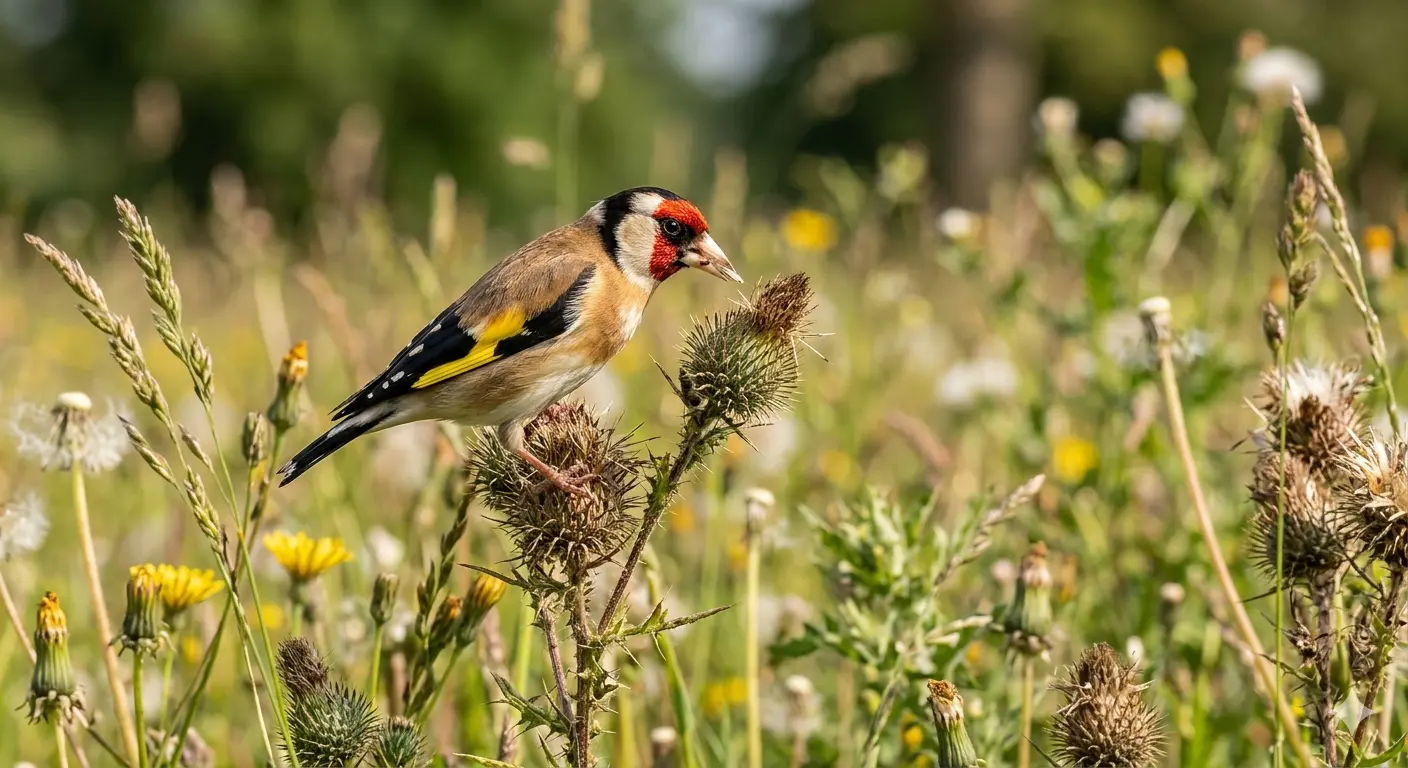
In their natural habitat, goldfinches are primarily granivores, meaning their diet is based on plant seeds. Their thin and pointed beak is evolutionarily perfectly adapted for extracting tiny seeds from weeds and flowers. The bulk of their diet consists of:
- Thistle seed: Their absolute favorite seed, which gave the bird its name in many languages (and its Latin name Carduelis from Carduus – thistle).
- Dandelion seed: Rich in vitamins and minerals, especially carotenoids that help maintain the bright red color of the mask and liver health.
- Meadow grasses: Various types of wild millet and foxtail.
- Insects: During spring, goldfinches eat small aphids and larvae to ingest necessary proteins for reproduction.
Best Food for Goldfinches
The best food for goldfinches isn't a single type of seed, but a balanced mix that simulates nature's diversity. A quality mix should contain at least 5-7 different types of seeds. Many experienced breeders use "Manitoba" or "Prestige" mixes, but the key is that the base should always be canary grass seed (plain canary seed).
Remember: The best food is fresh food—if the seed doesn't sprout when placed in water for 24 hours, it is "dead" and nutritionally poor.
Top 10 Most Important Seeds for Goldfinches
| Seed | Primary Nutrient | Main Role | Ideal Season |
|---|---|---|---|
| Niger (Nyjer) | Fats (Oils) | Main source of energy and body heat | Winter (high %), Summer minimal |
| Canary Seed | Carbohydrates | Daily diet base, easily digestible | Year-round |
| Hemp | Fats / Proteins | Boosts condition and encourages song | Winter moderate, Summer cautious |
| Dandelion (Seed) | Vitamins / Minerals | Liver support and natural mask pigmentation | Highest during Summer |
| Chicory | Minerals | Aids digestion and healthy metabolism | Year-round |
| Flax (Linseed) | Omega-3 Oils | Feather shine and quality during molting | Autumn (molting period) |
| Poppy | Fats | Extra energy and mild calming effect | Winter and song training periods |
| Sunflower (Micro black) | Calories | Extra energy for birds in cold conditions | Winter (especially in outdoor aviaries) |
| Pine / Fir Seed | Resins and Antioxidants | Strengthens immunity and resilience | Winter (natural environment) |
| Meadow Foxtail | Carbohydrates | Easy digestion for young and old birds | Summer |
The Biological Cycle: Why a Change in Diet is Mandatory?
In nature, a goldfinch does not eat the same food in January as it does in July. During winter, it searches for high-energy seeds rich in oils to maintain its body temperature (~40°C). In spring and summer, the focus shifts to "milky" seeds (half-ripe grass seeds) and insects that provide protein for raising young.
As owners, our task is to simulate these natural cycles. If you keep the bird on the same standard seed mix year-round, you risk two problems:
- Summer Obesity: Excess energy not used for heating turns into fatty deposits around the liver.
- Winter Exhaustion: A lack of lipids leads to muscle mass loss and the cessation of singing.
Winter Diet: Fuel for Fighting the Cold
Winter is a period of rest but also high energy consumption, especially if your birds live in outdoor aviaries. The main goal of the winter diet is thermoregulation.
1. Energy Seed Mix
The winter mix must be rich in black seeds (oilseeds). The base should consist of:
- Niger (Nyjer): The primary energy source. Rich in fats that goldfinches digest easily.
- Hemp: Extremely caloric. Can be given in a higher percentage in winter, but use caution—too much hemp can make a bird aggressive.
- Sunflower (Micro black): Excellent for aviary birds, but should be given hulled or slightly crushed.
- Pine and Fir Seed: In nature, this is their main winter treat. It is rich in specific resins that boost immunity.
2. Importance of Carbohydrates
While fats are key for long-term warmth, carbohydrates from floury seeds (millet, canary seed) provide instant energy for daily activities. The ratio in winter should be around 60% oilseeds and 40% floury seeds.
3. Winter Vitamin Supplementation
Since fresh greenery is unavailable in winter, adding vitamins to the water is necessary. A special focus should be placed on Vitamin A (important for mucous membranes and vision) and Vitamin D3, as sunlight intensity is low.
Summer Diet: Preparing for Song and Molting
Summer brings high temperatures but also the most critical period in a goldfinch's life—molting. Replacing the entire plumage requires massive amounts of protein and minerals.
1. Fat Reduction
When temperatures exceed 25°C, the bird no longer needs as much "fuel" for heating. The percentage of hemp and niger should be reduced to a minimum. The focus shifts to:
- Canary Seed: Should form the base (up to 60-70% of the mix).
- Chicory and Dandelion: The seeds of these plants are "medicine" for a goldfinch's liver.
- Flax: Helps with the shine of new feathers during molting.
2. Milky Seeds and Fresh Food
Summer is the time to offer goldfinches "living" food. Half-ripe heads of dandelion, thistle, and various meadow grasses are invaluable. They contain enzymes that aid digestion and pigmentation.
3. Proteins for New Feathers
Building feathers is a process that consumes keratin. You should introduce:
- Egg Food: Once or twice a week.
- Brewer's Yeast: Rich in B vitamins, which are crucial for feather structure.
Seed Mix Comparison (Winter vs Summer)
| Seed | Winter (%) | Summer (%) | Why? |
|---|---|---|---|
| Canary Seed | 30% | 60% | Base that doesn't burden the liver. |
| Niger (Nyjer) | 30% | 10% | Main source of fat and energy. |
| Hemp | 15% | 5% | High energy, but can burden the liver in summer. |
| Chicory / Dandelion | 10% | 20% | Supports liver health and aids detoxification. |
| Flax / Poppy | 15% | 5% | Aids digestion and provides feather shine. |
Goldfinch Diet by the Months
To achieve peak results, you shouldn't change the diet all at once, but gradually.
March - May (Breeding Preparation)
This is the "awakening" period. We gradually increase the protein portion. We start giving sprouted seeds that simulate the spring awakening of nature. Sprouted seeds are rich in Vitamin E, which is crucial for fertility and the urge to sing.
June - August (Breeding and First Molt)
Maximum amount of fresh greens. Dandelion (leaf and flower) is a daily must. Birds must have access to minerals (grit, cuttlebone) because females consume calcium for eggshells.
September - November (Main Molt and Autumn)
This is the "most expensive" period for the organism. The diet must be the most diverse. Add powdered minerals over egg food. The color of the mask (red) depends directly on the carotenoids the bird ingests now. Without enough natural pigments from dandelion or thistle, the mask will turn orange instead of bright red after molting.
Most Common Cause of Goldfinch Mortality
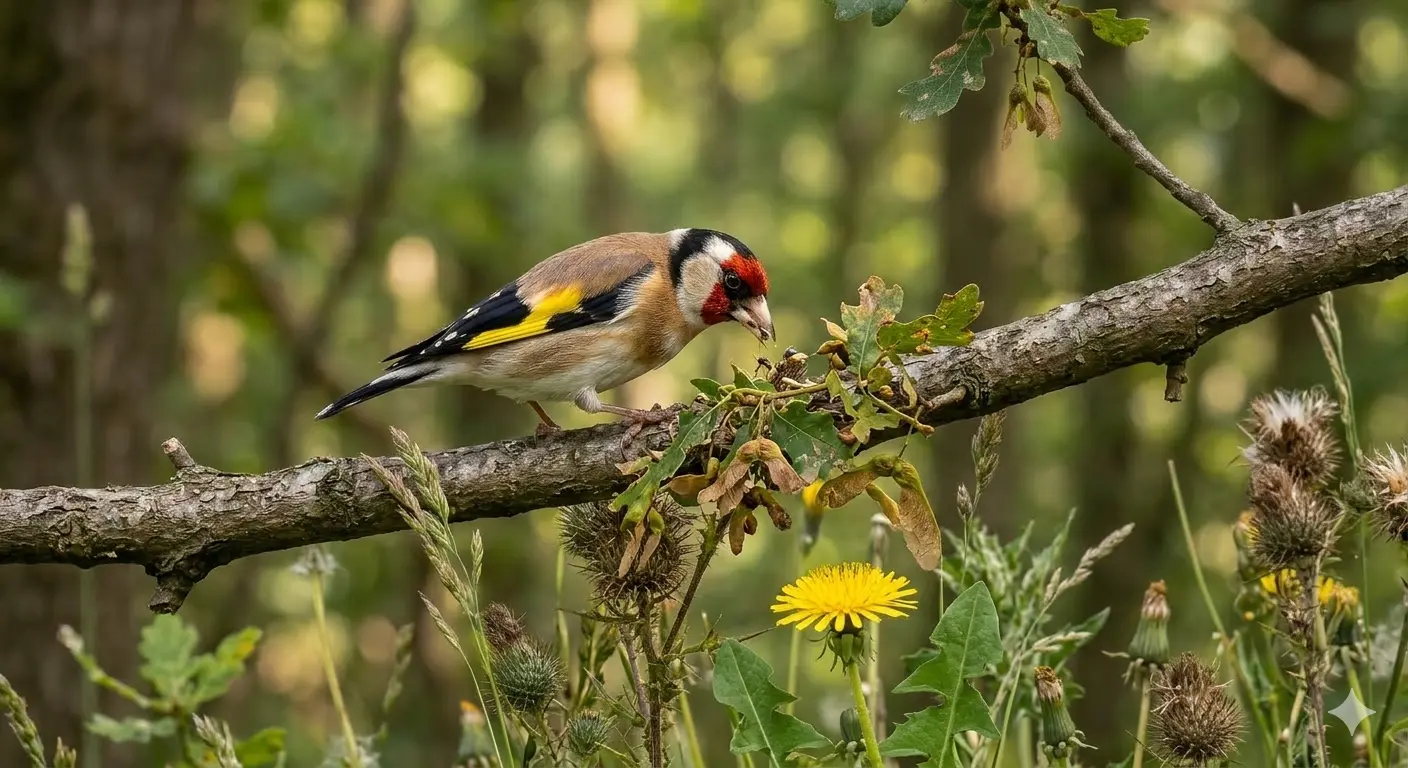
In captivity, the leading cause is hepatic steatosis (fatty liver). This happens when an owner keeps a bird on a "winter" diet (lots of niger and hemp) during the hot summer months.
Symptoms of Liver Disease:
- The bird is puffed up and sleeps during the day.
- The chest becomes "sharp" (muscle loss), but the abdomen is dark purple or black.
- Droppings are yellowish.
Solution: Immediate transition to a diet of plain canary seed and dandelion or milk thistle (silymarin) tea.
Water and Minerals in a Goldfinch's Diet
Regardless of the season, two elements remain constant, though their significance changes.
Water
In winter, water must not freeze (if birds are outside), and in summer, it must be changed twice a day to prevent bacterial growth. In summer, adding 1–2 ml of apple cider vinegar per liter of water is recommended to acidify the environment and prevent "megabacteria" (Macrorhabdus ornithogaster), which goldfinches are prone to.
Grit and Minerals
Goldfinches don't have teeth. They use small stones (grit) in their gizzard to grind hard seeds. In winter, when they eat more fatty and hard seeds, grit is crucial for digestion. In summer, a mineral block is vital for calcium.
Tips for Goldfinch Song
Many ask: "Why doesn't my goldfinch sing in winter?". The answer lies in the diet. Song is linked to hormone levels (testosterone).
- To encourage song: Toss in a bit more poppy and niger seeds in February. This will "warm up" the bird.
- To calm the bird: If a bird is too aggressive, increase the canary seed portion and reduce hemp.
However, diet alone isn't enough if the bird lacks the genetic foundation and proper training. To get the most out of your pet, read our detailed guide on encouraging goldfinch song and training young singers.
Feeder Hygiene
Seasonal feeding also involves using different types of food (sprouted seeds, egg food) that spoil quickly.
- Summer: Egg food should stay out for no longer than 2-3 hours. After that, it becomes a breeding ground for salmonella.
- Winter: Oil-rich seeds can go rancid if humidity is high. Always smell the food before serving—it should not smell of mold or old metal.
Conclusion: Listen to Nature
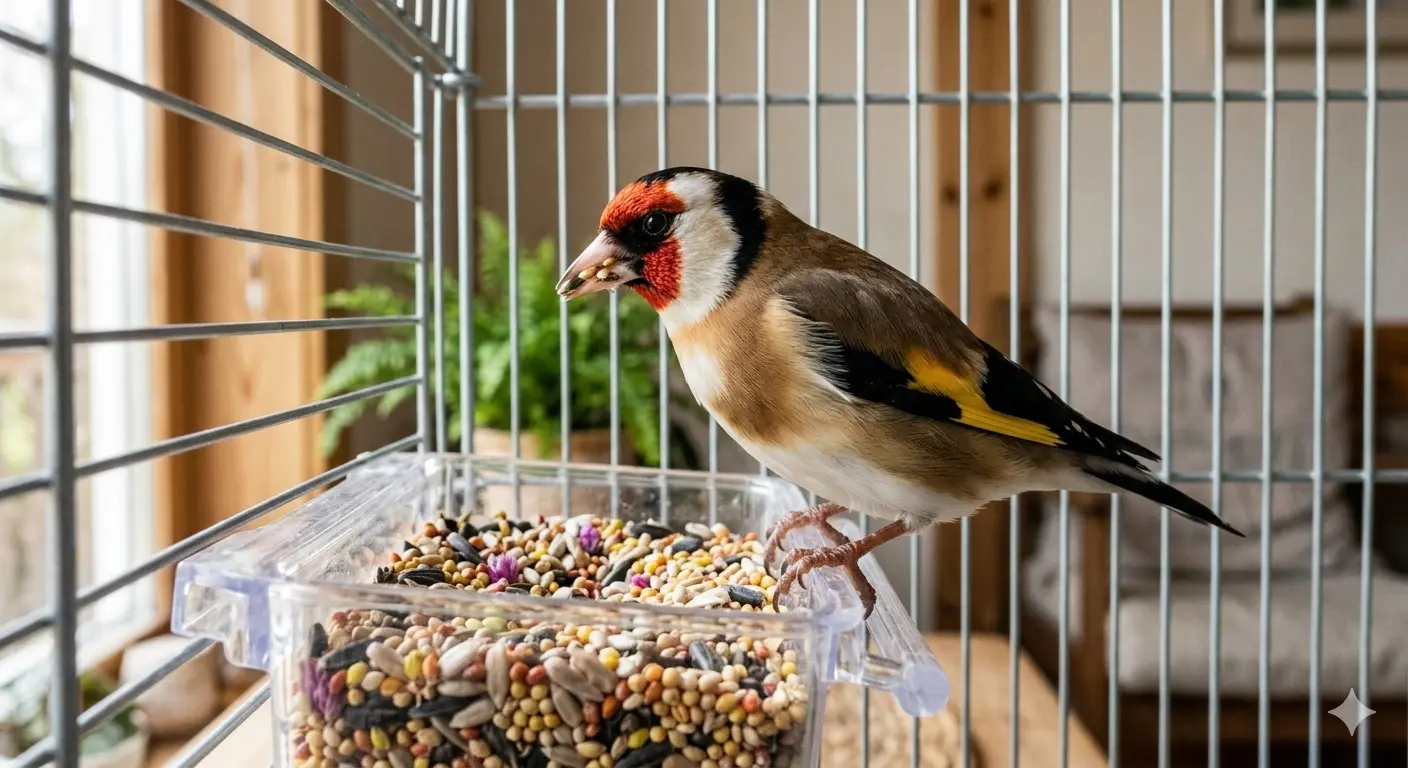
Goldfinch nutrition isn't a fixed formula, but a living discipline. Observe your birds daily. If you notice a bird shivering in winter, boost the fat. If you notice it is sluggish in summer, reduce the oilseeds.
By adjusting the diet according to the seasons, you are not only extending your pet's life but ensuring its song is powerful and its colors are as nature intended. Proper nutrition is half of health; the other half is your commitment and love for these incredible birds.
Frequently Asked Questions
Can goldfinches eat fruit?
Goldfinches are not primarily fruit lovers like parrots. You can offer a small piece of apple occasionally, but they prefer vegetables (spinach, broccoli) and wild herbs.
What is "red food" and is it necessary?
These are artificial carotenoids. If you provide your goldfinch with enough dandelion, carrots, and thistle during molting, artificial food is not necessary for a beautiful red mask.
Can a goldfinch survive the winter on canary seed alone?
It's unlikely. If it lives outside without extra fats from niger or sunflower, it won't be able to produce enough body heat and will likely perish during the first hard frost.
Why is my goldfinch throwing seeds out of the feeder?
It is looking for its favorite seeds (usually niger or hemp). This is a sign that the mix is too rich in floury seeds or that you have provided too much food at once.
