European Goldfinch Care: Tips for Indoor Keeping
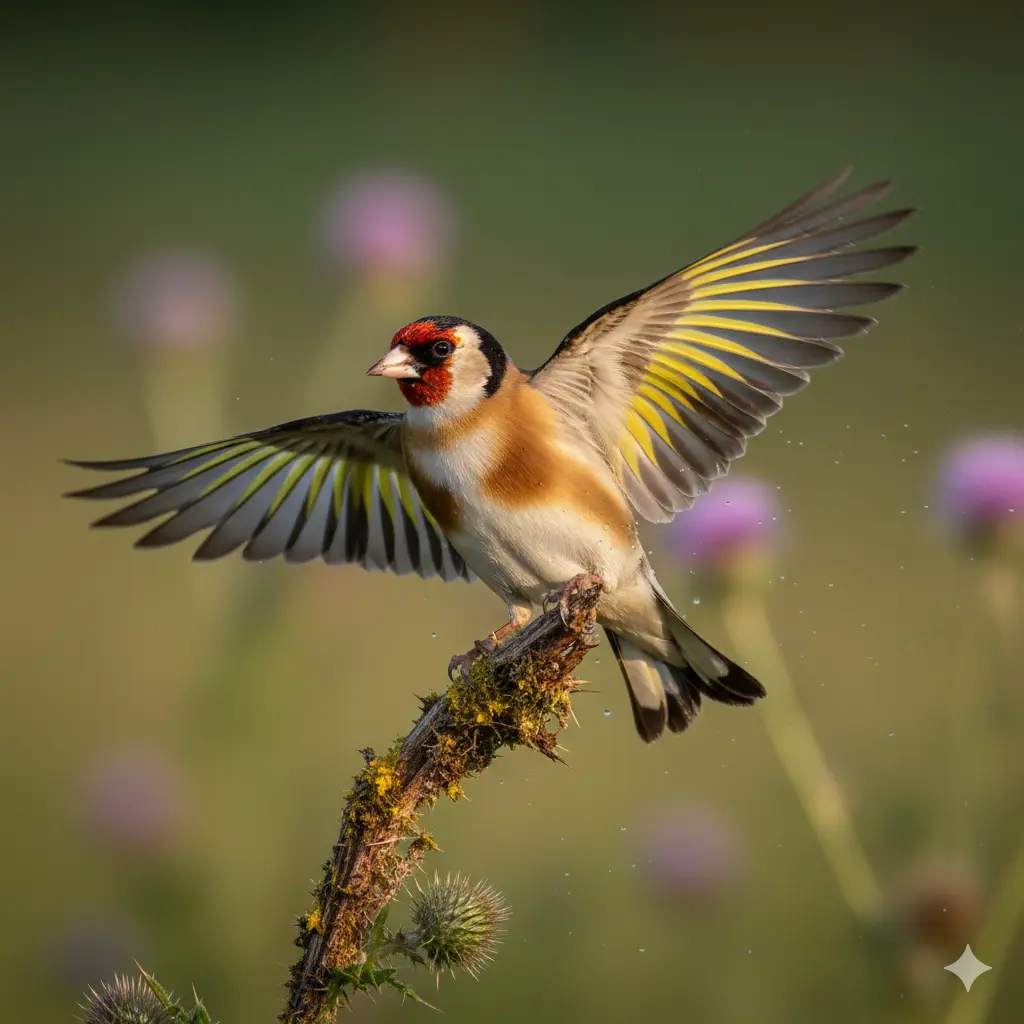
If there were a contest for the "King of Song" among European songbirds, the European Goldfinch (Carduelis carduelis) would likely be in the grand finale. Unlike canaries, which have been domesticated for centuries, the goldfinch carries the spirit of the wild, an innate elegance, and a song that has inspired artists for generations.
Keeping a European Goldfinch as a pet requires specific knowledge. They must be legally closed-banded, properly fed, and kept in adequate conditions to ensure their health and legal status.
Legal Status: Ethics and Origins
Before bringing a goldfinch into your home, you must understand that this is a regulated process. In many regions, including the US and Europe, keeping native or migratory species requires proof of captive breeding.
How to Identify a Legal Bird
The only definitive proof that a bird was hatched in captivity is a closed leg band (typically size 2.5 mm or 2.7 mm).
- The band is placed on a chick's leg at 5–7 days old. Once the bird grows, it is impossible to remove or add the band without injury.
- The band should display the hatch year, country code, breeder association ID, and a unique bird number.
Hybrids (Mules): A Unique Tradition
Crossing a European Goldfinch with a Canary (usually a male goldfinch and a female canary) produces hybrids known as Mules.
- Breeding Goal: To create a bird with the "wild" look and fiery notes of a goldfinch, but the stamina and length of a canary's song.
- Fertility: These hybrids are almost always sterile. They are kept exclusively as world-class singers and exhibition birds.
The Ideal Cage for an Active Flyer
Goldfinches are exceptionally active and energetic compared to many exotic finches. Their cage shouldn't just be a place to sit—it must be a space where they feel secure.
Placement and Height
Unlike Zebra Finches, goldfinches prefer to observe their surroundings from a height.
- Place the cage at eye level or higher.
- Avoid high-traffic areas. They value a quiet corner where they won't be startled by sudden movements.
- Darker wire cages (black or charcoal) are often preferred over shiny chrome, as they reduce glare and help the bird feel more "hidden" and secure.
Cage Dimensions and Specifications
A goldfinch is a bird that would "fly miles" in a single day in the wild. They need enough horizontal space for at least two to three full wing flaps between perches to maintain heart health and muscle tone.
- Minimum Dimensions: 24 x 14 x 16 inches (60 x 35 x 40 cm). Length is the most critical dimension since birds fly horizontally, not vertically.
- Bar Spacing: Must be strictly between 10 mm and 12 mm (approx. 0.4 to 0.47 inches). Anything wider poses a risk of the bird getting its head stuck.
Perches and Foot Health
The wrong perches are the leading cause of arthritis and bumblefoot in goldfinches.
- Discard the smooth plastic perches that come with most cages. Use natural branches like hazel, willow, or fruit tree wood.
- Provide varying diameters, ideally between 8 mm and 12 mm. This variation massages the feet and prevents pressure sores.
- Place only two perches at opposite ends of the cage to force the bird to fly across the open space.
Nutrition: Beyond Basic Seeds
Proper nutrition is critical for goldfinches. In the wild, they eat seeds from over 100 different plants. In captivity, they often suffer from fatty liver disease if fed only millet or canary seed.
Goldfinch Seed Mix
Look for specialized "Goldfinch" or "European Finch" mixes. They should include:
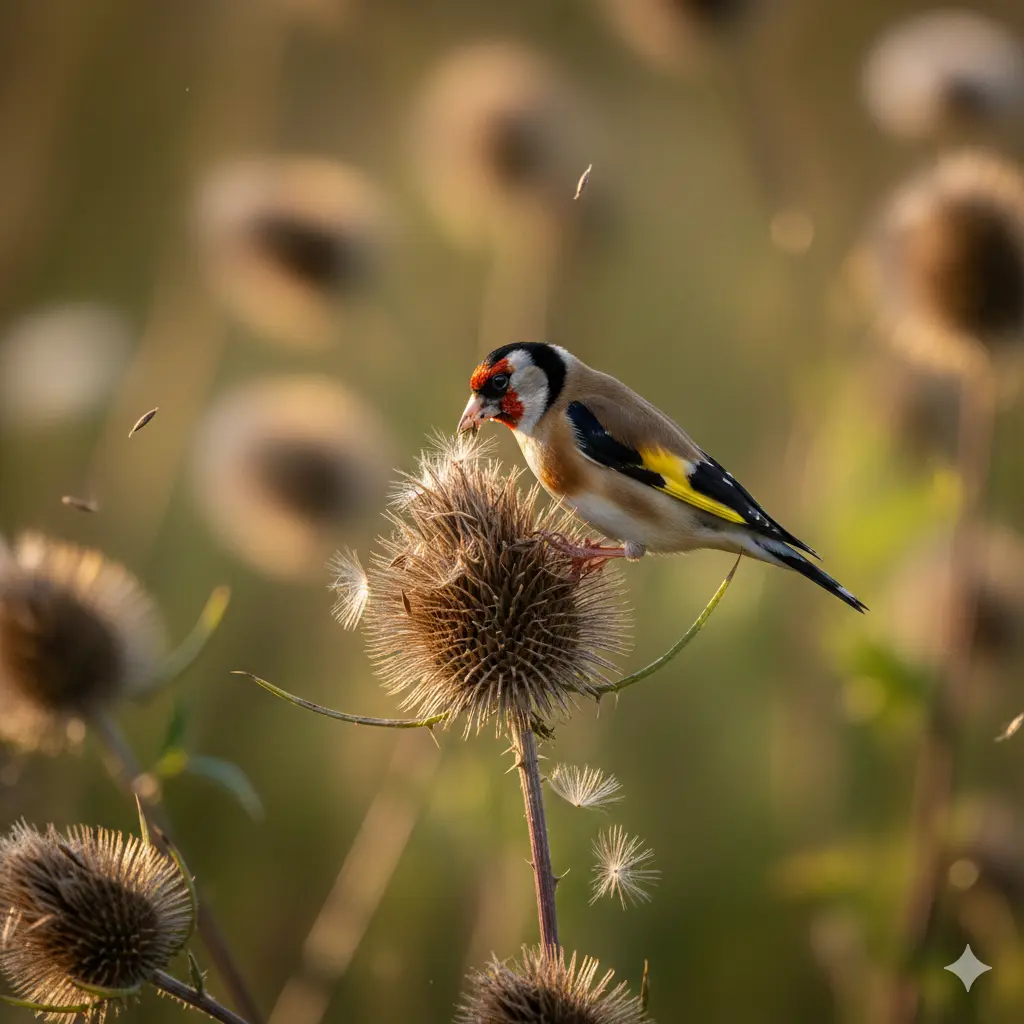
- Thistle (Nyjer) and Teasel: Their absolute favorite food (hence the name "Thistle Finch").
- Chicory and Dandelion: Key for digestion.
- Hemp and Sunflower Hearts: Provide these in very small quantities as they are high in fat and can lead to obesity.
Essential: Cuttlebone and mineral grit must be available at all times for calcium and digestion aid.
Fresh Greens and Minerals
Goldfinches love wild herbs. During the season, offer:
- Half-ripe dandelion heads.
- Chickweed and plantain.
Tip: Never collect plants from the side of busy roads. Heavy metals from exhaust fumes are fatal to small birds.
The Goldfinch Song: Vocal Artistry
The male goldfinch sings almost year-round, except during the molt. Their song is fast, cheerful, and full of "liquid" notes and metallic "tinkling" sounds.
- Song Tutoring: Young goldfinches learn by listening to older males. Serious keepers often use high-quality audio recordings to ensure the young birds develop a "clean" song without flaws.
- Light Influence: Singing is directly linked to day length. As spring brings longer days, the intensity of the song peaks.
Health and Wellness: Early Warning Signs
In nature, goldfinches instinctively hide illness. If you notice your bird is "puffed up" (huddled with ruffled feathers) or lethargic, the issue is likely advanced.
Common Health Issues
- Coccidiosis: A parasitic intestinal disease. Symptoms include liquid droppings and rapid weight loss.
- Prevention: Use a wire floor grate so the bird cannot eat seeds that have fallen into droppings.
- Respiratory Infections: Often caused by drafts or sudden temperature swings. Look for clicking sounds while breathing.
- Mites: External parasites that attack feathers at night or cause scales on the legs.
The Molt: A Critical Period
Once a year (usually late summer), the goldfinch replaces its feathers. This is the most energy-demanding time; the bird stops singing and becomes vulnerable.
- Molting Support: Increase vitamins and amino acids in their diet. Daily bathing water is essential to help new feathers break through the skin.
- False Molt: If a bird loses feathers in mid-winter, it’s a sign of stress, drafts, or a disrupted light cycle (too much artificial light late at night).
FAQ
Why is my goldfinch not singing? Common reasons include molting, drafts, lack of natural sunlight, or stress from frequently moving the cage.
Do female goldfinches sing? No, only males have a developed song. Females use short, pleasant calls for communication.
How long do they live? With proper care, a goldfinch can live 12 to 15 years. Some have been known to reach 20 years.
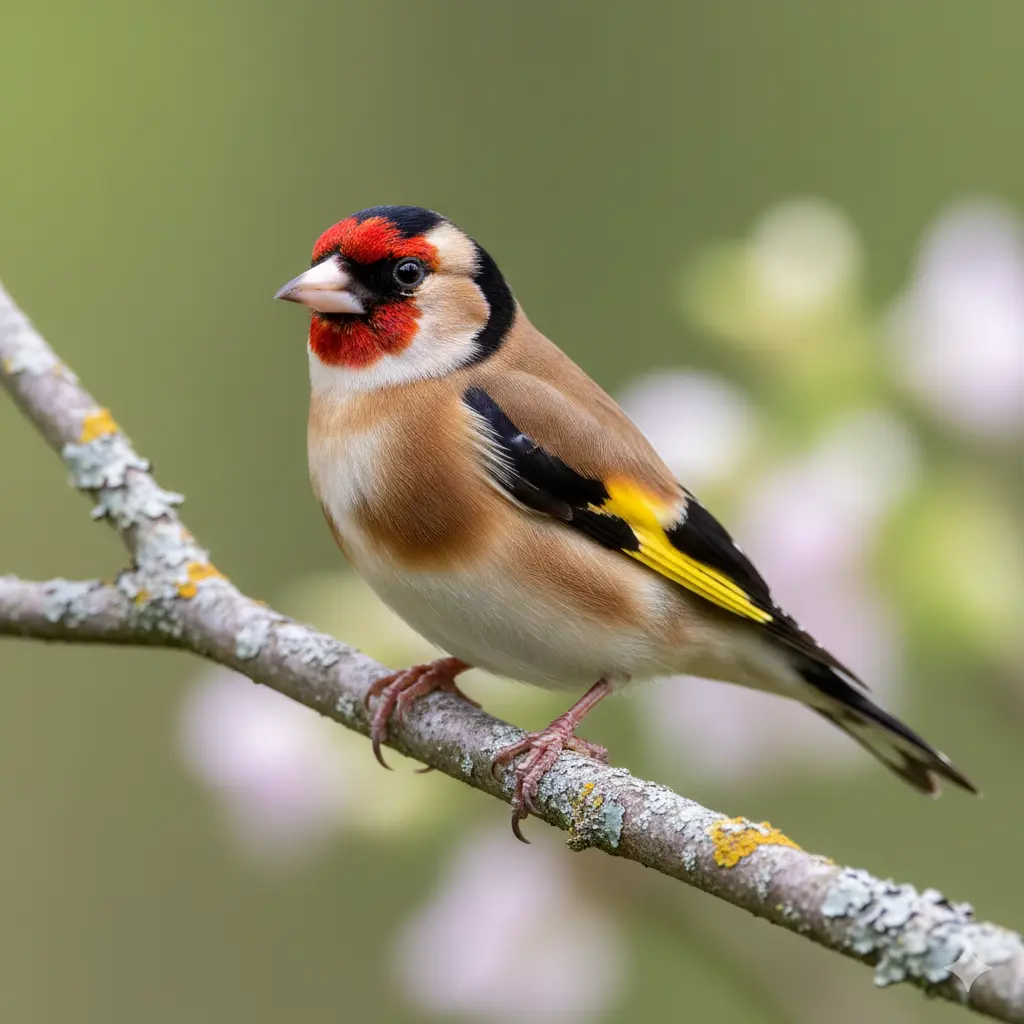
How can I tell a male from a female? The main difference is the "mask." In males, the red mask usually extends past the eye. In females, it typically stops halfway through the eye. Also, the "shoulder" of the wing is jet black in males and brownish-green in females.
Conclusion: A Bird for True Nature Lovers
Keeping a European Goldfinch means having a piece of the wild in your home. They are not "toys" or pets for beginners who lack the time for daily hygiene and specific dietary needs. However, for those who hear a goldfinch sing at dawn, it’s easy to see why they have been the most prized residents of balconies and courtyards for centuries.
