How to Tame an Indian Ringneck: The Hand-Feeding Method
The Indian Ringneck Parakeet (IRN) is more than just a parrot; it’s a symbol of elegance, history, and incredible adaptability. Their fascinating intelligence and complex problem-solving skills make them one of the most desired—yet often most challenging—pets in the avian world. The biggest hurdle for any new owner is the "acclimation gap": how do you transform a "wild" bird into a tame companion?
The answer isn't found in a bigger cage or expensive toys, but in the palm of your hand. Hand-feeding is the cornerstone of taming. It’s the moment instinctive fear of predators shifts into a conscious decision for friendship. In this guide, we’ll break down the biology of trust and the steps to making your Indian Ringneck a true family member.
The Biology of Fear and Positive Reinforcement
To understand why hand-feeding is so effective, you must understand the IRN brain. In the wild, they are prey. Every movement above their head or a direct, fixed stare is interpreted as a hawk or cat attack.
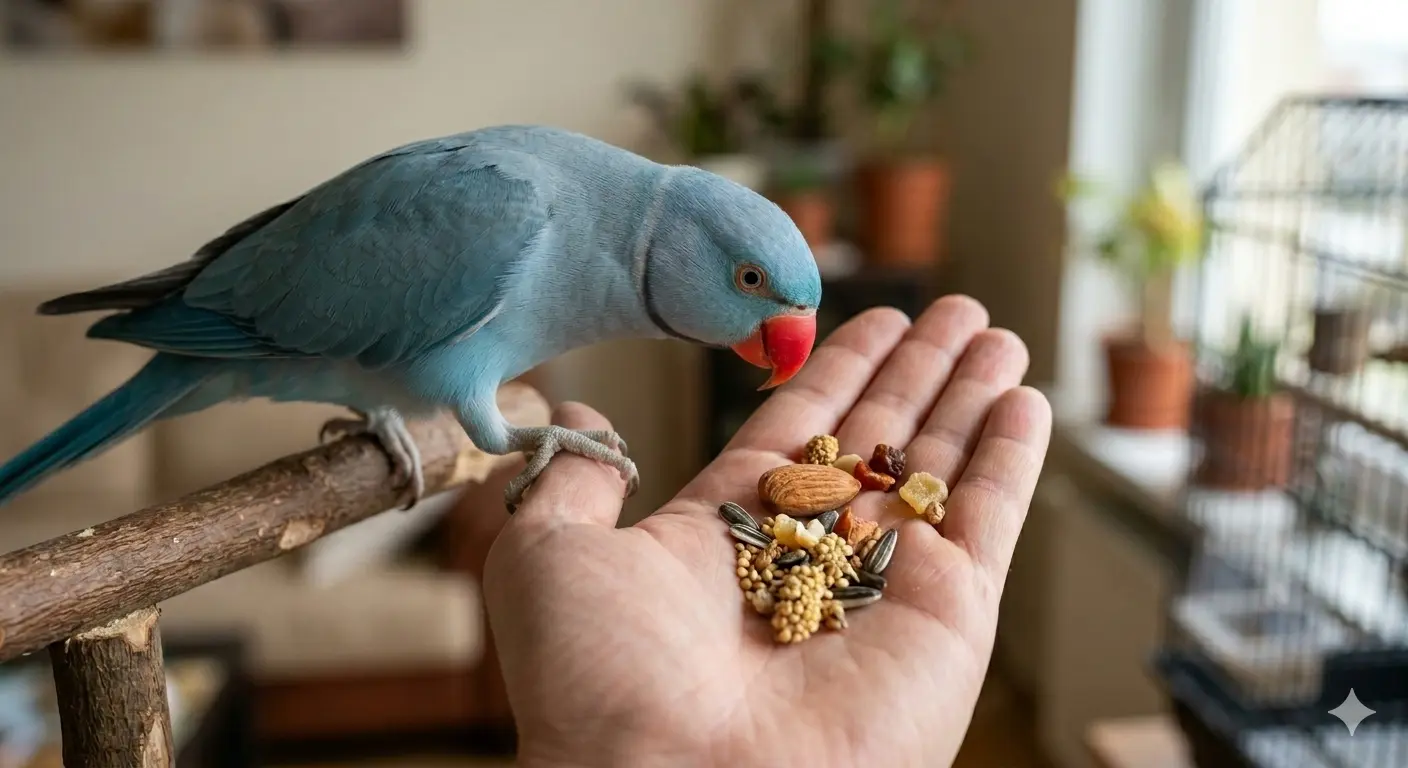
When you offer food by hand, you are applying positive reinforcement. Instead of forcing interaction (which causes stress), you create a situation where the bird chooses to approach you because the reward (treat) outweighs the fear. This process releases dopamine in the parrot's brain, replacing negative associations with human touch with positive ones.
Before You Reach Out: Setting the Stage
Taming begins before you even open the bag of treats. Indian Ringnecks are highly sensitive to the energy of their environment.
1. Cage Placement
The cage should be at eye level or slightly above. If it’s too low, the bird feels vulnerable; too high, and they may feel overly dominant. Ideally, place the cage in a corner of a living area where the family gathers, ensuring the bird has at least one "solid" wall behind them for security.
2. Identifying "Trust Currency"
Not all treats are created equal. To find your bird's favorite, offer a variety in a bowl: sunflower seeds, almonds, walnuts, apple slices, millet, and banana. Whatever disappears first is your "currency." Completely remove this item from their regular meals. If they have 24/7 access to their favorite treat, they won't have the motivation to "negotiate" with your hand for it.
3. Audio Stimulation
Talk to your bird before approaching. Indian Ringnecks love rhythmic, calm speech. Use their name often. Your voice is the bridge that lowers tension before physical contact.
Phase 1: Feeding Through the Bars
The biggest mistake owners make is sticking their hand directly into the cage. The cage is their fortress. The first phase must happen from the outside.
- The Long Stick Technique: If the bird is very skittish, use a long spray of millet. This allows you to stay at a safe distance.
- Closing the Gap: Every day, hold the millet a bit shorter until your fingers are right against the bars.
- Reading Body Language: If the bird retreats to the highest perch and fluffs its feathers aggressively, you're moving too fast. If it stands still and watches your hand, it’s ready.
The goal: The bird should approach the bars without hesitation the moment they see you.
Entering the "Forbidden Zone"
Once the bird takes food through the bars, it’s time to open the door.
- The Still Hand: Slowly place your hand inside, but don't move toward the bird. Hold the treat perfectly still.
- The 30-Second Rule: If the bird doesn't approach within 30 seconds, slowly remove your hand. Don't insist. Let them "regret" missing the opportunity.
- Consistency: Repeat this until the bird takes food from your fingers inside the cage at least 20–30 times before moving to the next step.
The Palm Bridge (Stepping Up)
This is the most important technical shift. The bird must decide to touch your skin.
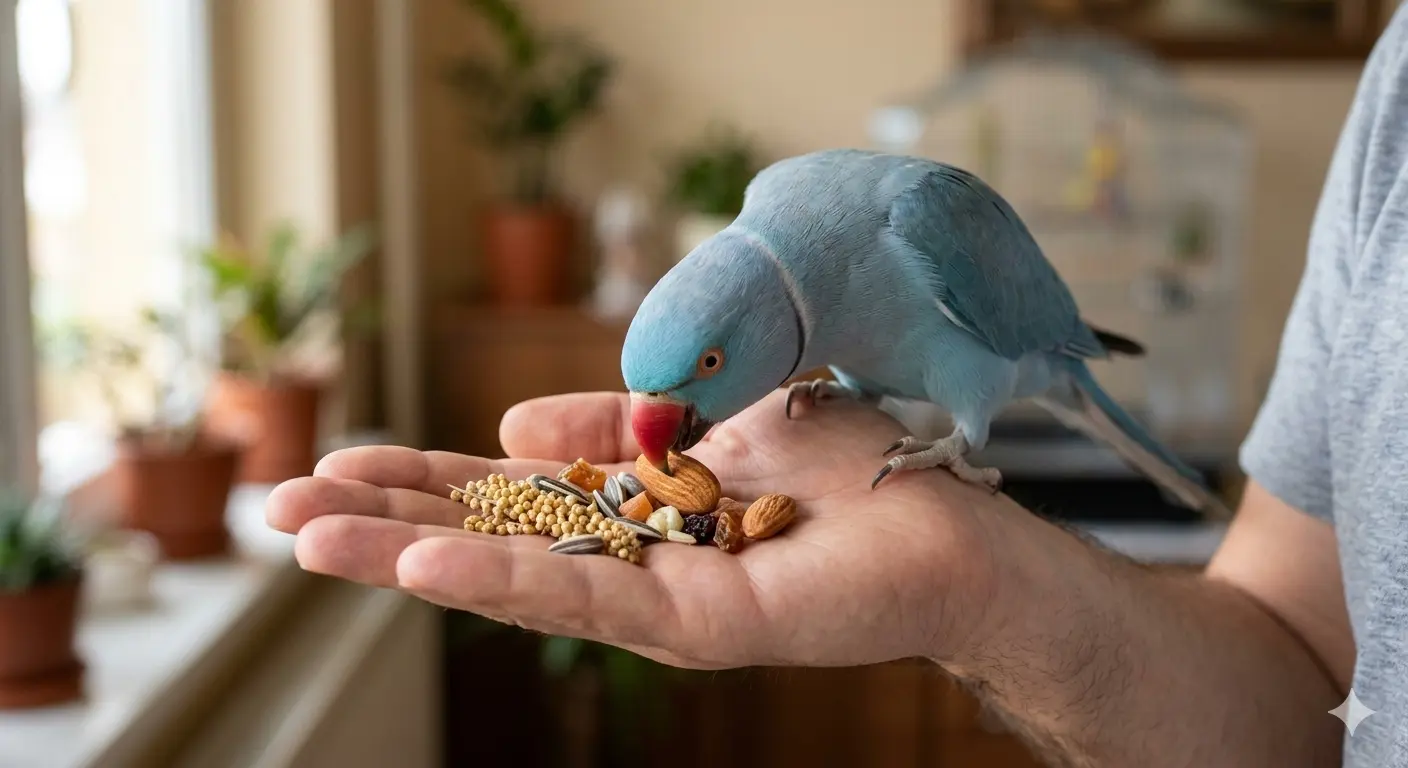
Place a few seeds in the middle of your open palm. Position your hand so the bird cannot reach the food unless it puts at least one foot on your finger or the edge of your palm.
- The Weight Test: The first time you feel the bird's weight and claws on your skin, stay perfectly still. Even if they "test" your finger with their beak (which is usually just checking for stability, not a bite), don't flinch.
- Be a Branch: Your hand must be as stable as a tree branch. If your hand shakes, the bird will feel unsafe and retreat.
Pro Tips to Speed Up Progress
The Mirror Method (Social Mimicry)
Indian Ringnecks learn by observation. If you have another tame bird (even a budgie), feed it in front of the IRN. When they see another bird enjoying a treat without consequences, their natural curiosity and hunger will take over much faster.
Target Training (Clicker Training)
This is a game-changer. Teach the bird to touch the tip of a wooden "target stick" for a "click" sound and a reward. This allows you to "guide" the bird around the cage or room without forcing physical contact, building a cognitive link between work and reward.
Evening Sessions
Birds are often calmer in the evening before the lights go out. Their energy levels drop, and their defensive mechanisms are less "on edge," making it an ideal time for quiet bonding.
Dealing with Biting and "Bluffing"
Biting in Indian Ringnecks is usually an expression of fear, not aggression.
- Fear Bites: The bird is warning you that you entered their space too fast. Back up a step.
- The Bluffing Phase: IRNs go through a "puberty" phase between 6 and 12 months old where they may become aggressive or "mean" for no apparent reason.
- What to do? Stay neutral. If they bite, don't scream (shouting is "drama" to them, and they love it). Simply end the session and ignore the bird. You are taking away what they want most: your attention.
Out-of-Cage Interaction
Taming isn't complete until the bird interacts with you in an open space.
- Safety First: Ensure the room is "bird-proof" (windows closed, curtains drawn, mirrors covered).
- Passive Interaction: Sit on the floor with a bowl of treats. Read a book or scroll through your phone. Ignore the bird.
- The Magnet Effect: When the bird gets hungry or curious, they will explore. If you are the only source of the "super-treat," they will eventually land near you, and finally, on you.

Conclusion: Consistency is Everything
The Indian Ringneck is a bird that remembers. If you lose their trust with a sudden movement or by grabbing them, you’ll have to go back ten steps. Taming is a marathon, not a sprint. Every seed they take from your hand is a brick in the wall of your future friendship.
Be patient, watch their beautiful eyes (which "pin" or dilate when excited), and enjoy the process. The moment your IRN flies to your shoulder for the first time, you’ll know every second of effort was worth it.
FAQ
How long does taming take? Usually anywhere from 2 weeks to 2 months, depending on the bird's age and your consistency.
Can an adult Indian Ringneck be tamed? Absolutely. It takes longer, but their intelligence allows them to change their mind about humans even later in life.
Should I clip their wings for easier taming? Modern avian experts generally advise against wing clipping. A bird that can fly feels safer because it has the choice to leave. A bird forced into contact often becomes more depressed or aggressive.
