
Understanding Zebra Finch Sounds: Decoding Their Vocal World
Walk into a room with a flock of Zebra Finches (Taeniopygia guttata), and the first thing you’ll notice isn’t their bright orange cheeks—it’s the noise. It’s not the loud screeching of a parrot; it’s a rhythmic, metallic "meep-meep" that sounds like tiny toy trumpets or a soft electronic buzzing. To the untrained ear, it sounds like chaos, but in reality, it is a Symphony of Sounds—a complex, structured language these tiny birds use to organize their social lives.
As we highlighted in our Zebra Finch Pet Guide, their social nature is the key to their happiness. And the key to social structure is communication. Zebra Finches don’t just "sing" because they are happy; they are negotiating territory, confirming pair bonds, warning of danger, and tutoring their young. In this guide, we will break down the physiology, acoustics, and meaning of every sound your finches make.

How Such a Small Bird Makes Such a Big Sound
Zebra Finches are tiny, but their vocal organ, the syrinx, is an engineering marvel. Unlike humans, who produce sound in the larynx using one set of vocal cords, birds have a syrinx located deep in the chest where the trachea splits into two bronchi.
A Zebra Finch has two independent membranes. This means they can control airflow through both bronchi simultaneously. The result? They can produce two different frequencies at the same time or create rapid, complex tones that the human ear can barely distinguish. This is the secret behind their characteristic metallic "honking."
This physiology allows their calls to remain clear even in a noisy flock. When ten finches are "honking" at once, the syrinx ensures their specific, individual voice can still be heard within the symphony.
The Zebra Finch Dictionary
If you want to quickly decode what your finches are telling you, here is a structured overview of common sounds:
| Sound (Acoustic Description) | Meaning | Context (When do you hear it?) |
|---|---|---|
| "Meep" / "Honk" (Short, metallic) | Contact Call / "I'm here" | Constant, while moving around the cage. |
| "Wsh-wsh-wsh" (Harsh, low rasp) | Aggression / Warning | During a squabble over food or a perch. |
| "Tiiii" / Squeaking (High-pitched) | Begging Call | Chicks asking parents for a meal. |
| "Zrrrt!" (Sharp, rapid buzz) | Alarm Call | When they see sudden movement or a pet cat. |
| Complex Song (Structured melody) | Courtship / Identity | Males only, usually directed at a female. |
The "Honk": The Foundation of Social Cohesion
The "meep-meep" is the sound finch owners hear most often. In professional literature, this is the Contact Call. It is the acoustic glue that keeps the flock together.
In the wild, Zebra Finches inhabit the vast, open landscapes of Australia, where flock movement must be coordinated. When a flock flies from one bush to another, it’s impossible for every bird to see everyone else. The "honk" is the solution. Every bird calls out constantly (sometimes several times a minute) to tell the rest: "I'm here, I'm safe, the flock is whole."
What This Means for Owners
This buzzing is a sign of a healthy social structure. If your Zebra Finches stop honking and the cage goes silent, it is often the first sign of illness or extreme stress. A "silent" finch is almost always a bird in trouble.
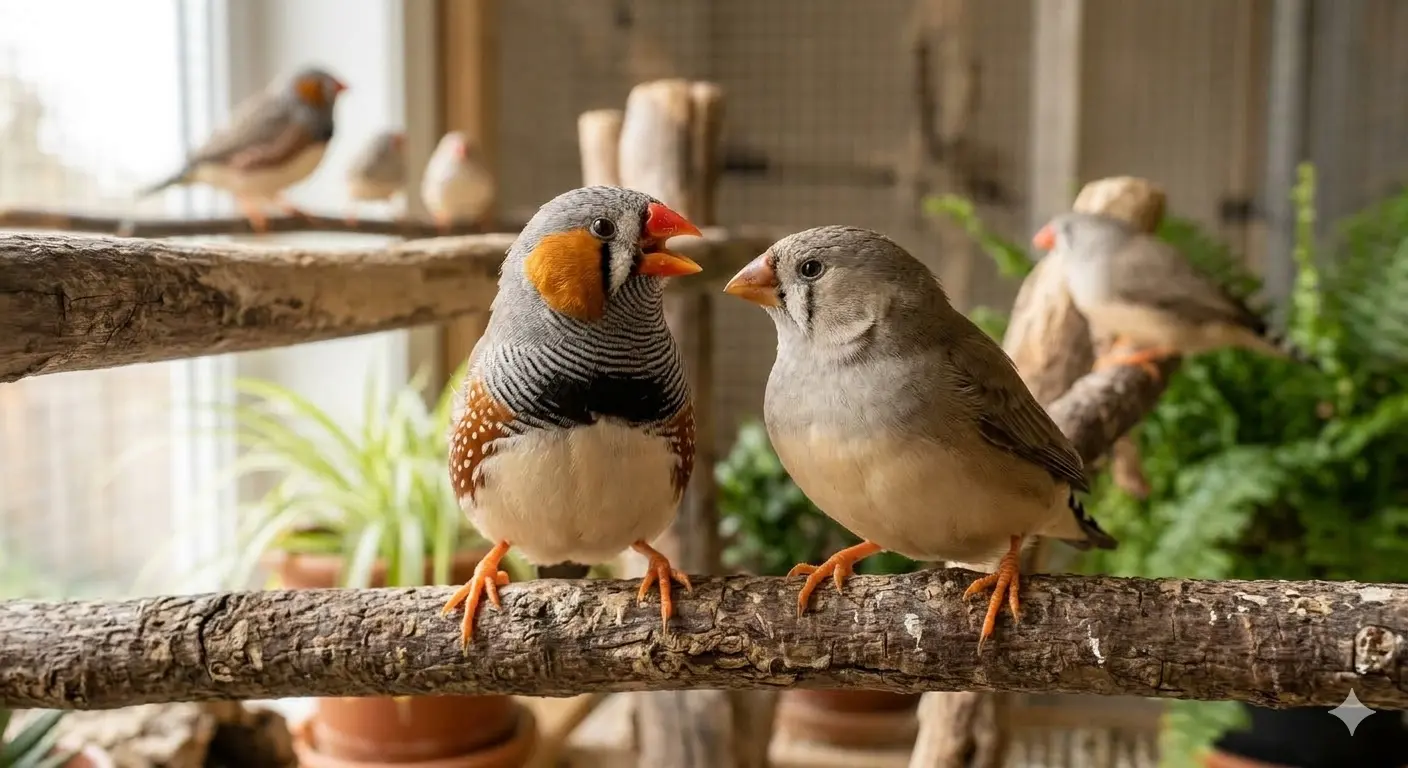
The Male Zebra Finch Song
The song of a Zebra Finch is one of the most fascinating aspects of their biology—and it is not the same as a contact call. While both sexes honk, only males sing the complex, structured song.
1. Acoustic Structure
A Zebra Finch song is not random. It follows a strict pattern:
- Intro Notes: Several short "clicks" or "beeps" to get the female's attention.
- Syllables: A variety of distinct sound elements linked together.
- Motif: This sequence of syllables is repeated in a fixed order, creating the bird's unique "motif."
Every male has an acoustic fingerprint. In a flock of 100 birds, a female can identify her mate solely by his specific song.
2. How They Learn to Sing
Zebra Finches aren't born with their song; they learn it, much like humans learn a language. A young male has a "critical period" (between 30 and 90 days of age) where he listens to his father or a "tutor" and tries to imitate him.
The process has three phases:
- Sensory Phase: The young bird creates a "template" of the father's song in its brain.
- Subsong (Babbling): The young male makes quiet, unformed sounds, practicing his vocal muscles.
- Crystallization: By day 90, the song is "set" for life. A Zebra Finch will never change his song once it has crystallized.
Aggression and Alarm: The "Zrrrt!" Factor
Zebra Finches are social, but they aren't always peaceful.
The Scolding Call ("Wsh-wsh")
When two finches chase each other over a favorite perch, you'll hear a harsh, rasping sound. This is the Scolding Call. It’s usually paired with body language—the bird opens its beak wide and lunges forward. This is a clear "back off" signal.
The Alarm Call ("Zrrrt!")
This is a sharp, rapid buzzing sound. In the wild, the first bird to spot a hawk makes this sound, and the entire flock immediately freezes or dives for cover. In your home, this might be triggered by a sudden movement, a new object in the cage, or a cat at the window.
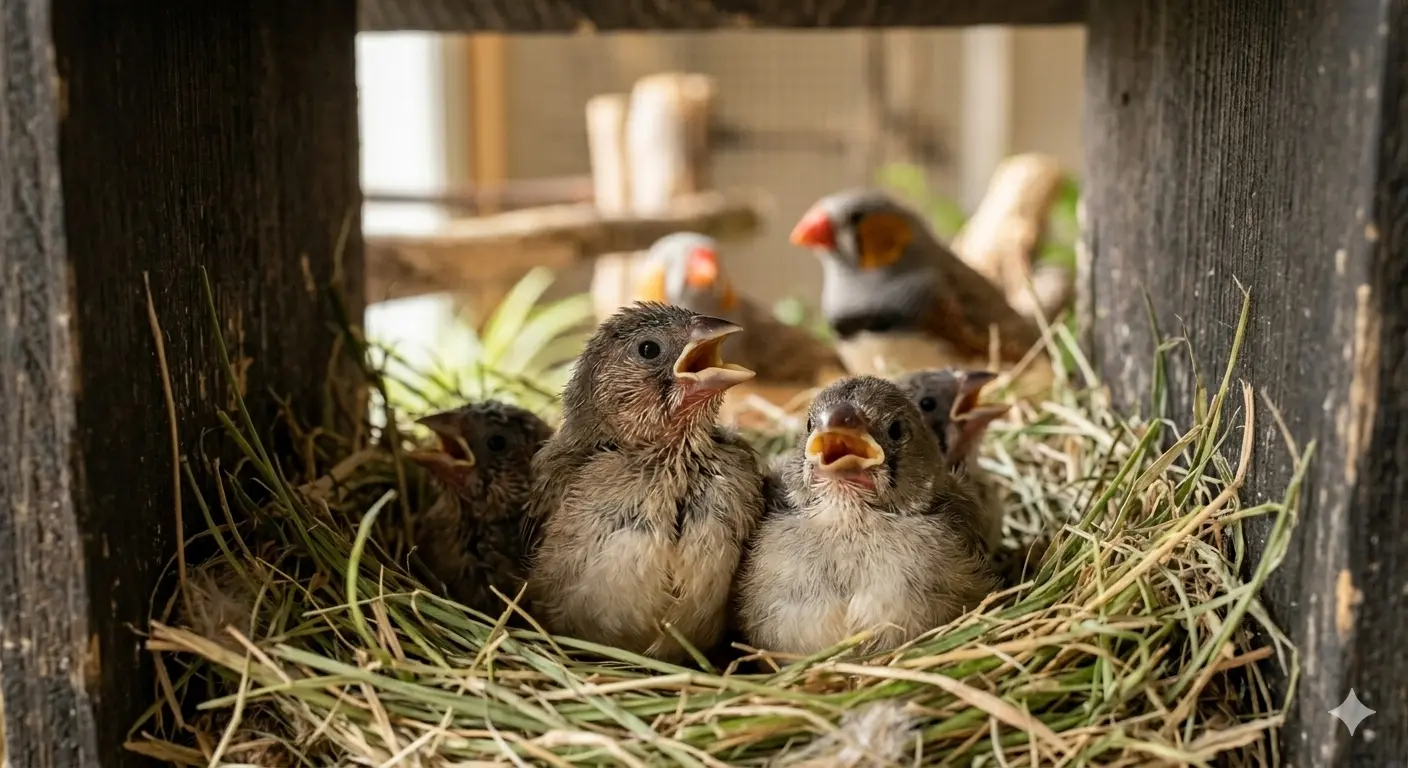
The Begging Call: "Feed Me!"
Baby finches have a very specific sound designed to be heard inside a crowded nest. It is a high-pitched, constant "tiiii" squeak. It is acoustically designed so that parents can identify which chick is the hungriest (loudest) even in a dark nesting box.
Using Sound to Diagnose Health
As an owner, you should be an "acoustic detective." Changes in sound are often the only indicator that a bird is unwell.
- Wheezing or Clicking: If your finch makes a faint whistling or clicking sound with every breath, it’s a sign of respiratory distress, likely an infection or air sac mites.
- Loss of Voice: If a male tries to sing but no sound comes out (or it sounds "hoarse"), it indicates a problem with the syrinx or air sacs.
- Social Silence: If the whole cage goes quiet, the flock is likely under collective stress.
Maintaining Acoustic Balance
White Noise and Singing
Many owners notice that finches sing louder when you turn on a vacuum, radio, or TV. This is an instinctive drive to "out-sing" the background noise to stay heard within the social structure.
The Importance of Night Silence
Just as they need sound during the day, finches need absolute silence at night. Covering the cage ensures they get 10-12 hours of restful sleep. Without this, birds become irritable and aggressive, and their immune systems can drop.
Conclusion: Listen to Your Flock
Zebra Finches don’t just make noise; they are in constant negotiation. From the "honks" that keep them together to the unique artistry of the male's song, every sound has biological meaning. Learning to decode their vocabulary is the key to being a great bird owner.
FAQ
Why doesn't my female finch sing?
Biology dictates that complex songs are for males. Females have the neurobiology for contact, aggression, and alarm calls, but not for learning structured motifs.
Can Zebra Finches learn to speak?
No. Zebra Finches are specialized song-learners, but they only imitate their own species. Unlike parrots, they do not mimic human speech or household sounds.
Why is my male singing to a mirror?
He sees his reflection as a new, rival finch. He is singing either to establish social contact or to defend his territory.
