Cockatiel Colors and Mutations – A Comprehensive Overview
When you imagine a cockatiel, the first thing that probably comes to mind is a grey bird with a bright yellow crest and those irresistible orange "blushed" cheeks. That is the Standard Grey Cockatiel, the same one that has roamed the Australian outback for centuries. However, in the world of pets today, the situation is much more colorful.
Thanks to decades of careful breeding, we now enjoy an incredible spectrum of colors and patterns known as mutations. In this guide, we will explore the most popular variants in detail:
- Standard Grey – The natural look with the strongest immune system.
- Lutino – Recognizable pale yellow birds with red eyes.
- Pearl – Famous for their unique "laced" patterns on the feathers.
- Pied – A combination of colors where no two birds are exactly alike.
- Cinnamon – Warm, brownish tones for fans of elegance.
- Whiteface – A modern mutation without the orange cheeks.
- Albino – Stunning, pure snow-white cockatiels.
If you’re wondering what the difference is between a Lutino and an Albino cockatiel, or why your Pearl cockatiel is suddenly changing color—you’ve come to the right place.
Standard Grey (Wild Grey) Cockatiel
Though some call it "common," the grey cockatiel is anything but ordinary. It is genetically the "purest" and is often considered the hardiest and longest-lived variant.
- Characteristics: Dark grey body, white wing edges, and bright orange cheek patches. After maturing, males develop a bright yellow face, while females retain a greyish-yellow face.
- Fun Fact: These birds are usually the loudest and most communicative. Their natural instincts are well-preserved, making them often the easiest to train for tricks.
Lutino Cockatiel
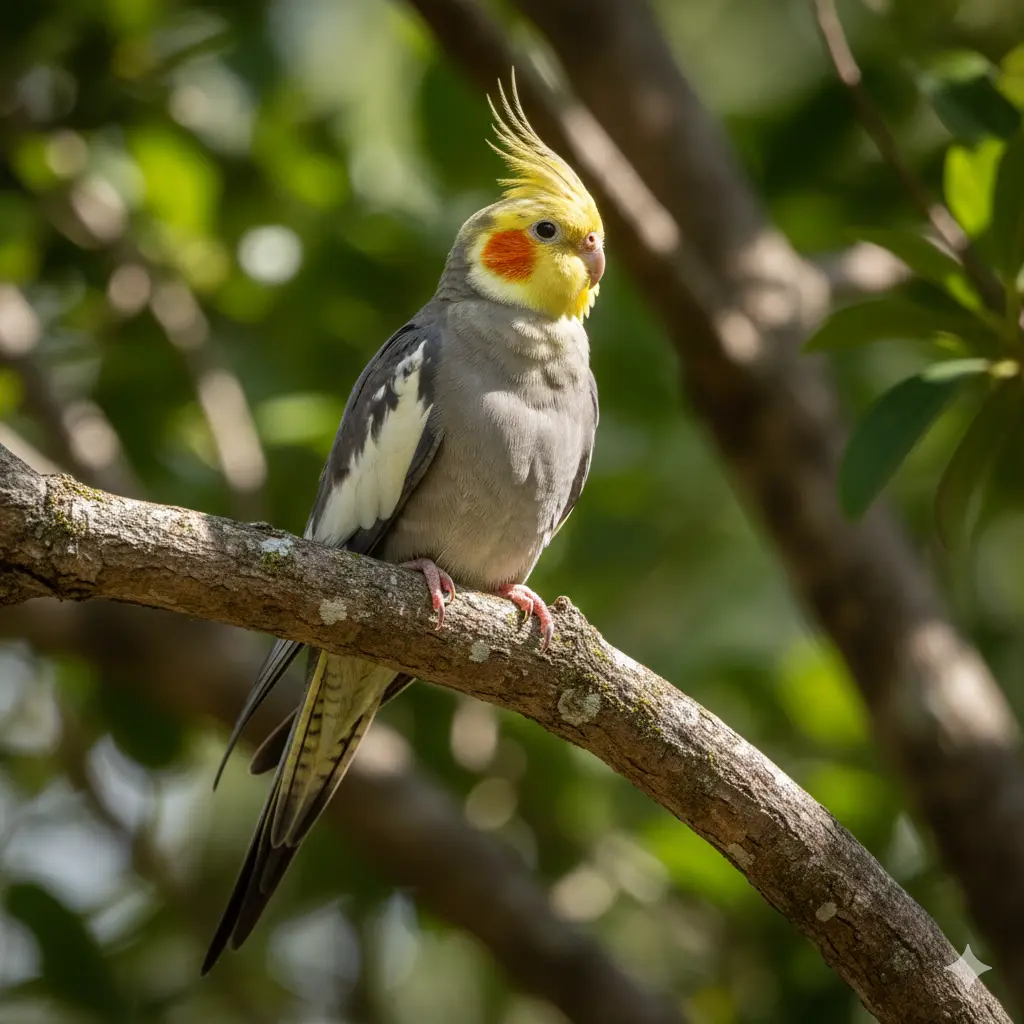
Lutino is arguably the most popular mutation in the world. These beautiful, fully yellow or cream-white birds with red eyes bring brightness to any room.
- Characteristics: Due to a lack of grey pigment (melanin), they are entirely light-colored. The cheeks remain bright orange, creating a beautiful contrast.
- Fun Fact: Some Lutino cockatiels may have a small "bald spot" immediately behind the crest. This is a genetic trait of this mutation and is not a cause for concern, though modern breeders aim to eliminate it through selection.
Pearl Cockatiels
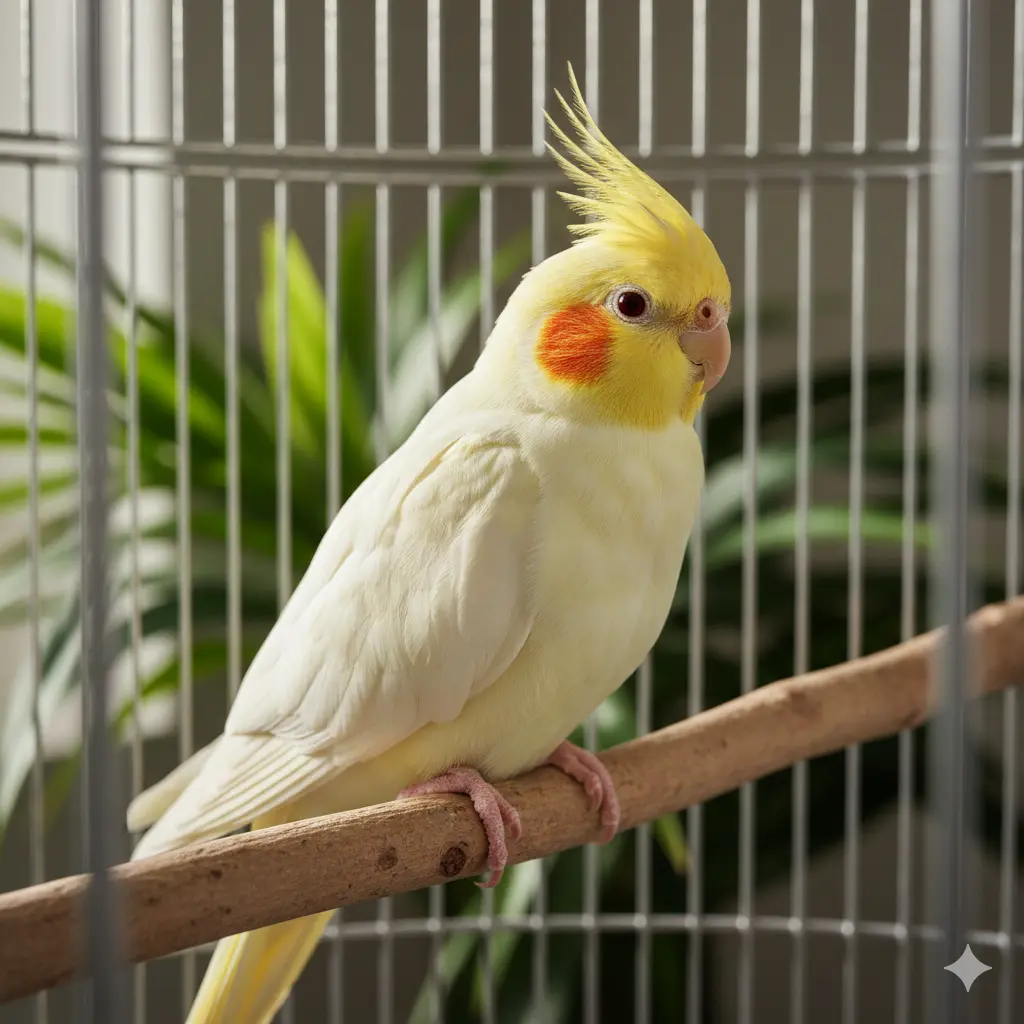
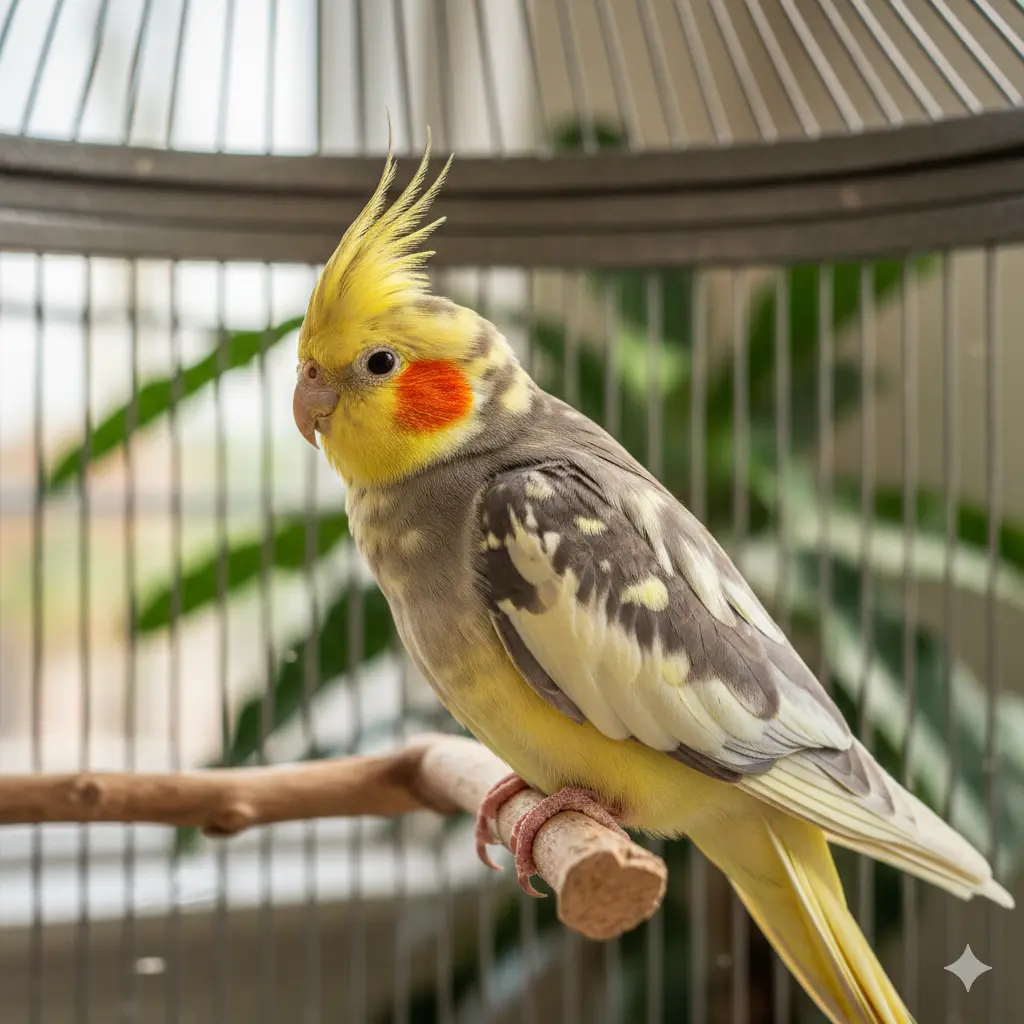
Visually, this is perhaps the most impressive variant. The feathers on the back and wings look as if they’ve been sprinkled with thousands of tiny pearls or delicate lace.
- Characteristics: Pearl cockatiels are unique because males "lose their pearls" as they age (after the first or second molt) and end up looking similar to a Standard Grey, while females keep their beautiful patterns for life.
- Appearance: The patterns can be yellow or white on a grey base, creating a unique "marbled" effect.
Pied Cockatiels
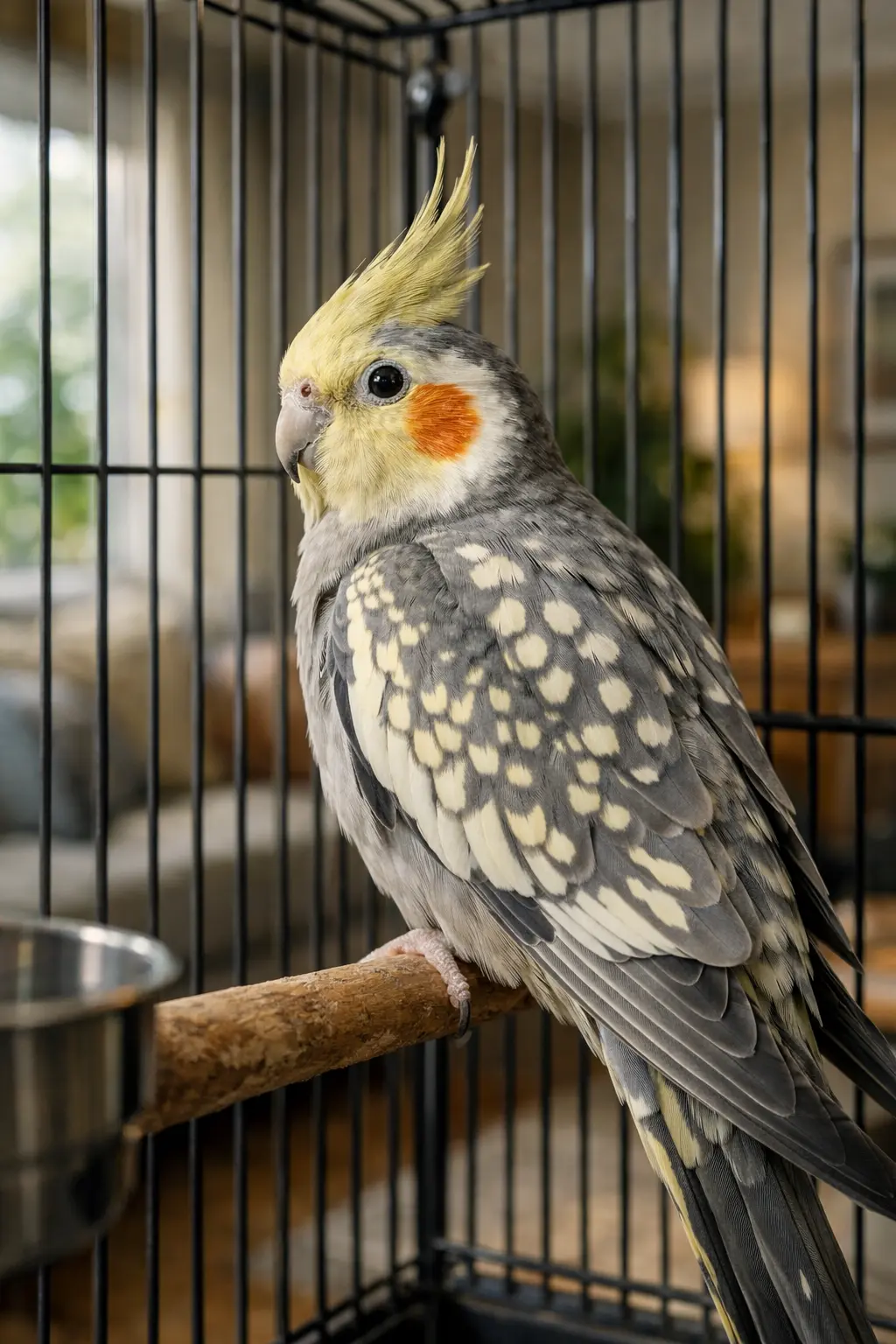
If you want a bird that looks like no other, look for a "Pied" cockatiel. In these birds, the pigment is randomly distributed, meaning no two pied cockatiels in the world are identical.
- Appearance: A combination of grey and yellow (or white) in the form of irregular patches. Some might have only one grey wing, while others are almost entirely yellow with just a few grey feathers.
- Character: Owners often claim that Pied cockatiels are particularly goofy, energetic, and unpredictable in their play.
Cinnamon Cockatiels
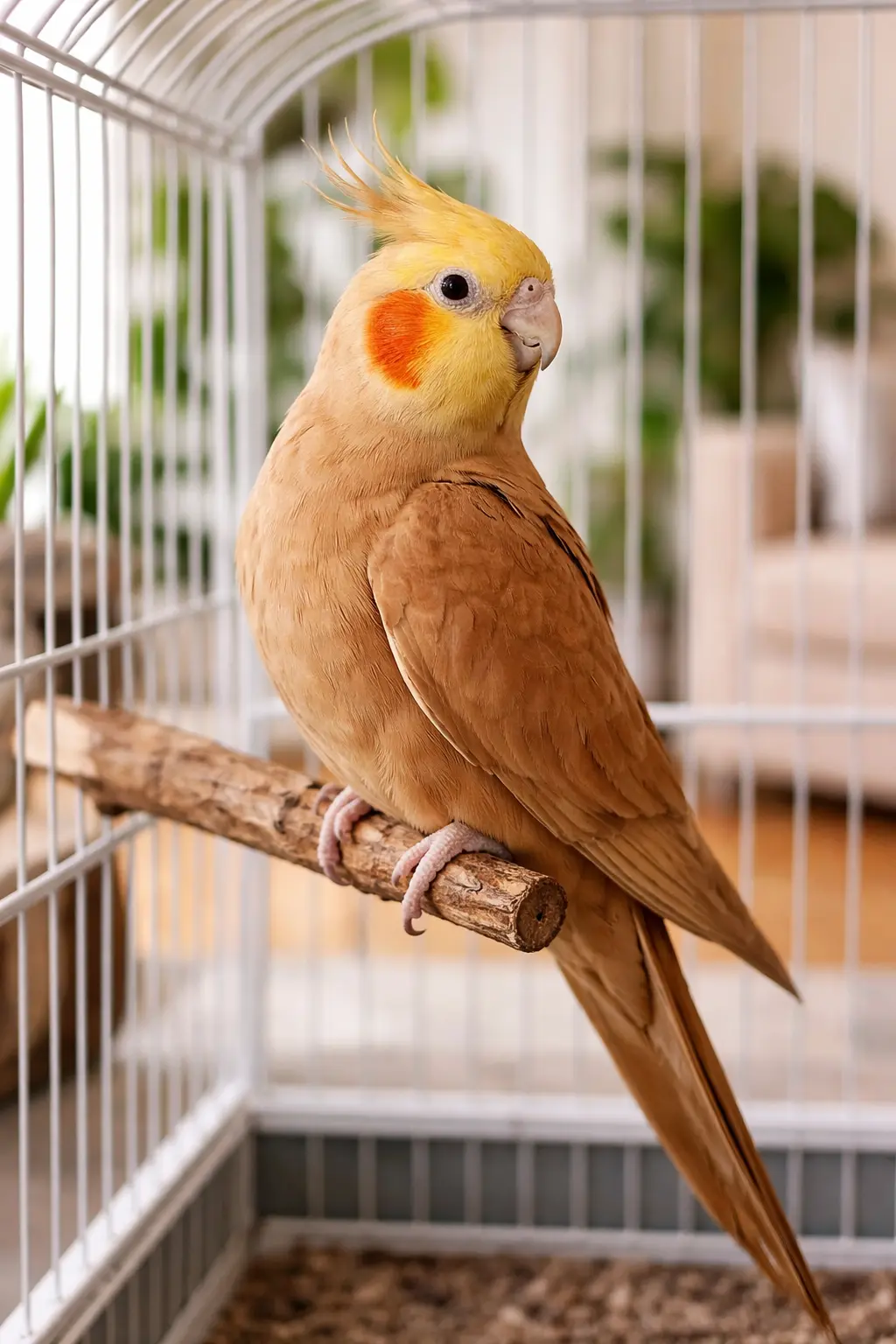
Instead of the cold grey color, these cockatiels sport a warm, brownish hue reminiscent of cinnamon or coffee with milk.
- Appearance: Their feathers visually appear softer, and their eyes are often not pitch black but rather a dark claret/maroon (best seen under bright light when they are chicks).
- A perfect choice for owners who prefer warm, earthy tones and a more subtle, elegant look.
Whiteface Cockatiels
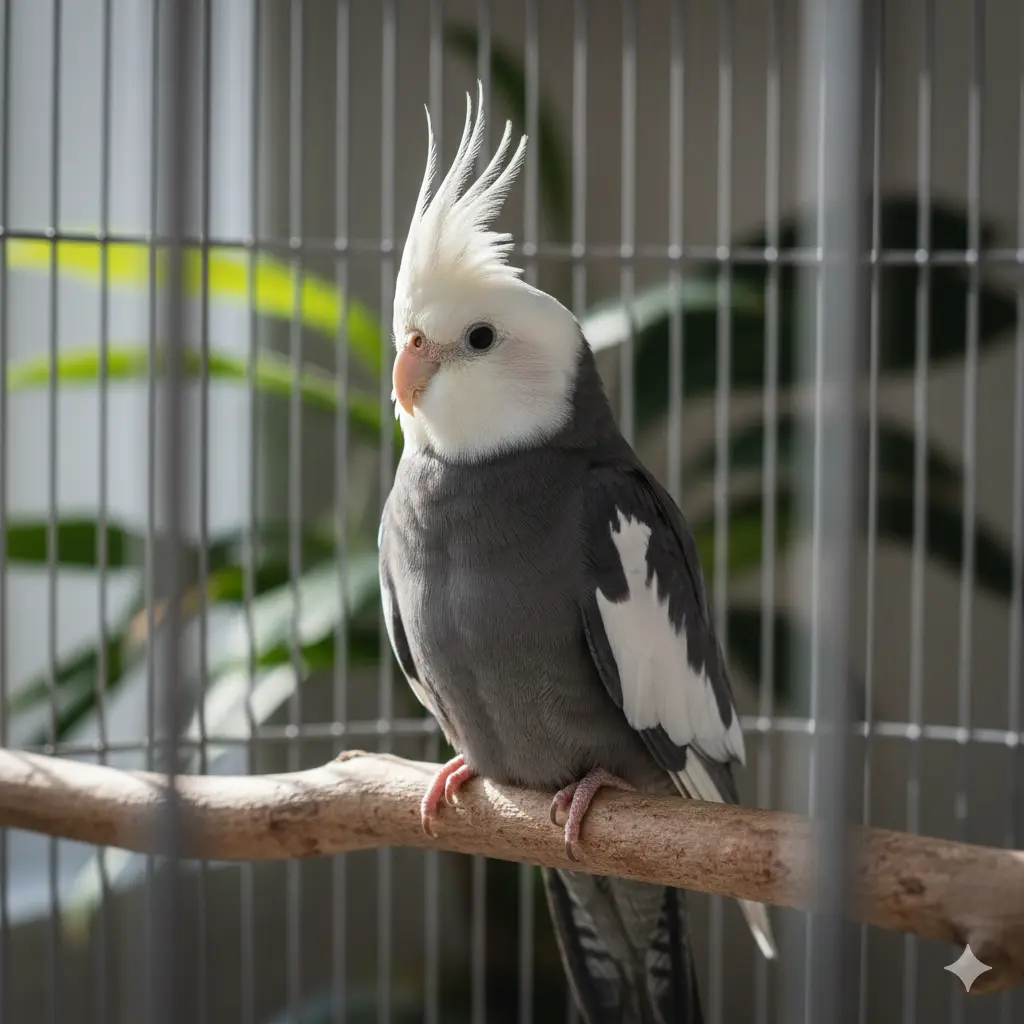
This is one of the most sought-after mutations in modern breeding. Whiteface cockatiels have no yellow pigment at all, and most strikingly—no orange cheeks!
- Appearance: Males have a crisp white face against a charcoal-grey body, which looks incredibly powerful and monochromatic. Females generally have a completely grey face.
- Vibe: They look very "aristocratic" and completely different from the classic image of a parrot most people have in mind.
Albino Cockatiel
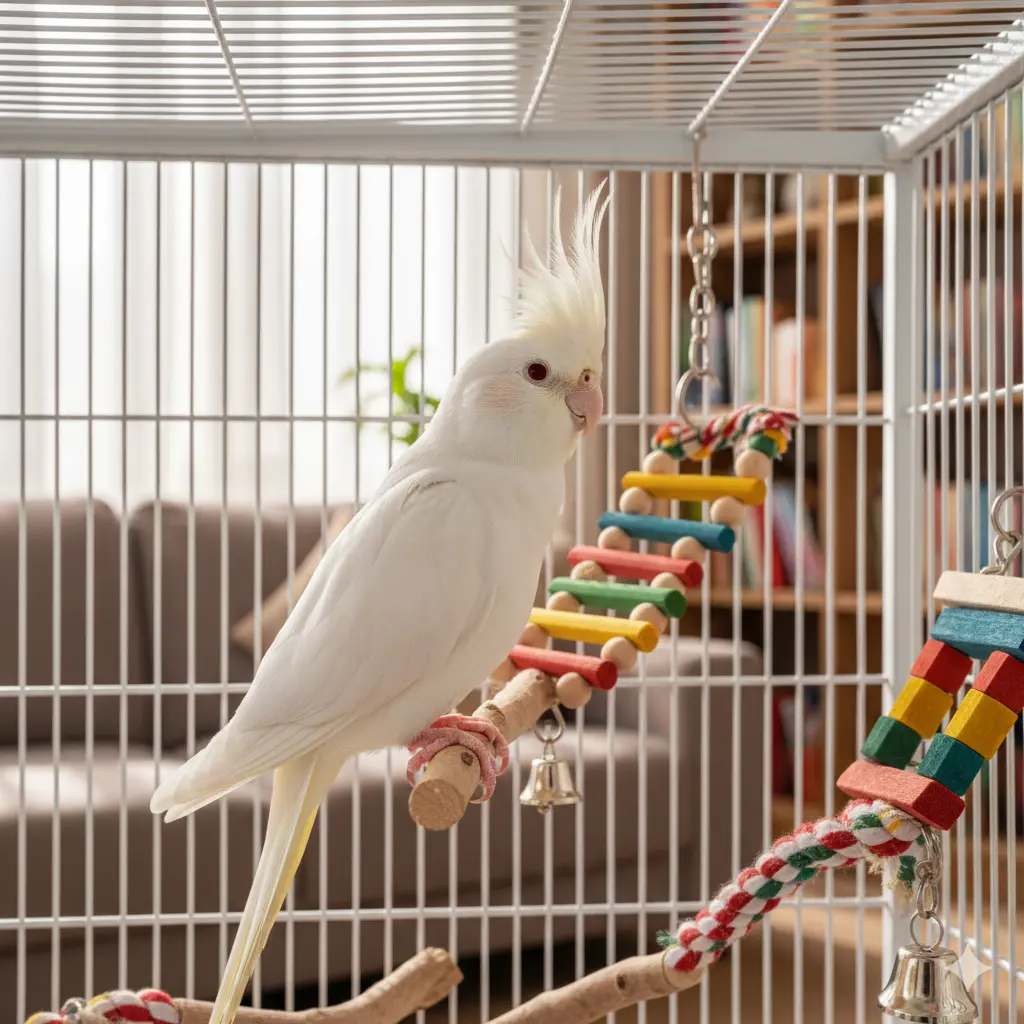
While we call them Albino, they are technically a combination of the Whiteface and Lutino mutations. These birds are pure snow white, with no patterns, red eyes, and pink feet.
- Rarity: They are quite rare and require slightly more careful attention. Since they lack pigment, their eyes are more sensitive to direct, harsh sunlight.
- Symbolism: Often seen as a symbol of peace, they look like little white angels in their cage.
Genetics for Beginners: How Do These Colors Occur?
You might wonder how it’s possible to get a snow-white bird in a cage from two grey birds in nature? The answer lies in the fascinating world of genetics. Don't worry, we'll explain it simply.
Sex-linked Genes
This group includes Lutino, Cinnamon, and Pearl. In these cases, males can be "split" for the gene (they look grey but carry the gene for, say, yellow), while females cannot be carriers—they either show the color or they don't.
Recessive Genes
Such as Whiteface and Pied. To get birds of these colors, both parents must carry that specific gene. This makes them more challenging to breed but also more valuable.
What Does Color Say About Health and Needs?
While color doesn't define personality, it can affect certain needs. For example, in Lutino and Albino cockatiels, red eyes mean the bird lacks the natural UV protection provided by dark pigment. If you notice your pet squinting often, move the cage away from direct, harsh sunlight.
Also, the Pied mutation is often considered exceptionally strong because it requires less "genetic heavy lifting" than pure Albino variants. On the other hand, Cinnamon cockatiels often have such silky feathers that they require more regular bathing to maintain that incredible texture.
Buying Tips: How to Choose the Right Bird?
When visiting a breeder, it’s easy to focus only on the prettiest color. However, beauty is secondary to health. Pay attention to the following:
Check Eyes and Nostrils
Regardless of color, eyes must be clear. The nostrils above the beak should be dry—any discharge is a sign of illness.
Inspect Feather Quality
Even the lightest feathers should have a natural sheen. If the feathers around the vent (tail area) are dirty, it could indicate digestive issues.
Activity Level and Behavior
A healthy cockatiel, of any color, will be curious. If a bird sleeps constantly while others are active, that is a red flag.
Do Colors Change Throughout Their Life?
Apart from the mentioned Pearl males who lose their spots, the base color remains the same. However, the quality of the color can vary:
- Bathing: A white cockatiel will turn "grey" from household dust if you don't provide regular baths.
- Diet: A diet that is too fatty can damage the liver, which in some mutations shows up as abnormal yellow patches in the feathers.
Does Color Affect Personality?
Scientifically—no. However, owner experiences often suggest:
- Grey Cockatiels are often the boldest and quickest to tame.
- Lutino and Albino can be a bit calmer and more gentle.
- Males of any color will always be more "talkative," while females tend to be quieter.
How to Maintain the Beauty of These Colors?
- Diet: Without Vitamin A and minerals, feathers lose their luster. To keep your bird's plumage vibrant, proper cockatiel nutrition is key.
- Sunlight: Indirect sunlight is essential for Vitamin D3 synthesis.
- Hygiene: A clean cage means clean feathers.
Frequently Asked Questions
Do cockatiel colors change as they grow?
Yes, in some mutations—especially males—plumage can change after the first molt.
Which cockatiel mutation is best for beginners?
Standard grey and pied are often the hardiest and easiest to care for.
Do albino and lutino cockatiels need special care?
Yes. They may need extra protection from direct sunlight because of their sensitive eyes.
Does color affect personality?
Not scientifically, though owners often describe greys as bolder and lutino or albino birds as calmer.
How do I spot a healthy cockatiel when buying one?
Clear eyes, dry nostrils, clean feathers, and curiosity matter more than color alone.
Conclusion: Which Color Should You Choose?
In the end, color is just an "outfit." When your cockatiel lands on your shoulder for the first time and asks for a head scratch, you won't care if they are grey, yellow, or white. Every cockatiel carries a huge amount of love in their tiny body.
Choose with your heart. If you are a beginner, Standard Grey or Pied are phenomenal choices. If you want something visually unique, Whiteface or Pearl will take your breath away every single day.
