
Zebra Finches as Pets: Care for These Social Birds
If you are looking for a pet that will bring constant movement, a quiet, melodic "concert," and fascinating social interactions into your home, Zebra Finches are an unrivaled choice. While canaries are solo artists, Zebra Finches are members of an orchestra. Their life is a series of continuous dialogues, mutual preening, and teamwork.
In this guide, we will explore why Zebra Finches have become synonymous with "social birds," how to provide them with a home that simulates the Australian savanna, and why their psychology is one of the most interesting in the world of pet birds.
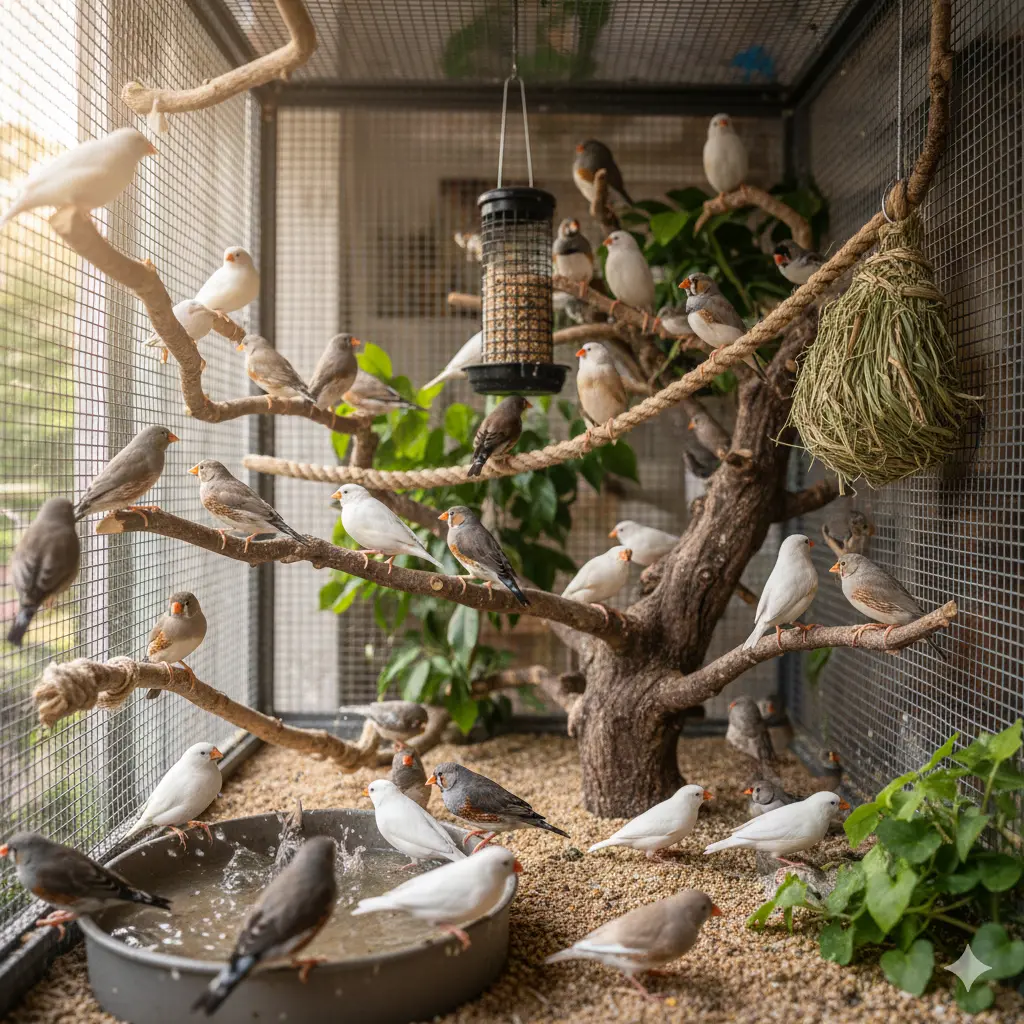
Flock Psychology: Why a "Solo Finch" is a Sad Finch
The first and most important lesson for any future owner: Zebra Finches are extremely social beings. In their natural habitat, they live in flocks numbering hundreds of individuals. For a Zebra Finch, being alone isn't just boring—it is stressful and life-threatening.
The Rule of Pairs and Groups
A Zebra Finch living alone will quickly fall into depression, stop eating, or become lethargic. They need someone who speaks their language 24 hours a day.
- A Pair (Male and Female): The most natural setup, but be prepared for their breeding instinct, which is very strong in this species.
- Two Males: Often function perfectly if there is no female nearby to trigger rivalry.
- A Colony: If you have space for a large cage (aviary), keeping 6 or more finches gives you the chance to see their true nature—hierarchy, friendships, and group sleeping.
Cage Dimensions: Flying Over Climbing
Zebra Finches are incredibly fast. They do not use their beaks to climb bars like parrots; they fly exclusively.
Width Over Height
As with canaries, vertical cages are useless. A Zebra Finch needs horizontal space.
- Cage Size: The minimum length for one pair is 60-75 cm (approx. 24-30 inches).
- Why? Zebra Finches make short, explosive flights. If the cage isn't long enough, they will only hop from perch to perch, leading to chest muscle atrophy and obesity.
Bar Spacing
Zebra Finches are tiny. The spacing between bars must not exceed 1 cm (approx. 0.4 inches). Anything more poses a risk of the bird trying to squeeze its head through and getting stuck, which is fatal in most cases.
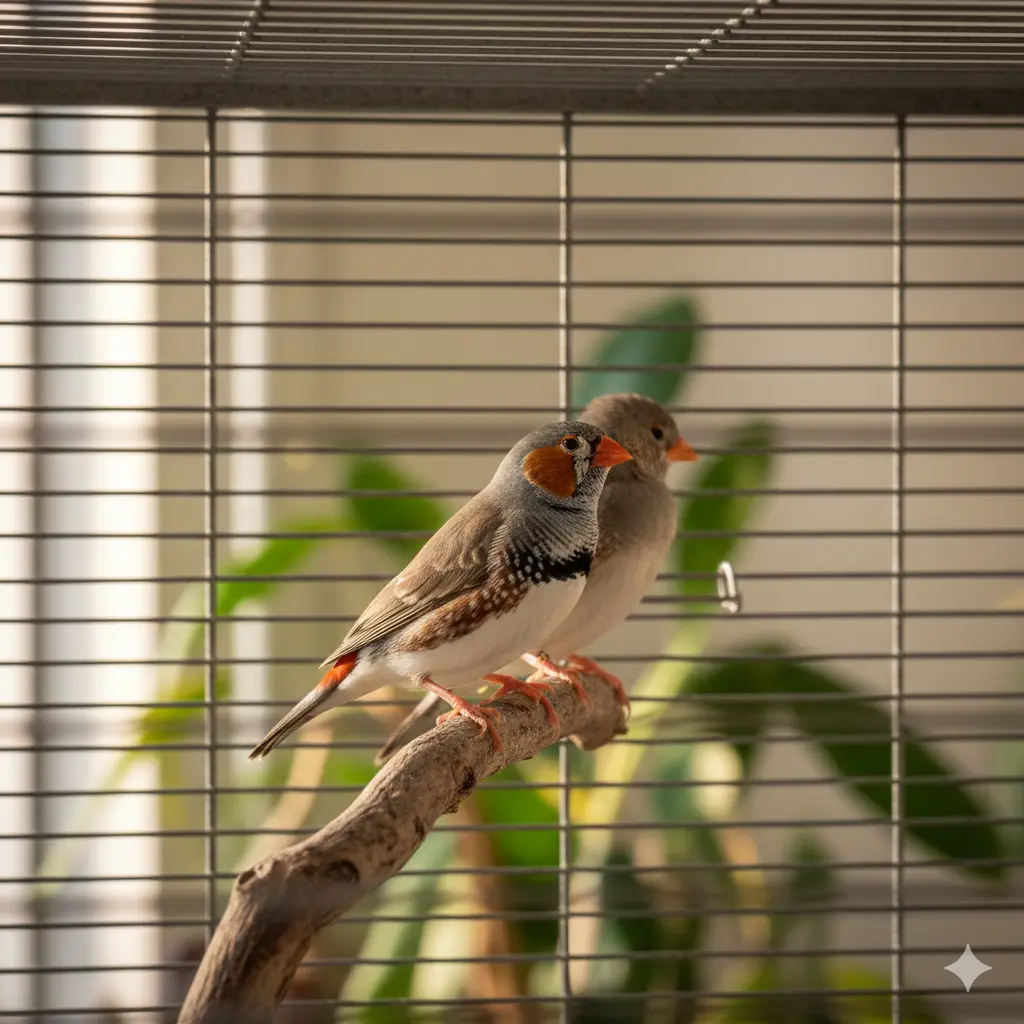
Diet for an Active Bird: More Than Just Seeds
Zebra Finches have a fast metabolism and burn a lot of energy through constant movement and "talking." Their diet must be nutrient-rich but carefully balanced.
Millet as the Base
Zebra Finches prefer smaller seeds than canaries. The best mixture contains:
- Red and Yellow Millet: The bulk of the diet.
- Canary Seed: For protein.
- Mohair (Millet Sprays): A treat they absolutely adore.
Fruits and Vegetables - A Challenge for "Picky Eaters"
Many owners mistakenly believe finches don't eat fruits and vegetables. The truth is they are often suspicious of new things.
- Offer them finely chopped parsley, broccoli, or cucumber. The more finely it's chopped, the higher the chance they will try it.
- It is mandatory to provide egg food once a week, and daily during molting or while raising young.
Note: Never give them avocado or chocolate, as they are toxic to birds.
Vocalization: The "Honk" Sound and the Fingerprint Song
Zebra Finches don't sing like canaries. Their sound is mechanical, rhythmic, and often described as the sound of a toy trumpet or a small xylophone. However, what makes them fascinating is their individuality.
Communication Code
Zebra Finches are constantly in contact. If you have a pair, you'll notice them calling out as soon as they are separated at opposite ends of the cage. That short "me-me" is their safety check.
- The Male's Song: Every male has a unique song. He learns it from his father during his first days of life but then modifies it. Research has shown that female Zebra Finches can recognize their partner based solely on his song in a flock of a hundred other birds.
- Song Meaning: A male sings when he is excited, during courtship, but also to show dominance on a perch. Unlike a canary whose song can be loud and exhausting, a finch's song is quiet and won't interrupt your conversation or TV watching.
Nesting Instincts
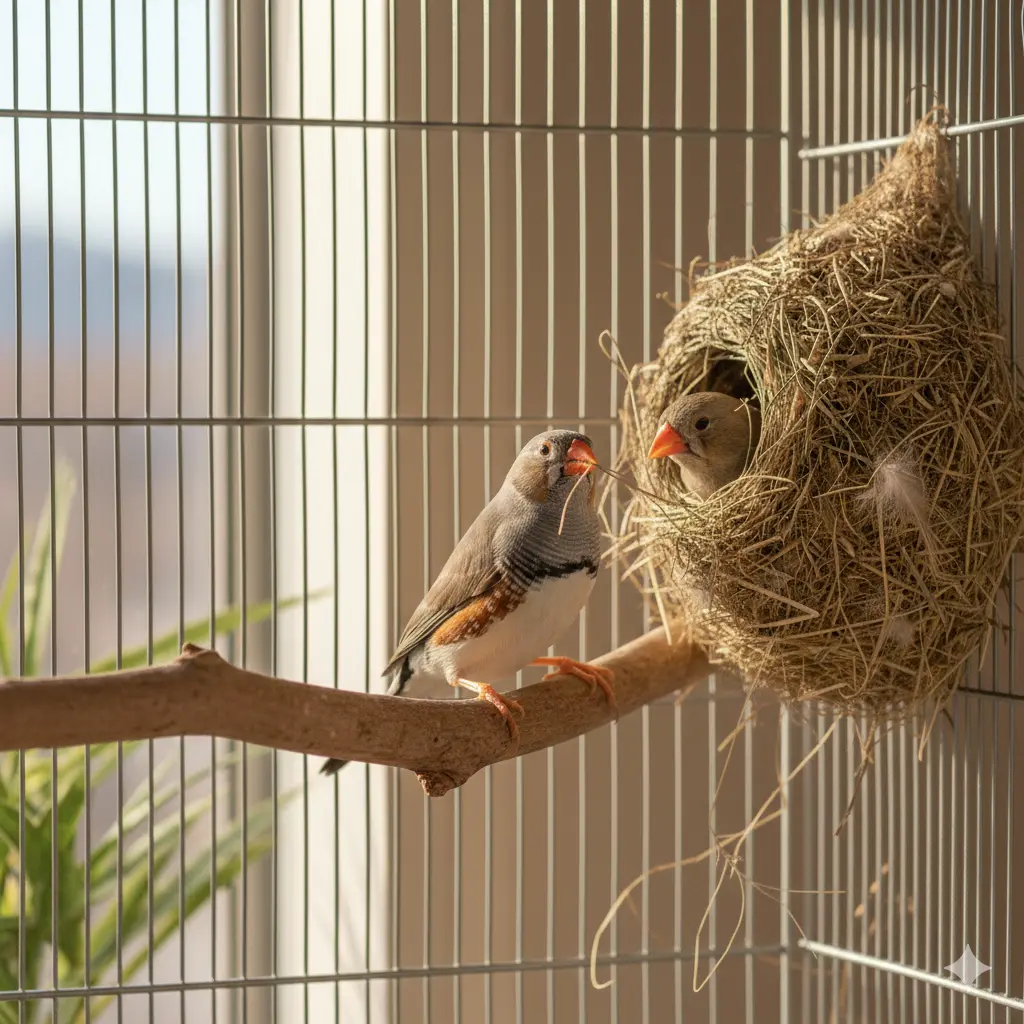
If there is one thing Zebra Finches love more than eating, it's nesting. They are known in the bird world as "breeding machines."
How to Control the Population?
A Zebra Finch will try to build a nest in a food bowl, a bath, or even on the cage floor using dropped feathers or bits of vegetables.
- No Nest: If you don't want chicks, the most important rule is—do not put a nest in the cage. Zebra Finches don't need to sleep in a nest; they are perfectly comfortable on a perch.
- Hormonal Triggers: Overly wet food and long daylight hours (over 12 hours) signal to their bodies that the "rainy season" (a period of abundance in Australia) has arrived, waking the mating urge.
- Risk for Females: Constant egg-laying depletes calcium from the female's bones. If you notice your female laying eggs frequently, be sure to increase her intake of cuttlebone and mineral grit to prevent paralysis or death due to "egg binding."
Bathing and Hygiene: More Than Just Fun
Zebra Finches are obsessed with water. For them, bathing is a social event. You will often see a whole pair or group crowding into a small bath at the same time.
- Bathing is followed by preening—a process where the bird uses its beak to take oil from the uropygial gland and apply it to every single feather. This maintains their waterproofing and thermal insulation.
- Since finches have a fast metabolism, the cage floor gets dirty faster than with other birds. Using bird sand that dries droppings quickly is recommended to reduce the risk of fungi and bacteria.
Common Health Issues: What to Watch For?
Zebra Finches are generally hardier than canaries, but their small size means they don't have many reserves when they fall ill.
"Scaly Leg" (Mites)
Caused by the Knemidocoptes parasite. The bird's legs become thickened with whitish crusts resembling tree bark.
- Prevention: Regular disinfection of perches and using natural wooden perches of varying thicknesses instead of plastic ones.
Respiratory Infections
Due to their size, finches are extremely sensitive to drafts and strong odors. Never use air fresheners or perfumes in the room where birds live.
Canary or Zebra Finches: Which is Right for You?
Beginners often hesitate between these two species. Here is a direct comparison to help you decide:
-
Canary:
- Sociality: Solitary (better off alone)
- Song: Loud, long, complex song
- Interaction: Minds its own business - independent
- Space: Needs length for flight
- Maintenance: Medium
-
Zebra Finches:
- Sociality: Mandatory in a pair or group
- Song: Quiet, rhythmic, trumpet-like
- Interaction: Constant dynamics and pair play
- Space: Needs a long cage for "chasing"
- Maintenance: Low (very hardy birds)
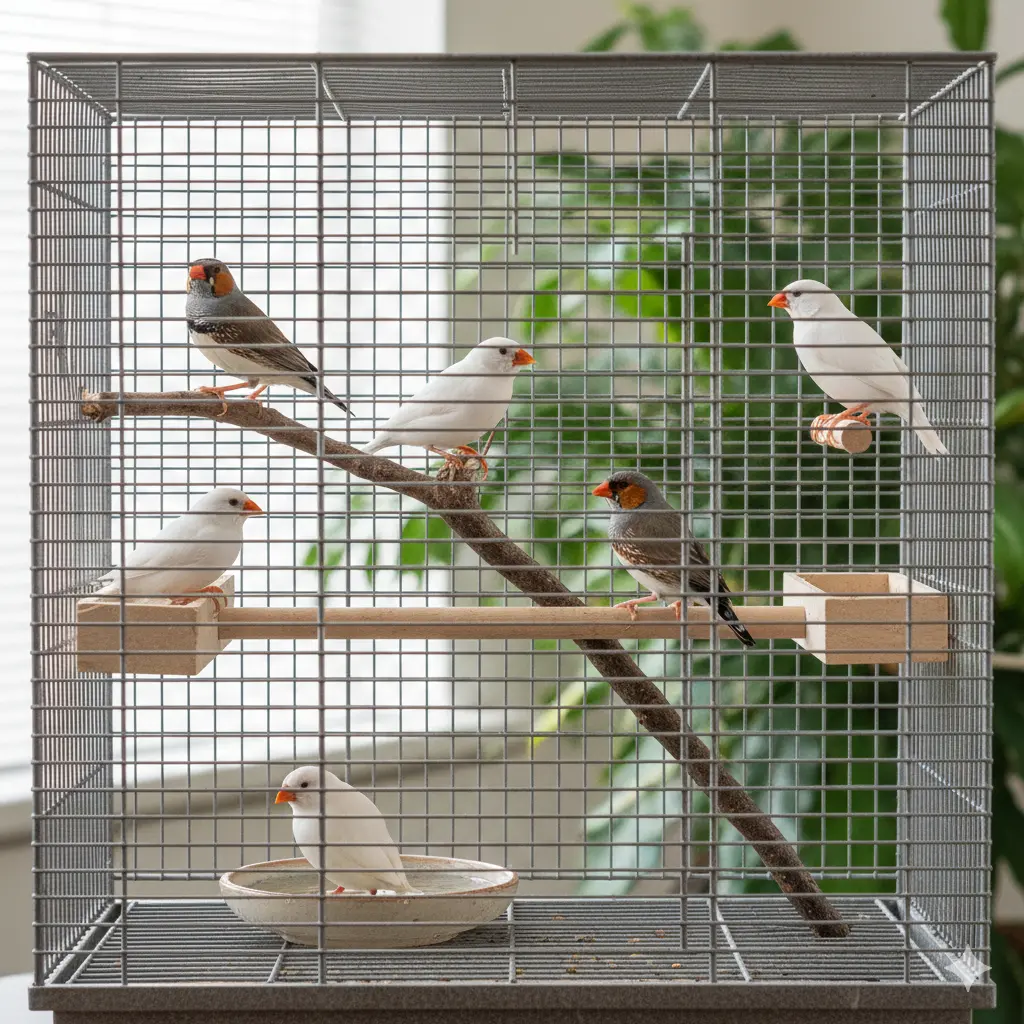
Secrets of Successful Socialization
Although Zebra Finches aren't parrots that will sit on your shoulder, they can become very trusting.
- Spend 15 minutes every day sitting by the cage without making sudden movements. Read a book or talk quietly.
- A spray of millet is like chocolate for humans to finches. If you hold it in your hand inside the cage, after a while, the bravest bird will land on your finger. Once one does it, the others will follow due to the flock instinct.
Frequently Asked Questions about Zebra Finches
How long do Zebra Finches live as pets?
Zebra Finches live on average between 5 and 8 years, though with top-tier care, nutrition, and a stress-free life, they can live up to 10 years.
Can Zebra Finches learn to talk?
No, Zebra Finches cannot imitate human speech. They communicate through their characteristic trumpet-like sounds and unique songs developed by males.
Can Zebra Finches live in the same cage as canaries?
While both species are peaceful, keeping them together in small cages is not recommended. Finches are fast and hyperactive, which can stress a calmer canary. This is only possible in large aviaries where each bird has its own space.
Do I need to provide light at night?
No, finches need complete darkness to rest (10-12 hours). Covering the cage with a light cloth can help them feel safer and establish a proper sleep rhythm.
How often should I clean the cage?
The cage floor should be cleaned at least twice a week, while a complete disinfection of perches and toys is desirable once a month to prevent infections.
Conclusion: Why Zebra Finches Make a Home Livelier
Keeping Zebra Finches is like having a small window into the Australian wild in the middle of your living room. Their energy is contagious, and their mutual love and care (like sleeping together in a "pile") remind us of the importance of togetherness.
If you are ready to provide them with a spacious horizontal cage, a quality millet mix, and most importantly, a partner of the same species, Zebra Finches will reward you with years of joy and quiet, soothing music that will make your home warmer.
