European Goldfinch Song: The Art of Training Young Singers
In the world of ornithology, the European Goldfinch is more than just a bird—it’s a symbol of prestige, tradition, and natural artistry. Its song has been admired for decades in gardens and song contests across the globe. However, owning a goldfinch that performs "concerts" in your living room isn't a matter of luck; it’s the result of dedicated training, much like coaching an elite athlete or a classical musician.
If you’ve just started this hobby, I recommend first reading our Goldfinch Care Guide to ensure your bird has the biological foundation for a healthy life. Only when a bird is in peak physical condition can we discuss tutoring and fine-tuning its voice.
Genetic Code vs. Learning: How the Song is Formed
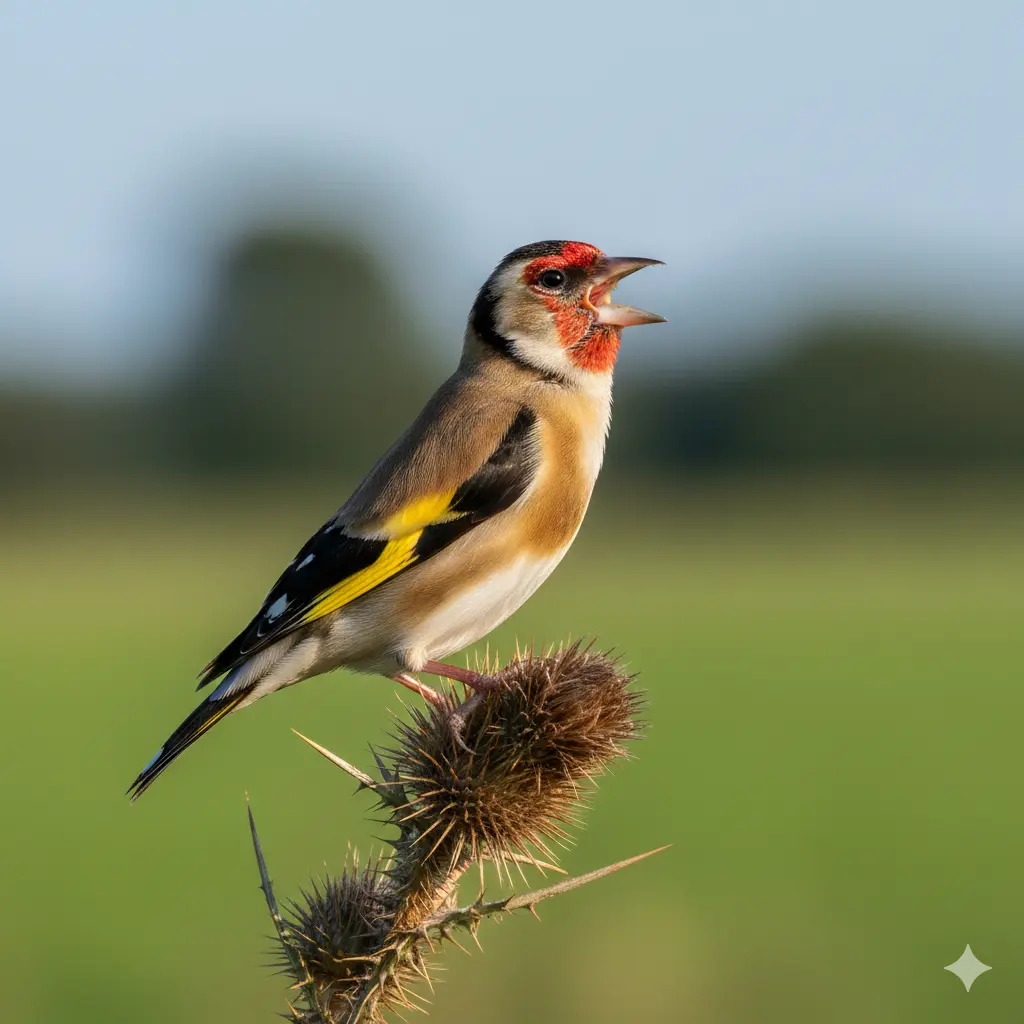
Many beginners believe that a goldfinch will simply start singing perfectly once it gets used to its cage. This is only partially true. The instinct to vocalize is innate, but the melody, rhythm, and purity of tones are learned skills. In the wild, this learning starts in the nest, listening to the father and other experienced males.
In a home setting, that natural chain is broken, and we step in as the "mentors." Training a young singer is essentially a filtering process. Your goal is for the bird to adopt the most beautiful trills while remaining immune to "junk sounds" from the environment, like sparrow chirps from the porch or a squeaky door—which goldfinches, with their incredible mimicry, can easily slip into their repertoire.
Anatomy of the Perfect Song: What Are We Listening For?
To be a good coach, you must know what a "quality" song sounds like. Experienced keepers divide the goldfinch song into several segments:
- The Intro: The initial chirps where the bird "builds momentum."
- Tours (Trills): The central part of the song—fast, rhythmic sequences that give the melody its dynamics.
- Bells: High, crystal-clear ringing tones that add nobility to the song.
- The Finish: A high-quality song always ends with a clean, sharp note, without raspy or broken syllables.
The goal of tutoring is for the bird to connect these parts into a long, seamless sequence known in the hobby as a "spool."
When is the Ideal Time to Start Tutoring?
The most critical window is the "Plastic Song" phase. This is the period from when the fledglings become independent until their first full molt. During this time, the bird's brain is neuroplastic—it physically shapes itself according to the sounds it receives.
If you miss this window (the first 4 to 6 months of life), training an older goldfinch is nearly impossible. They will always retain the "mistakes" picked up in their youth. This is why serious breeders move young males to "Song Schools"—rooms with a controlled acoustic environment.
Method 1: The "Live Master"
Veteran keepers still swear by the Live Master method. This involves placing one "Professor"—an older male with a perfect song—in a room with 3–4 young students.
- Advantage: Young birds don't just learn by ear; they learn by observation. They see how the Professor expands his throat and his body posture while singing.
- Risk: If the Professor starts molting and stops singing, or develops a vocal flaw, the young birds will mimic it immediately.
Method 2: Digital Schooling (Audio Tutoring)
Technology has made bird tutoring more accessible than ever. High-quality audio recordings allow you to train your bird to international competition standards.
Key Rules for Audio Tutoring:
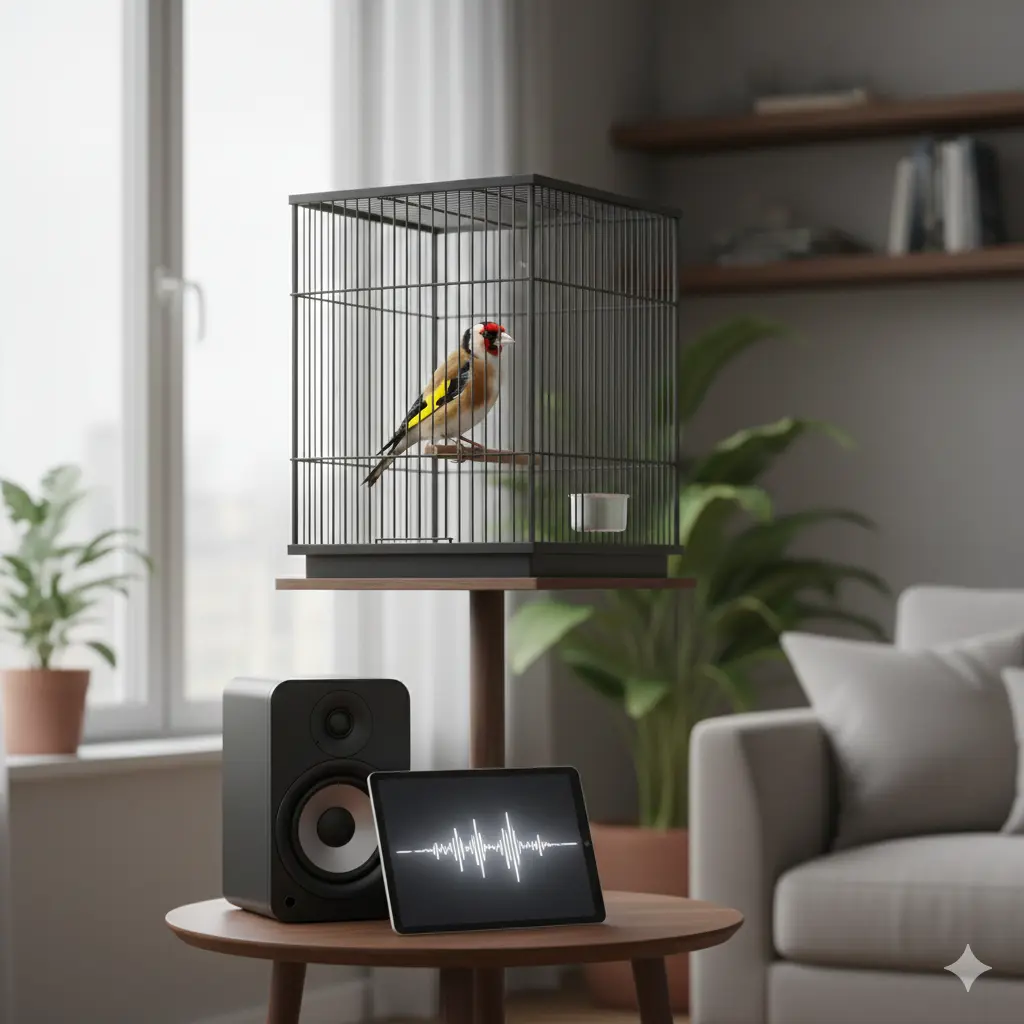
- Speaker Quality: Do not use small, "tinny" phone speakers. They distort high frequencies. Use speakers that can faithfully reproduce the sharpness of a goldfinch’s voice.
- Volume Control: The sound must be natural. If the recording is "blasting," the bird will become aggressive or frightened instead of learning.
- Absolute Silence: There must be silence between playbacks. This is when the bird "rewinds" what it heard in its head and practices quietly—a behavior keepers call "muttering" or "sub-song."
Audio Hygiene: Avoiding "Song Spoilers"
A common mistake is keeping a goldfinch in a living room with a constant TV humming in the background. Goldfinches are intelligent enough to pick up a jingle from a commercial or a ringtone. Once a goldfinch incorporates an "artificial" sound into its song, it loses its traditional beauty and value.
Why Has My Goldfinch Stopped Singing?
The question "why is my goldfinch silent?" is a common concern. It usually boils down to three factors:
1. Molting (The Physiological Stop)
When a bird replaces its feathers, all protein and energy go into the follicles of the new plumage. Singing is a luxury the body cannot afford during this time. This is a rest phase, not a training phase.
2. Nutritional Imbalance
A goldfinch eating only basic canary seed will never be a master singer. They need "high-octane" fuel: thistle, dandelion, niger, and hemp seeds. Without Vitamin E and Selenium, their singing drive drops.
3. Psychological Pressure
Goldfinches are birds of character. If the cage is constantly moved, or if there is a draft or a nearby cat, the bird will "lock up." Song is a sign of territorial dominance. If the bird feels like prey, it will remain silent.
Training Hybrids (Mules)
Mules (Goldfinch x Canary hybrids) are often even better singers because they possess the lung capacity of a canary with the voice of a goldfinch. However, tutoring them is even stricter. They are prone to slipping into "canary song," which is undesirable for goldfinch purists. If you are training a Mule, it shouldn't hear a canary within 150 feet.
The Dimming Method (The "Darkbox")
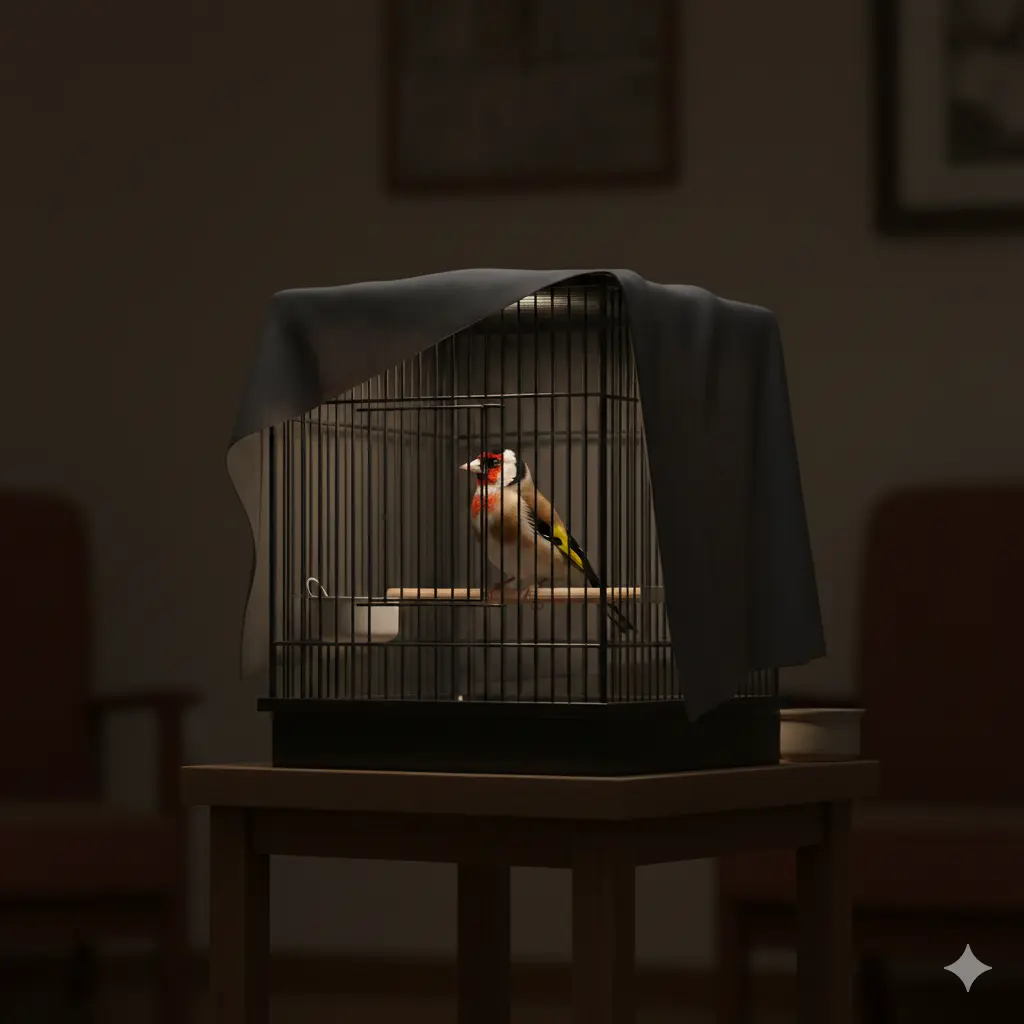
Old-school masters often use a thin cloth to slightly dim the cage. This isn't a punishment; it’s meant to calm the bird. In the shadows, visual stimuli disappear, and the sense of hearing sharpens. The bird becomes laser-focused on the audio it hears.
This is usually done for 1–2 hours a day during the most intense learning phase. You will notice the bird lowering its head, slightly fluffing its feathers, and "talking under its beak." This is the moment the song is etched into its memory.
FAQ
Can female goldfinches sing? Females have beautiful calls, but they lack the complexity of the male's song. Their role in tutoring is typically as "stimulators"—their presence can encourage a male to sing more energetically.
How long do goldfinches live and sing? With proper care, they can live up to 15 years in captivity. They usually provide their best songs between ages 3 and 6, when they are fully mature and experienced.
What if my goldfinch sounds "raspy"? This is often due to a poor diet (too much fatty seed) or minor respiratory issues. Try cleaning up the diet and offering more fresh apple and greens for a few weeks.
Conclusion: An Art Form with a Soul
Raising a master singer is a year-long journey—from the first days out of the nest to the moment the bird hits its first "clean" trill. It’s not just a hobby; it’s a way to connect with the wild. When your goldfinch sings with a full voice, it’s a confirmation that you’ve provided perfect conditions, peace, and care.
