Budgie Body Language: Understanding Your Bird's Emotions
Budgies (parakeets) are fascinating creatures that, despite their tiny size, possess an incredibly complex communication system. While owners often long to hear their bird say its first word, the truth is that budgies "talk" from the moment they wake up until they close their eyes. They do this through wing positions, tail rhythms, and even the way they dilate their pupils.
Understanding body language isn't just a fun way to observe your pet; it is a vital component of preventative healthcare and successful training. In this guide, we will decode every movement, from subtle feather tremors to energetic acrobatics on the perch.
Head and Eyes: The Mirror of Intent
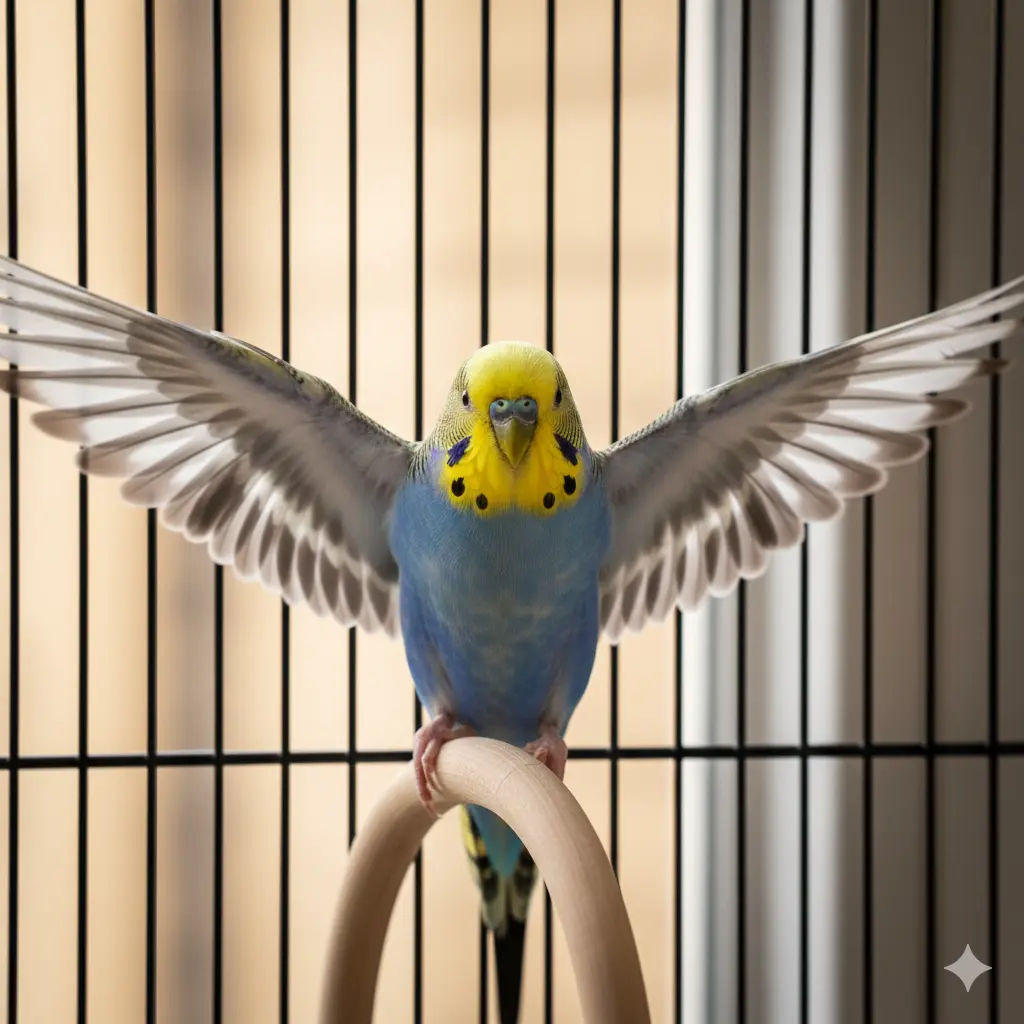
In most birds, the head is the primary signal transmitter. Budgies use their eyes and beaks to express states ranging from deep relaxation to extreme aggression.
Eye Pinning (Dilating and Contracting Pupils)
When you notice the black part of your budgie's eye rapidly shrinking and expanding, it is a clear signal of high excitement or intense focus. Depending on the situation, this "pinning" can have very different meanings. Experienced keepers often see eye pinning in a positive context when speaking in a gentle tone or offering a favorite treat, indicating fascination and joy.
On the other hand, if this rapid pulsing is accompanied by a fanned-out tail and a lowered head, you are entering a negative zone. Avian experts confirm this combination is often a final warning before a strike. The bird feels threatened or territorial, and a hand reaching into the cage may receive a painful bite. Always look at the accompanying signals to correctly assess the emotion.
Beak Grinding
This quiet, raspy sound that resembles the crushing of seeds is one of the best sounds an owner can hear. Budgies grind their beaks when they are completely relaxed, usually just before sleep. It is a physiological sign that the bird feels safe in its environment and is ready for rest.
Beak Tapping
Males are more prone to this behavior. Tapping the beak against a mirror, a perch, or your finger is a sign of affection and a desire for interaction. It is part of their courtship and social bonding ritual. If you aren't sure about your bird's gender, check out our guide on how to tell a budgie's gender based on cere color and behavior.
Wings: Signaling and Energy Release
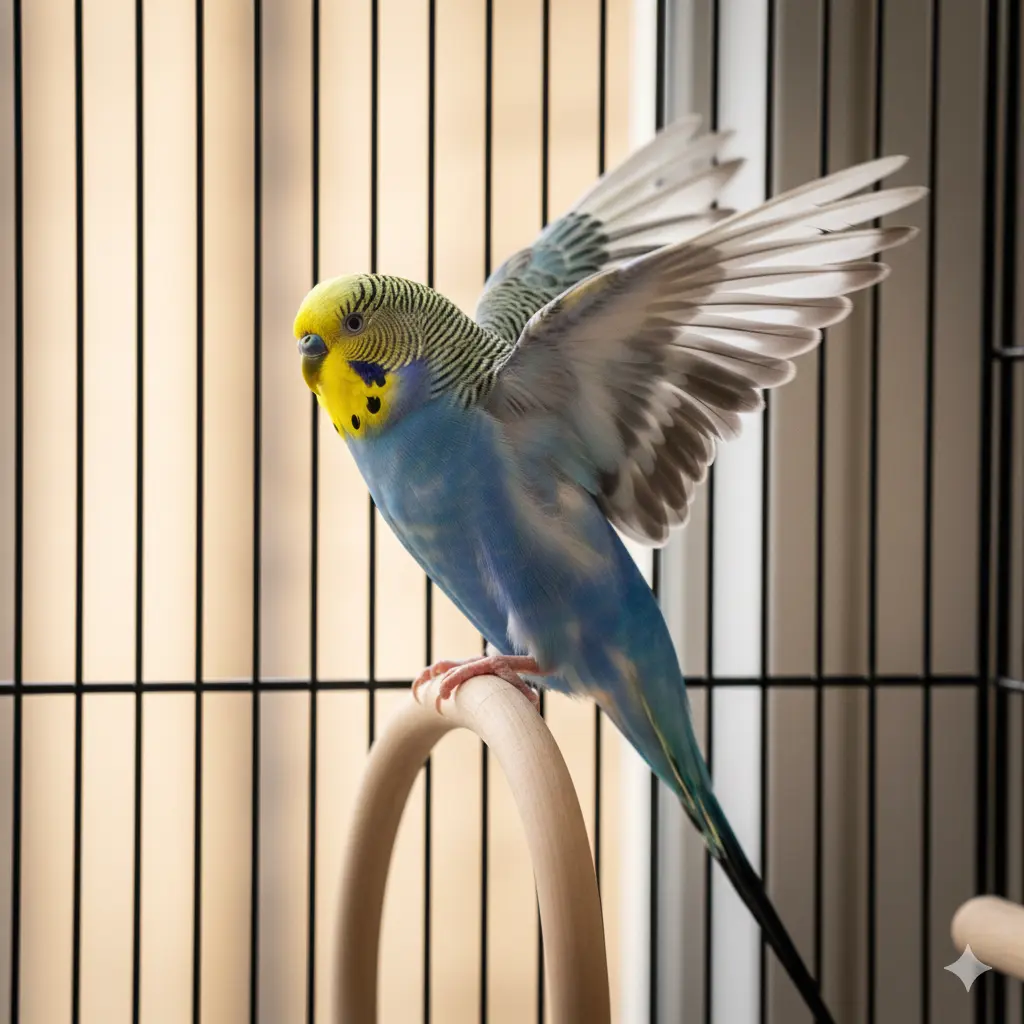
A budgie's wings serve as more than just tools for flight. They are "arms" used to gesture their physical and mental state.
Wing Flapping in Place
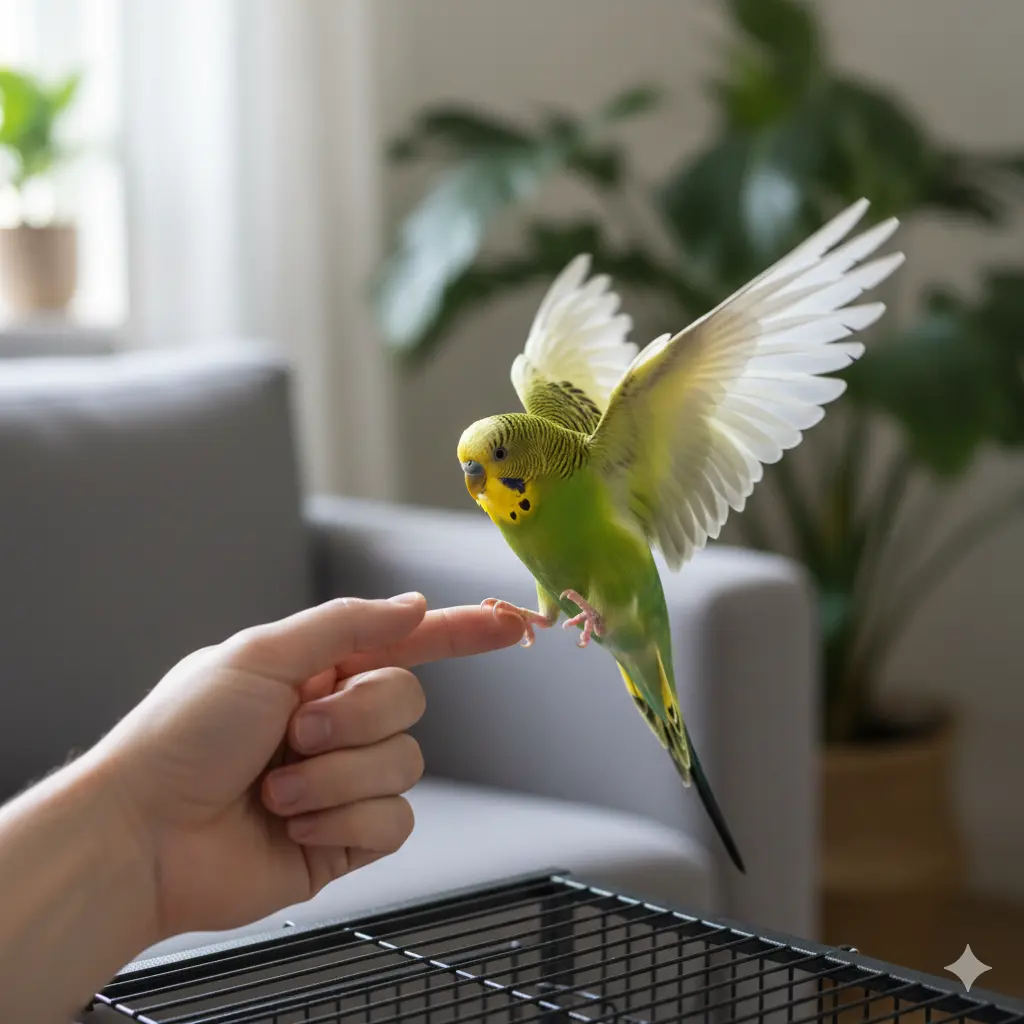
You will often see a budgie hold firmly onto a perch or cage bars and flap its wings frantically for a few seconds. This is a "motor warm-up." The bird is exercising its muscles, burning off excess energy, or simply trying to get your attention. It is a sign of vitality and good health.
Wing Flicking or "Heart Wings"
When a budgie slightly holds its wings away from its body so they resemble the top of a heart, it is likely cooling down. Since birds don't have sweat glands, lifting their wings helps lower their body temperature. However, if the bird is also hopping and "chattering," it is a classic sign of pride and courtship.
Wing Shrugging
A quick upward twitch of the wings usually means the bird is uncomfortable or irritated by something nearby. If this happens frequently, check for cage mites or skin irritations that might be causing an itch.
The Tail: A Rudder for Health and Stability
The tail is often the most reliable indicator of a bird's physical condition. While the head might send mixed signals, the tail usually tells the plain truth.
Tail Wagging
This is the avian equivalent of a dog wagging its tail, though less intense. Budgies wag their tail side-to-side when they finish an activity, like eating or bathing. It is a "reset" signaling they are ready for the next phase of their day.
"Tail Bobbing" – A Major Red Flag
This behavior is a serious alarm for any owner and requires immediate attention. If you notice your budgie's tail visibly moving up and down in rhythm with every breath while it sits still, the bird is putting in massive physical effort just to breathe. In healthy birds, breathing is almost invisible, and the tail remains steady.
Clinical experience shows that tail bobbing is one of the earliest signs of respiratory infection or internal organ issues. Because budgies are masters at hiding illness to avoid looking vulnerable, this movement is often the only subtle proof of a health struggle. If you see this—especially if accompanied by an open beak while breathing—consult an avian vet immediately.
Fanned Tail
When a budgie fans out its tail feathers, it wants to look dominant or is feeling frightened. It is a visual "back off" warning to other birds or to you.
Feather Position
Feathers are the first line of communication you'll notice the moment you look at the cage.
The "Fluff Ball"
A budgie's feathers are its primary insulator. When a bird fluffs up so it looks twice its size and resembles a ball, it is trapping a layer of warm air against its skin. If this is brief and ends with a vigorous whole-body shake, it's just normal grooming or tension release.
However, sitting fluffed up for long periods is a different story. If the bird sits like this for hours with eyes closed and on both feet, its body is likely using its last energy reserves to stay warm. This is a visual "cry for help" indicating illness or shock.
Sleek, Tight Feathers
When a bird looks "thin" because its feathers are pressed tight against its body, it is in a state of panic or high stress. It is trying to look as small and inconspicuous as possible to avoid danger.
Fluffed Head and Cheek Feathers
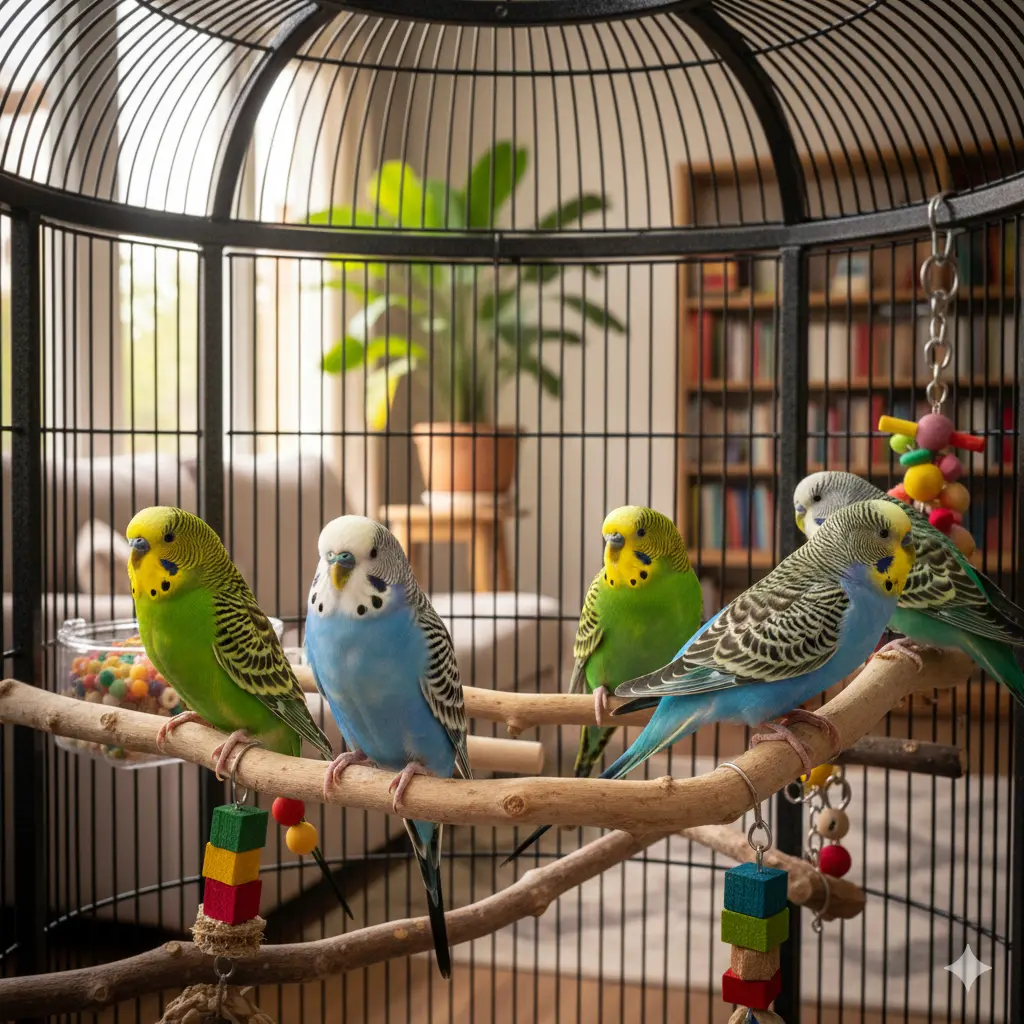
This is an invitation for affection! Budgies are social creatures that preen each other in spots they can't reach. If your bird offers its head with fluffed cheek feathers, it is a sign of ultimate trust.
Specific Whole-Body Movements
While every budgie is an individual, these universal movements clearly show mood and intent.
Hopping from Perch to Perch
When your budgie energetically jumps between perches, often chirping happily, it is in peak physical form. This isn't just burning energy; it's a sign of curiosity and mental stimulation—the perfect time for training.
Horizontal Body Position
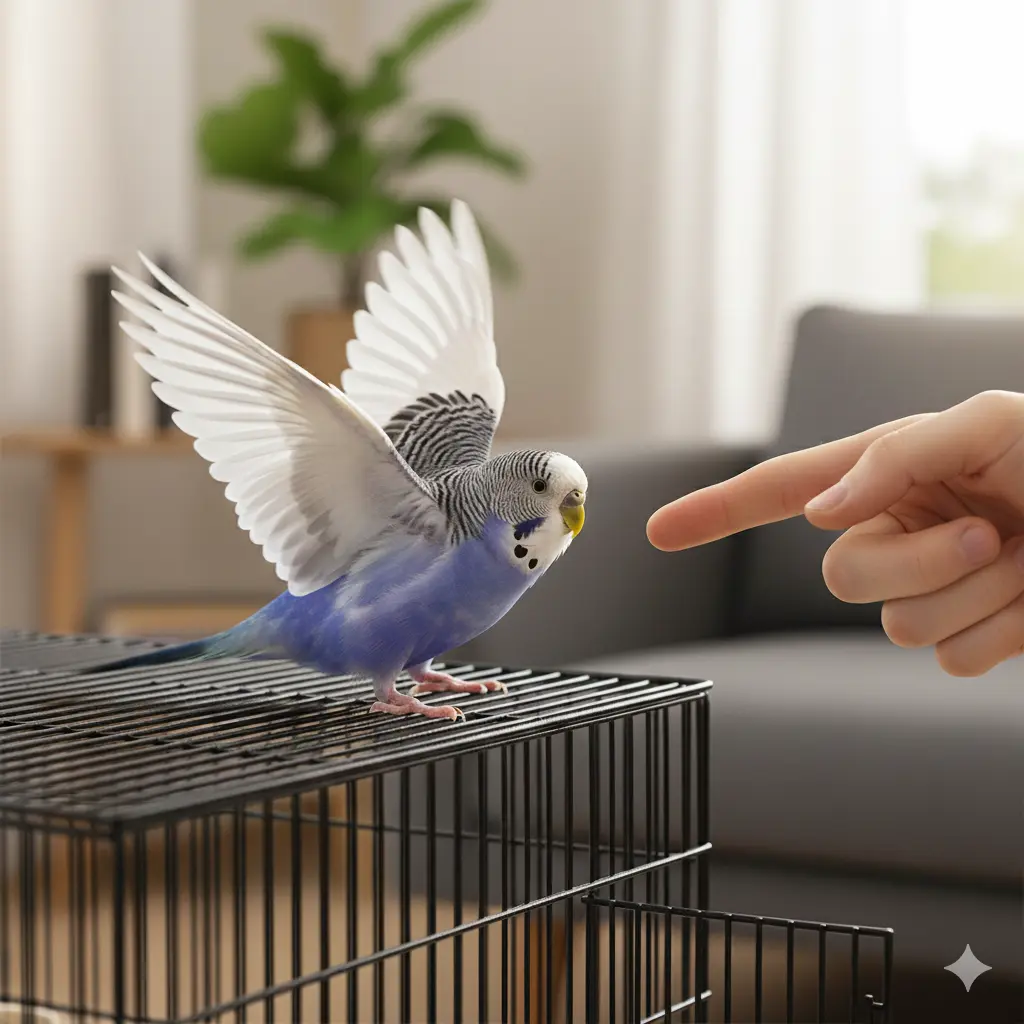
If a budgie crouches low, becoming almost horizontal to the perch with its neck extended toward you, it is in a "low start" position. The bird is preparing to fly directly to you or another target. This is a clear sign of trust and a desire to socialize.
Standing on One Leg
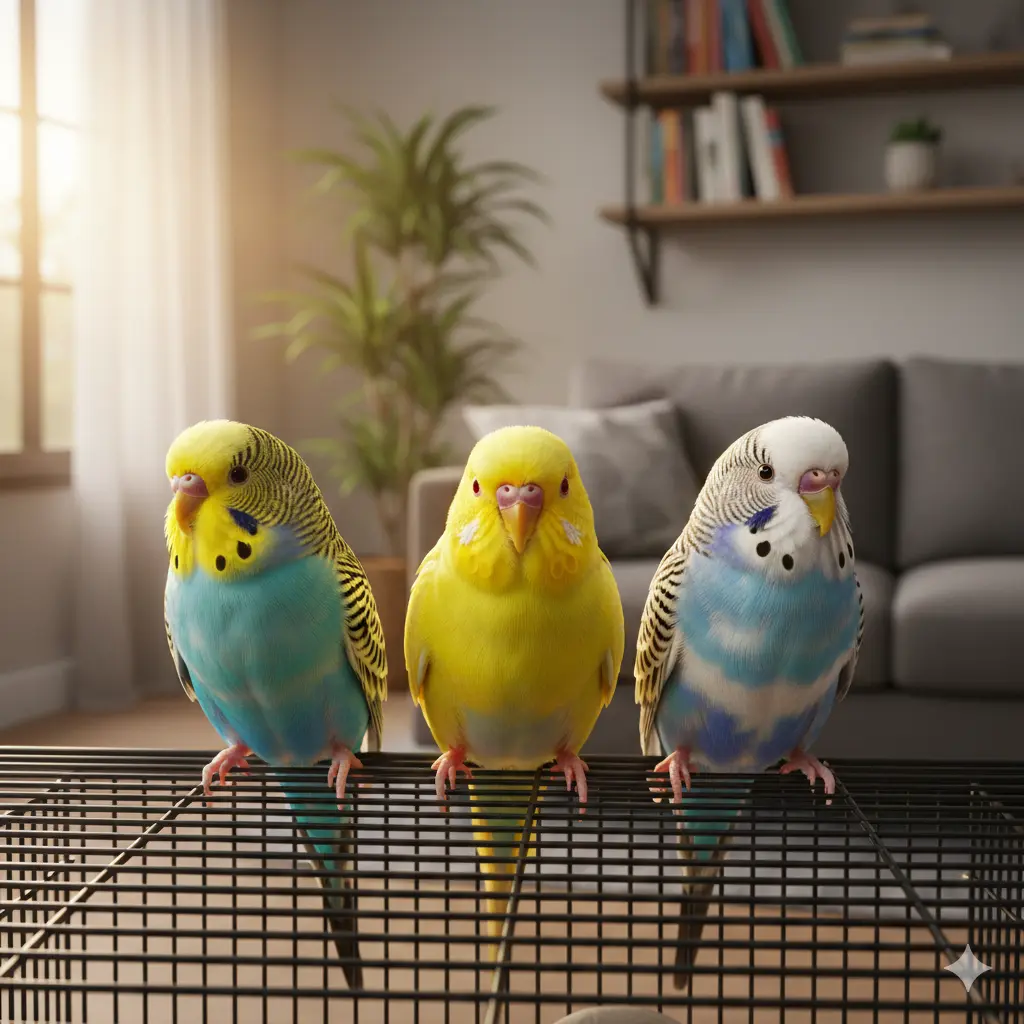
This is a great sign for owners! Instinct tells budgies to be ready for flight at any second, and standing on one leg slows them down. When a bird tucks a leg into its warm belly feathers, it is telling you that it considers you—and its environment—completely safe.
How to React to Body Language
Your power as an owner lies in anticipation. Learning to read these signals prevents accidents. For example, before a budgie bites, it will almost always:
- Pin its eyes several times.
- Slightly fluff the feathers on the back of its head.
- Emit a short, sharp warning tone.
If you ignore these signs and continue the behavior that is bothering them, a bite is the logical next step in their communication.
Become a Partner to Your Bird
Learning budgie body language takes patience and observation. Every bird has its own unique gestures, but the basic code is universal. Spend ten minutes a day just watching them without interference. You will build a bridge of trust that ensures your budgie lives a happy, fulfilled, and long life.
Frequently Asked Questions
What does it mean when a budgie puffs up like a ball?
Brief puffing after sleep or bathing is normal. If it lasts for hours with closed eyes, illness or fever may be the cause.
Is standing on one leg a sign of sickness?
No. Resting on one leg usually means the bird feels safe and relaxed in your presence.
How do I know a budgie does not want contact?
Pinned eyes, fluffed head feathers, tense posture, and sharp warning sounds often come before a bite.
Does feather shaking always mean stress?
No. Shaking feathers is often a normal reset after sleeping, bathing, or mild tension.
How much daily observation helps with body language?
About ten minutes of quiet watching each day is enough to learn your bird's normal patterns.
