Do Cockatiels Talk? The Truth About Speech and Whistling
The short answer is: Yes, cockatiels can talk, but their true talent lies elsewhere. Unlike African Greys or Amazons, which have crystal-clear diction, cockatiels have a unique, "robotic" or gravelly voice. However, they are the absolute champions of the bird world when it comes to whistling. A cockatiel is far more likely to master the theme from The Addams Family, Star Wars, or The Andy Griffith Show than it is to recite a complex sentence.
Who is More Talented: Males or Females?
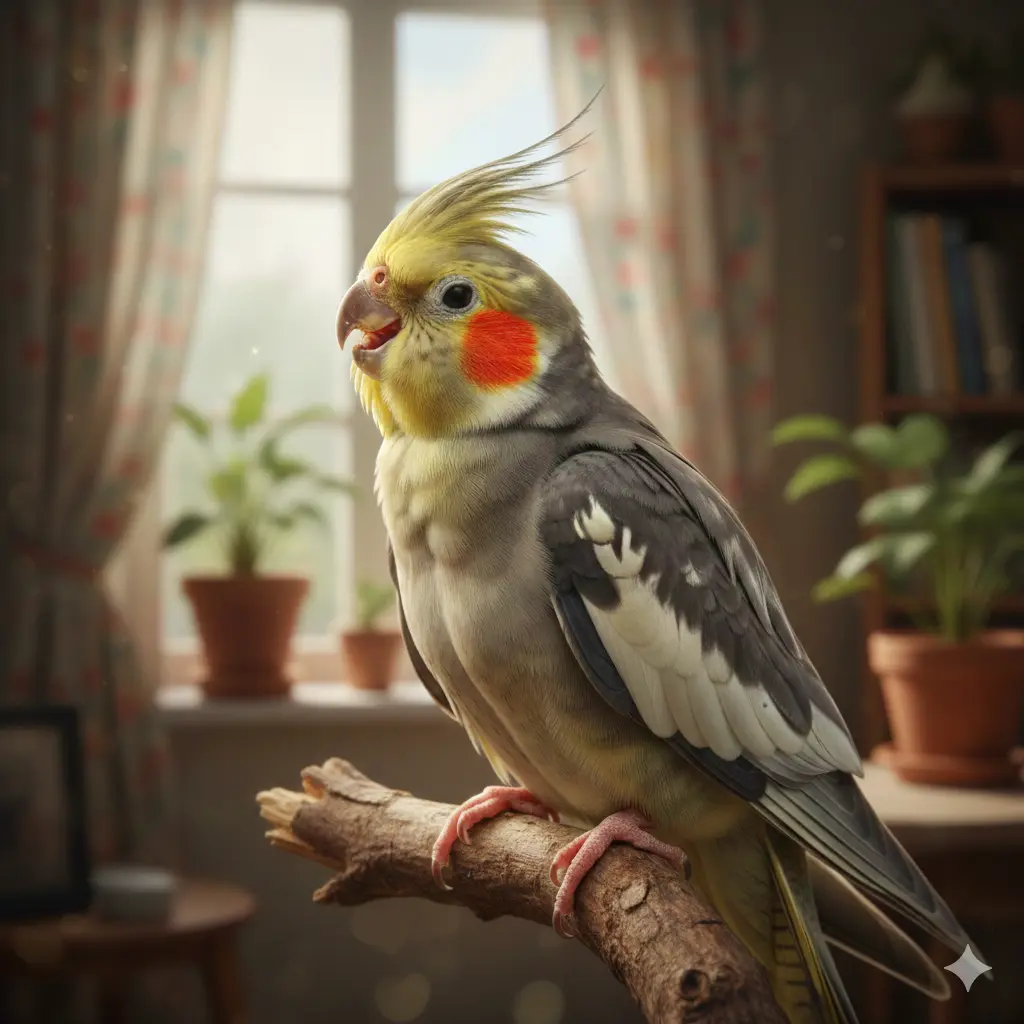
If your priority is a bird that "talks" or whistles catchy tunes, gender plays a huge role in cockatiels. If you aren't sure of your bird's sex, check out our detailed guide on how to tell a male from a female cockatiel.
- Males: These are the true entertainers. In the wild, males use songs and whistles to attract mates. Due to this genetic predisposition, males are much more likely to mimic human speech and melodies.
- Females: Generally, females are quieter. While they make wonderful, cuddly pets, it is rare for a female to speak or whistle complex songs. They usually communicate through short, functional chirps.
What Does a Cockatiel's Voice Sound Like?
When a cockatiel talks, it isn't a "clean" human voice. It sounds more like a hoarse whisper or a fast-forwarded recording. They often blend words with whistles, so a phrase like "Pretty bird" might sound like a mix of speech and a digital chirp.
What are the easiest things for them to learn?
- Their Name: Especially short ones like "Rocky," "Koko," or "Buddy."
- Simple Greetings: "Hello," "Hi," or "Whatcha doin'?"
- Sound Effects: Mimicking a kiss (mwah!), a microwave beep, or a doorbell.
How to Teach Your Cockatiel to Talk
Trust is the "currency" you use to buy your bird's attention. If you haven't bonded with your pet, teaching them to speak will be incredibly difficult. For a better understanding of their signals, read our complete guide on cockatiel body language.
If your cockatiel retreats to the back of the cage when you approach, your voice isn't music to them—it's a threat. Once the bird shows signs of relaxation (preening while you are near, grinding their beak before bed), they are ready for their first "lesson."
1. Choosing the First Word: The Psychology of Sound
Not all words are equal to a cockatiel. They process high frequencies and hard consonants more easily.
- What to Pick: Words with "sharp" consonants like P, T, or K. "Peek-a-boo" is a classic American favorite because it’s easy for them to mimic.
- Intonation: Cockatiels don't hear words; they hear melodies. Use an enthusiastic, high-pitched "excited" voice. If you say "Hello" differently every time, the bird will get confused. Stick to one consistent tone.
2. The "Model/Rival" Technique
This is the most effective way to train birds. It involves two people:
- One person (the trainer) asks a question or says a word.
- The second person (the model/rival) answers correctly and is immediately rewarded with a treat and praise.
The Result: The cockatiel watches this interaction, realizes that a specific sound earns a "prize" (millet or attention), and will try to "jump into" the conversation to get the reward too.
3. "Golden Hours" and Focus
- Morning Focus: Right after waking up, cockatiels have a natural instinct to vocalize. Use the first 15 minutes before breakfast for training.
- Evening Trance: Before bed, when lights are dimmed, cockatiels often enter a calm phase where they "mutter" to themselves. This is the perfect time to whisper words to them from a short distance.
4. Functional Speech (Association)
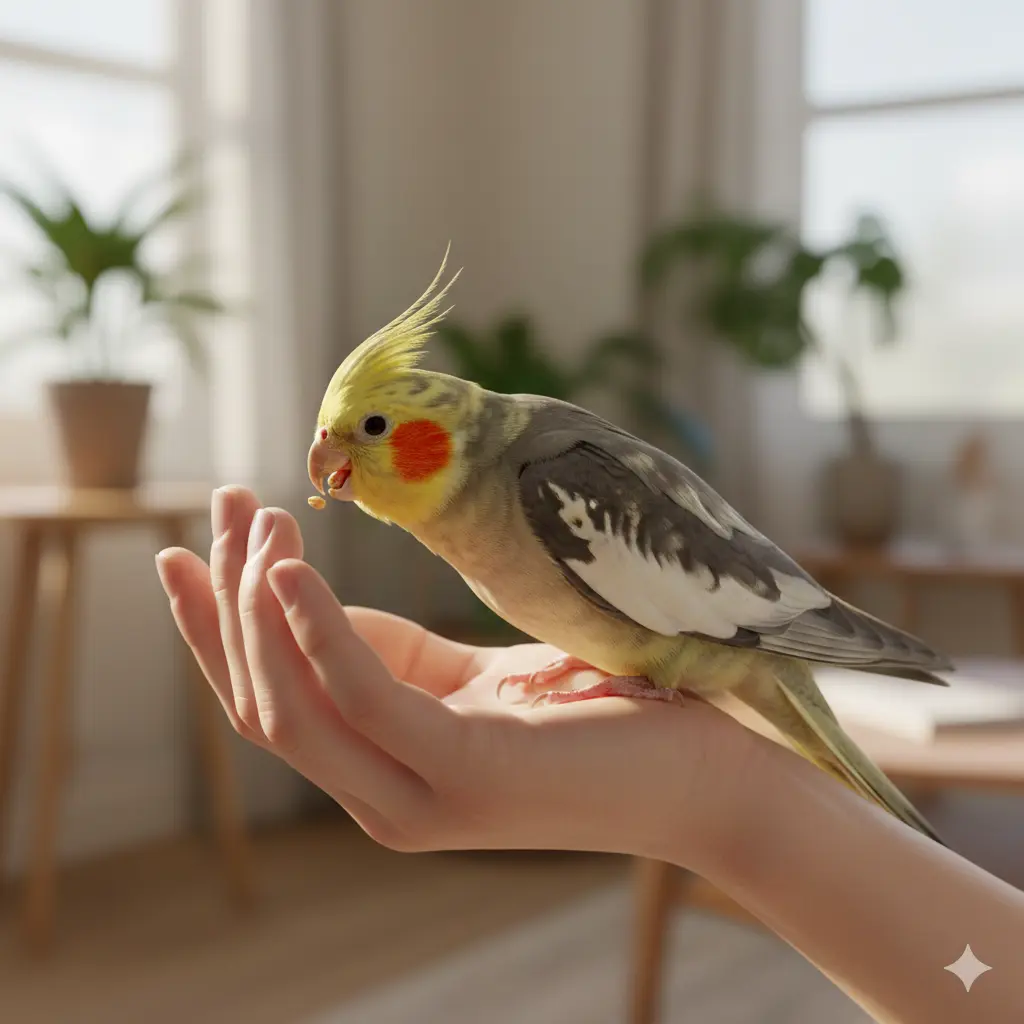
Cockatiels are smarter than many realize. They can learn to use words in context.
- Example: Every time you enter the room, say "Hello!" Every time you offer a piece of broccoli, say "Treat!"
- Goal: Eventually, the bird associates the word with the action. This is when mechanical mimicry turns into actual communication.
Whistling: Where Cockatiels Truly Shine
Many owners skip speech training and focus on whistling because cockatiels love it. They can master:
- Popular movie themes or pop songs.
- Mimicking other birds outside.
- Home appliances (which can sometimes get annoying!).
Pro Tip: Do not teach your cockatiel to whistle before it learns its first word. Once they realize they can whistle—which is much more natural for them—they may lose all interest in trying to "talk."
Why Has My Cockatiel Stopped Talking?
If a vocal bird suddenly goes quiet, it could be a sign of:
- Illness: A quiet cockatiel is often a sick cockatiel.
- Molting: During a heavy molt, all their energy goes into growing new feathers.
- Stress: Moving the cage or a change in the household can temporarily silence a bird.
Frequently Asked Questions (FAQ)
Can every cockatiel learn to talk?
Not every bird will talk, but males have a much higher success rate (around 80%). Every bird has a unique personality.
Should I use a mirror to help them learn?
No. Mirrors are the enemy of speech training. If a cockatiel sees its reflection, it thinks it's another bird. It will focus on courting the "stranger" in the mirror rather than bonding with and learning from you.
Can an older cockatiel learn new words?
Yes! While young birds are like sponges, older cockatiels (even 10+ years old) can learn new phrases if you have a strong bond. The key with older birds is high-value motivation, like their favorite treat (spray millet).
Do they understand what they are saying?
They primarily mimic, but through association, they understand the situation. If you say "Night night" before covering the cage, they understand that the phrase means it's time for sleep, even if they don't know the dictionary definition of the words.
