Understanding Cockatiel Crest Positions: What Your Bird is Telling You
If a dog expresses itself through its tail and a cat through its ears, then the Cockatiel (Nymphicus hollandicus) definitely speaks through its crest. That beautiful plume of feathers on top of their head isn't just a decorative feature that makes them the most recognizable parrots in the world—it is their most precise communication tool.
As a cockatiel owner, you have an incredible advantage: your pet wears a "mood indicator" on its head that works in real-time. By understanding the subtle changes in crest position, you can avoid a bite, recognize fear, or cherish moments of pure love.
In this guide, we will decode the secret language of the crest and see how it fits into the bigger picture of bird behavior, including the age-old question—is my cockatiel male or female?
The Anatomy of the Crest: More Than Just Feathers
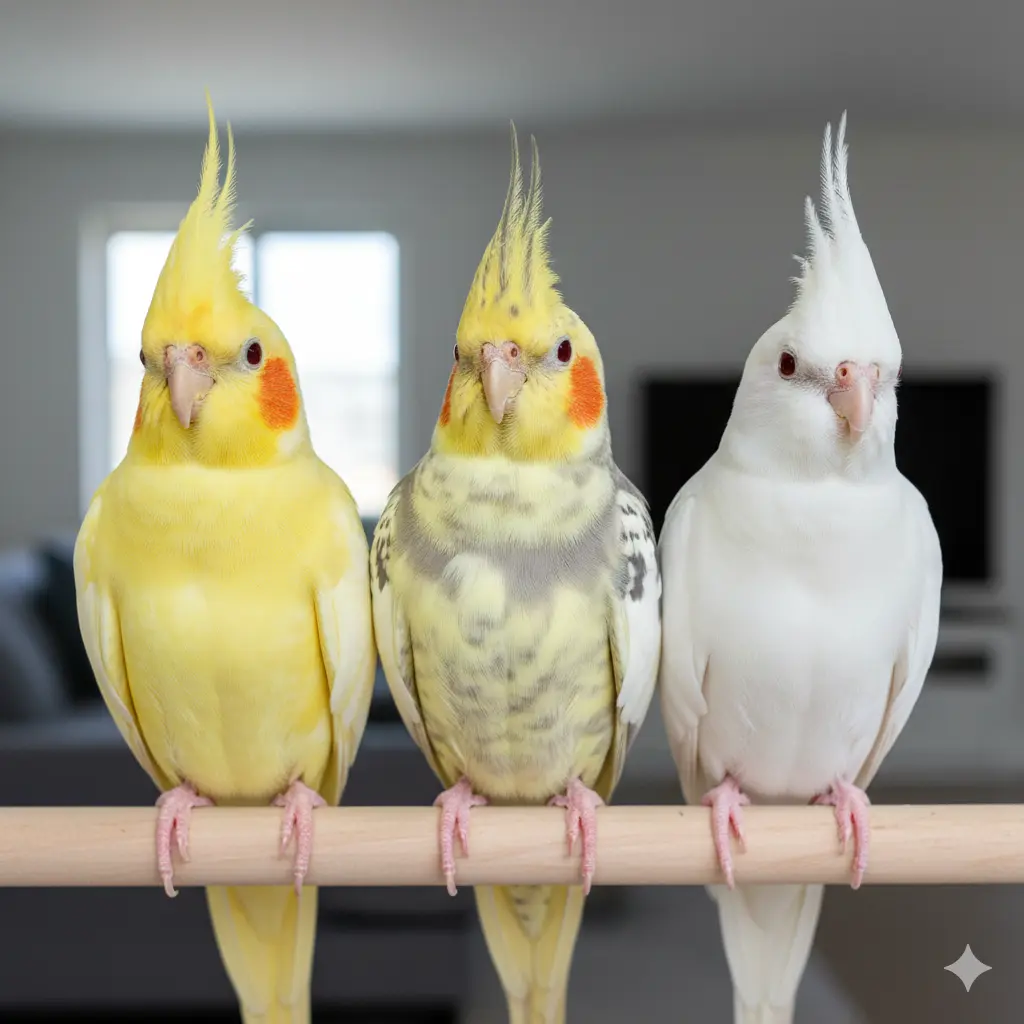
The crest consists of several long feathers controlled by specialized muscles on the bird's head. These muscles are directly linked to the bird's nervous system, meaning the crest position is often an involuntary reaction to external stimuli. Just as our pupils dilate in the dark, a cockatiel's crest reacts to adrenaline, joy, or perceived danger.
5 Key Crest Positions Every Owner Should Know
To properly understand what your cockatiel is saying, think of the crest as an antenna picking up and broadcasting emotional signals. However, the crest never "speaks" alone—the secret is watching the whole package, including eye pinnying and body posture.
1. The Vertical "Straight Up" Crest
When your cockatiel straightens its crest to a near-perfect 90-degree angle, it is a signal of maximum focus. In this state, the bird is like a sponge soaking up information. Perhaps they heard a strange bird outside, saw a new grocery bag on the table, or are simply fascinated by what you are eating. Their eyes are wide open, following your every move. This is the "golden hour" for training. The bird is mentally present and curious, making it the perfect time for learning new tricks or introducing a new toy.
2. The Relaxed "Half-Mast" Crest
If the crest is angled back at about 45 degrees, with the tips slightly curved upward, stay calm—your cockatiel is in its "Zen" phase. This is the default position when they feel safe with their flock (you!). You’ll often see this while they are munching on seeds, preening, or napping on your shoulder. It is a silent confirmation that your bird trusts you completely and feels no need to be on "guard duty."
3. The "Flat Back" (Extreme Defensive)
This is a position every owner must respect: when the crest literally disappears, flattened so tightly against the skull that the bird looks "bald." This is a clear sign of extreme defense or anger. If accompanied by snake-like hissing and spread wings, your cockatiel is warning you that it is ready to bite. On the other hand, if the bird is frozen still, it is in a state of sheer terror. Your reaction should be to back off. Give your bird space to feel safe again.
4. "Fluffy Cheeks" with a Raised Crest
One of the most adorable sights is when the crest is up, but the cheek feathers (flanches) are so puffed out they almost cover the beak. This is the visual definition of bliss and pure love. It usually happens when you speak to them in a soft, gentle tone. Your cockatiel is showing that they are emotionally "open" to you. If they offer their head for "scritches" in this moment, it is the ultimate act of trust.
5. The Crest in Motion
Sometimes the crest doesn't stay still; it moves up and down rapidly while the bird pacifies around the cage or hops on the floor. This is a sign of high excitement and anticipation. Your bird is likely thrilled that you’re home or recognized the crinkle of a treat bag. It’s the bird equivalent of a dog wagging its tail!
Does the Crest Help Determine Gender?
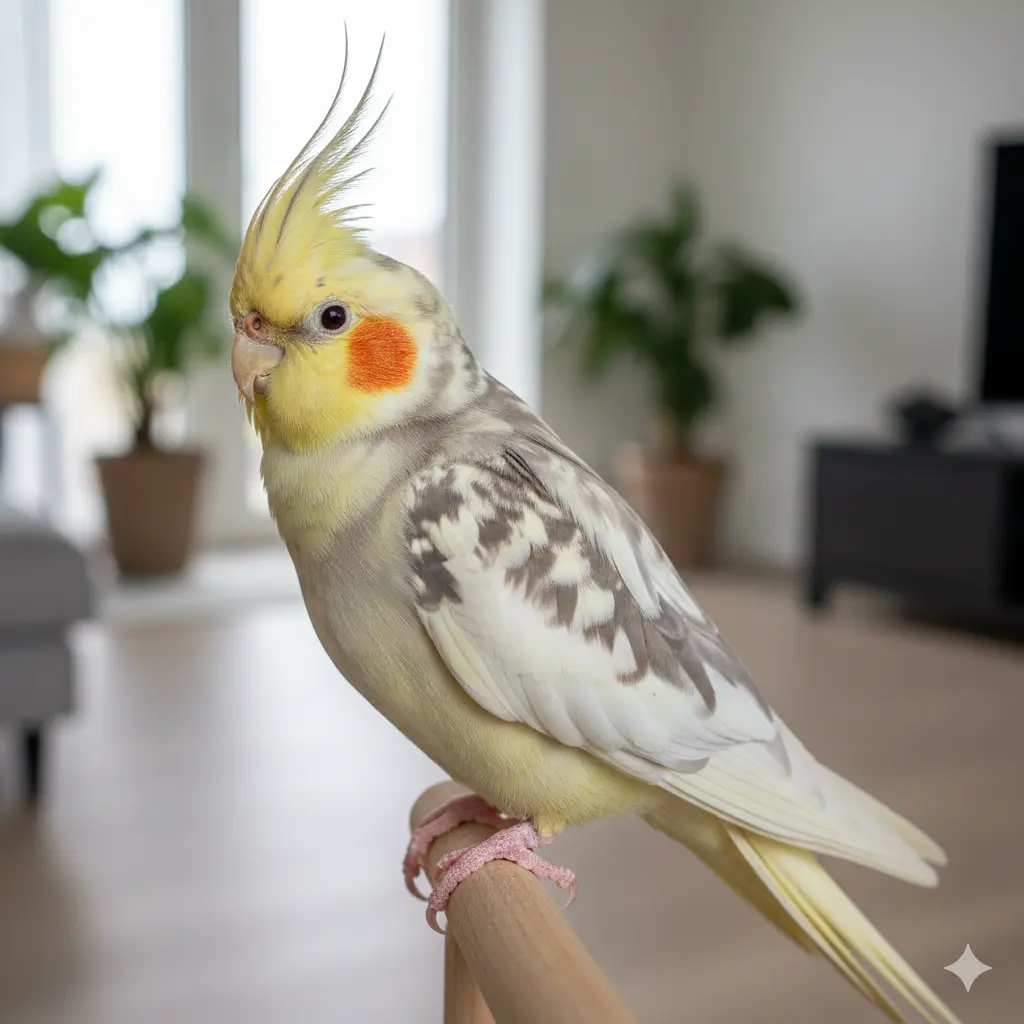
While a DNA test is the only 100% way to be sure, the way a bird "wears" its crown can offer clues during courtship rituals.
- Males: Real "knights in shining armor." Males use their crest as a visual amplifier during their serenades. To impress, they will stand tall, square their wings into a "heart shape," and raise their crest to the max while whistling.
- Females: Masters of subtlety. Their crest is more often in the relaxed "Zen" position. They rarely use it for dramatic showboating like the males do.
Reading Between the Lines
To be an expert in bird emotions, look at the rest of the body:
"Angel Wings" and Bat-Birding
If your cockatiel hangs upside down with wings spread wide, don't worry! This is a sign of extreme confidence and joy. They are stretching and claiming their territory, basically saying, "Look how big and beautiful I am!"
Beak Grinding - The Lullaby
That soft, rhythmic grinding sound as they fall asleep is a "happy noise." It means they are perfectly content and mentally ready for rest. If they do this on your shoulder, take it as a huge compliment.
Hissing - The Final Warning
Cockatiels hiss when they feel cornered. It is an instinctual defense mechanism. If you hear this, back away and identify the stressor.
Caring for the Crown
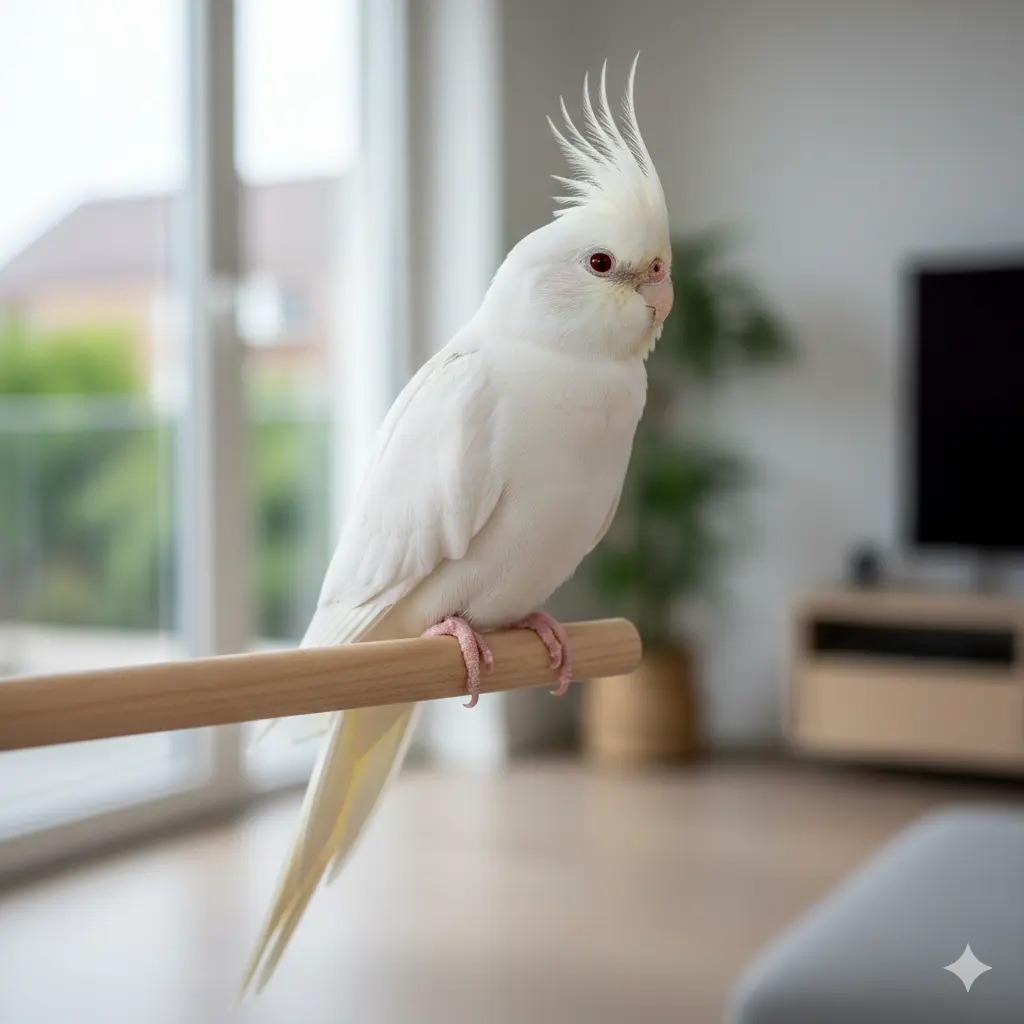
To keep that crest looking like a king's crown:
- Misting: Use a spray bottle with lukewarm water. Regular "rain" keeps the feathers elastic.
- Nutrition: The crest is made of keratin. Ensure a high-quality cockatiel diet rich in minerals and vitamins to prevent brittle feathers.
Conclusion - Listen to the Crest
Your cockatiel has a daily dialogue with you, even without words. Their crest is their voice, their emotion, and their message to the world. Once you learn to read these subtle movements, your bond will reach a whole new level.
Just look at that beautiful plume of feathers—it never lies.
Frequently Asked Questions
What does a raised crest mean in a cockatiel?
Usually curiosity, attention, or mild excitement. Panic is accompanied by rapid breathing and escape attempts.
Can the crest help determine gender?
It may give clues, but it is not reliable. DNA testing is the only sure method for many mutations.
Why does a cockatiel hiss?
Hissing is a defensive signal that you have crossed a boundary. Back away and give the bird space.
Do cockatiels like back scratches?
Most prefer gentle head scritches around the ears and under the crest rather than back or belly contact.
How do I keep the crest healthy?
Regular misting and a balanced diet rich in vitamins and minerals help maintain strong feathers.
