
Is My Cockatiel Male or Female?
So, you’ve brought home your first cockatiel. You look at those bright orange cheeks and that tuft of feathers and wonder, "Are you my new best bud or a little lady?" Maybe the pet store clerk told you it's a male because it "whistles loud," or you were told it’s only a few months old.
The truth is, cockatiels (Nymphicus hollandicus) are masters of disguise. Unlike some other birds, determining their sex and age can be real detective work—especially if you have one of the popular color mutations.
In this guide, we’ll cover everything: from visual clues and specific behaviors to scientific methods and subtle signs that reveal your feathered friend's age.
Visual Sexing: Theory and Mutations
In wild-type (Standard Gray) cockatiels, nature made the differences clear. However, decades of captive breeding have created mutations like Lutino, Pearl, and Whiteface, where visual differences almost vanish.
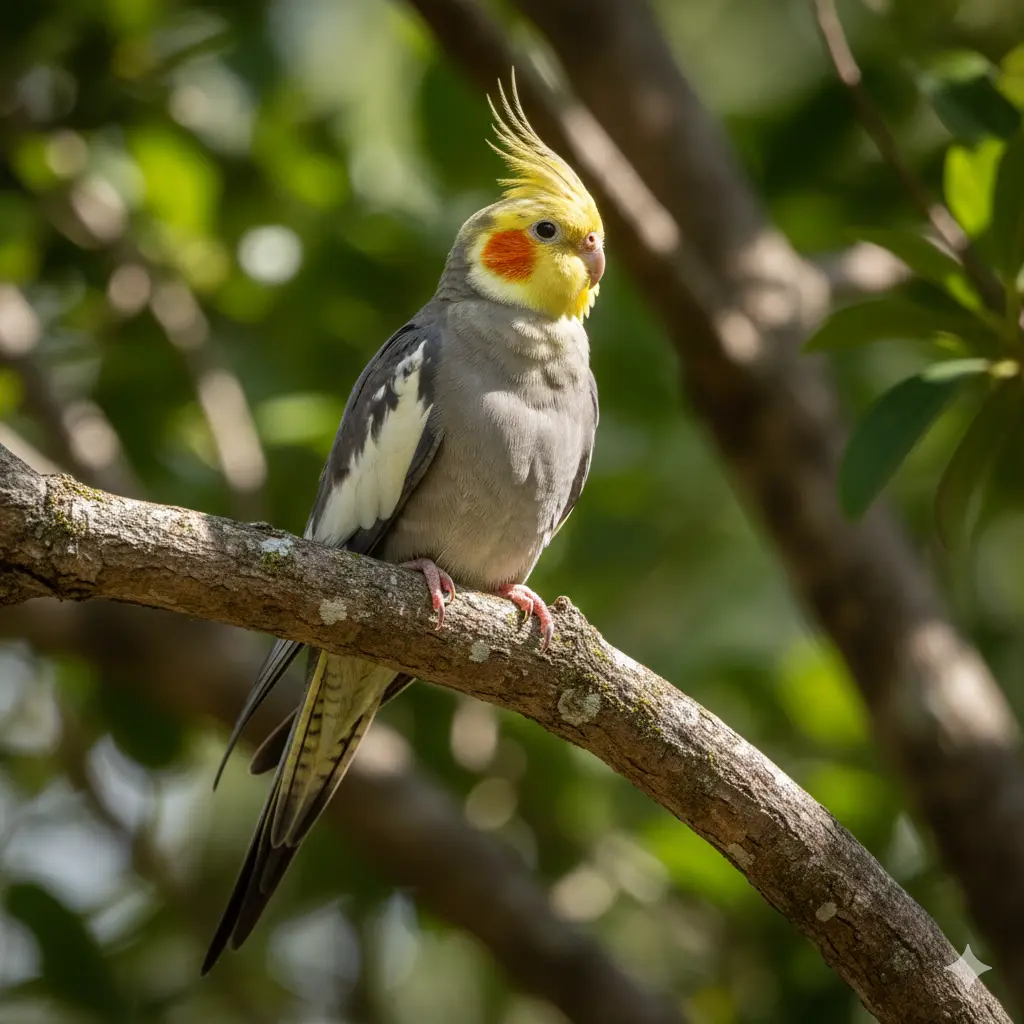
Standard Gray Cockatiels
In "normal" grays, the difference is most obvious after the first molt (around 6–9 months of age):
- Males: They sport a bright yellow face and intense, almost neon orange cheek patches. Their bodies are solid gray, and the underside of their tail is dark gray without patterns.
- Females: Their faces remain gray or a dull yellow. The cheeks are noticeably paler. The "smoking gun" is the underside of the tail—females have horizontal yellow stripes or dots (called "barring") and yellow spots on the underside of their wings.
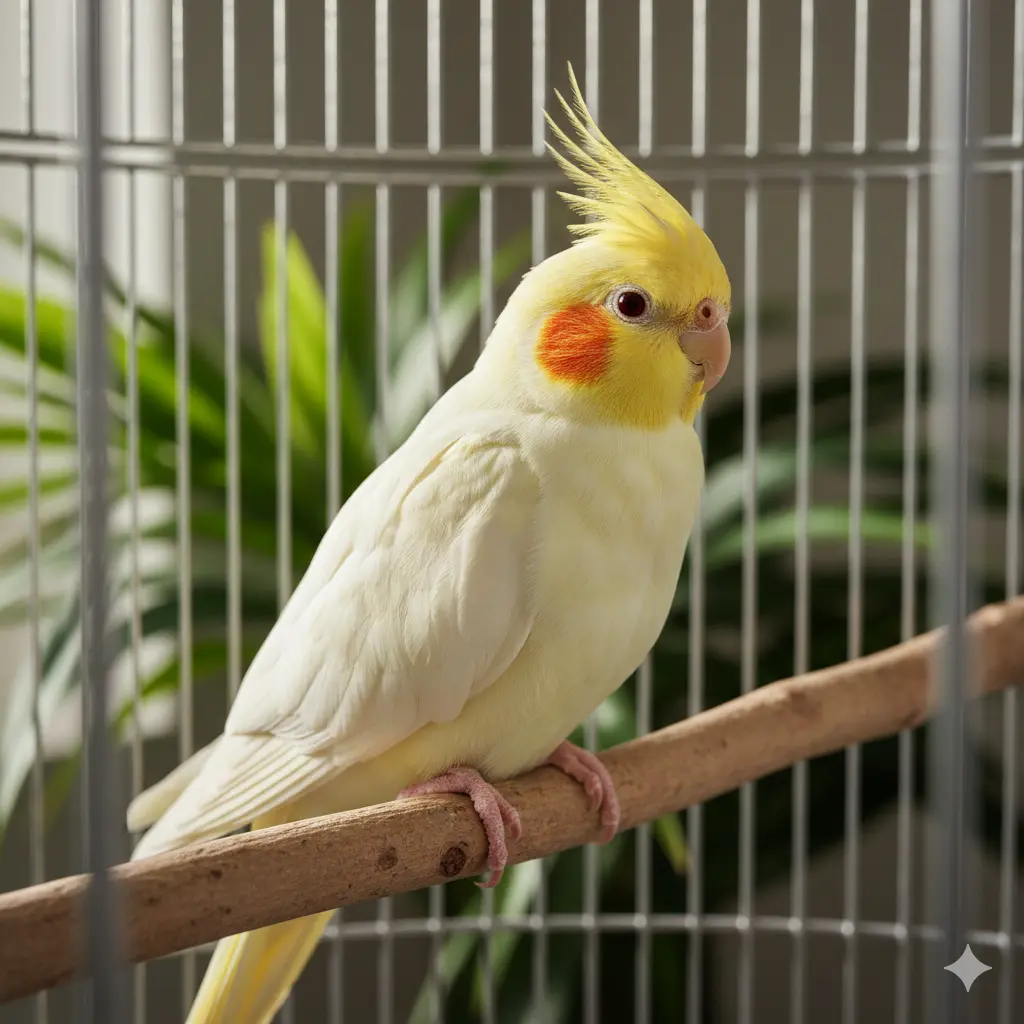
Lutino Cockatiels (Yellow-White)
This is where it gets tricky. Since both sexes are yellow, look for subtle details:
- Females: They often retain yellow barring on the underside of the tail and wings, but these are usually only visible under bright, direct sunlight.
- Males: They lose these faint patterns entirely once they reach maturity.
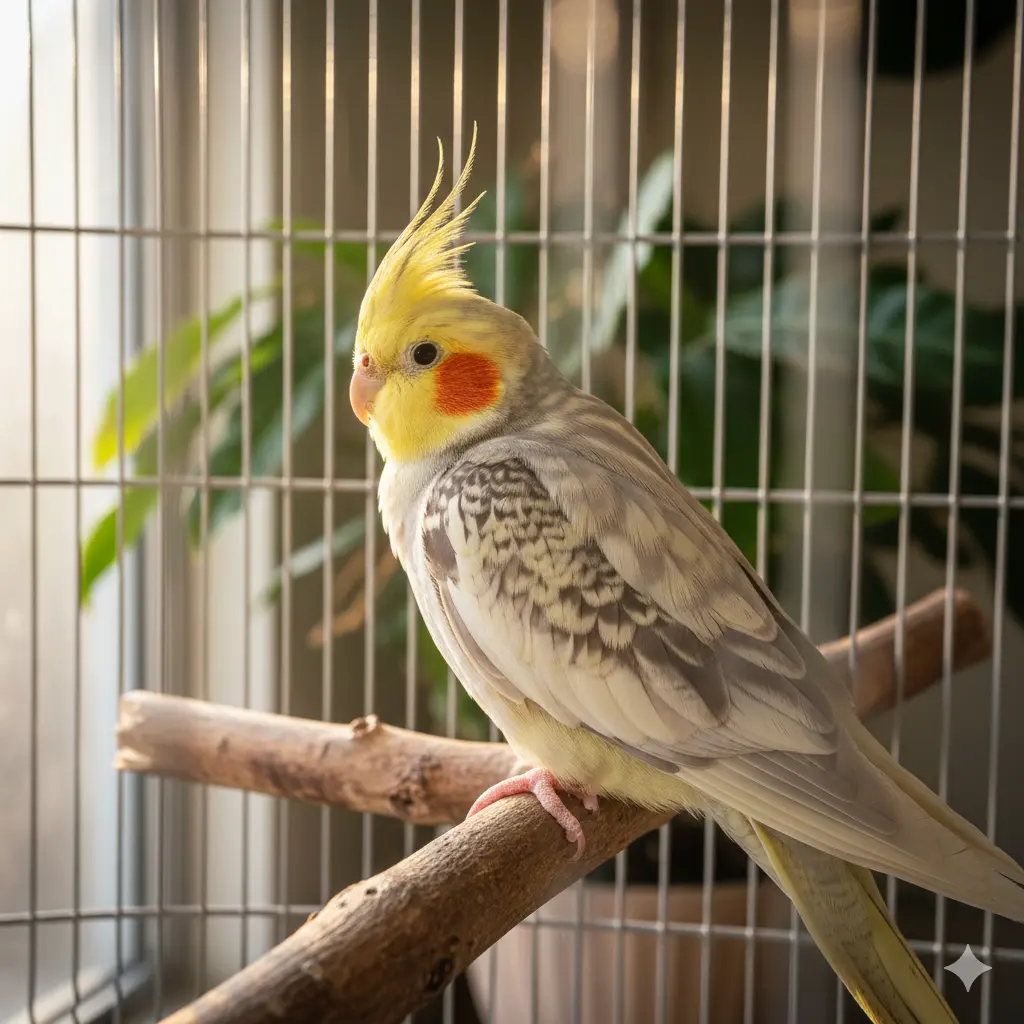
Pearl Cockatiels
This is the most fascinating mutation to watch:
- Males: As they age, they "lose their pearls." With every molt, a male becomes more solid gray while his face turns yellow.
- Females: They keep their beautiful "pearled" patterns throughout their entire lives.
Behavior: The "Talent Show" Clues
If visual signs fail (common with Albino or Pied cockatiels), behavior is your best ally. Cockatiels are expressive, and males and females have very different "hobbies."
Males: The Musicians and Performers
Males are the noisy ones. If your cockatiel does the following, there is a 95% chance it’s a boy:
- Singing and Whistling: Males constantly practice new tunes. If your bird tries to mimic a song or your whistle, it's likely a male.
- Beak Bonking: Males love to tap their beaks against the cage, food bowls, or mirrors to get attention.
- Heart-Wings: When a male wants to impress, he will arch his wings away from his body (forming a heart shape when viewed from behind) and strut proudly.
Females: Quiet and Reserved
Females are generally quieter and tend to stick to single-note chirps.
- Specific Vocalization: Females often emit high-pitched, repetitive "flock calls."
- Egg Laying: The most obvious sign—if your bird lays an egg, the mystery is solved. Even without a mate, females can lay unfertilized eggs.
Determining Age: From Baby to Senior
While it’s nearly impossible to tell the exact age of an adult bird without a leg band, we can identify their "life stage."
Babies (Under 6 Months)
- Eyes: Look large compared to the head ("puppy dog eyes").
- Beak & Feet: The skin on the feet is smooth and pinkish; the beak is clean without scratches.
- Crest: Usually shorter and straighter.
- Clumsiness: Juveniles are often awkward when landing or navigating perches.
Adolescents (6–12 Months)
This is the period of the first big molt. The bird loses feathers, might be grumpier, and true colors start appearing (like the yellow face in males).
Adults (1–10 Years)
- Feet: The skin becomes rougher, darker, and slightly scaly.
- Crest: Reaches full length with a characteristic curve.
- Confidence: The bird is a stable flier and has defined habits.
Seniors (15+ Years)
Cockatiels can live 20+ years with proper care. In older birds, you might notice:
- Lower Activity: They spend more time napping.
- Joint Issues: They may sit lower on the perch or prefer wider platforms.
DNA Sexing: The Only 100% Sure Method
If you have a mutation where visual sexing is impossible (like Albino), the only certain way is a DNA test. It’s very simple: you send a freshly plucked feather (not one that fell out naturally) or a drop of blood to a specialized lab. The results take a few days and usually cost about the same as a nice bird toy.

Why Nutrition Matters for Sex and Age
You might wonder what food has to do with gender? A lot!
- Females: They have a much higher need for calcium, especially if they begin laying eggs. Without a proper cockatiel diet, egg-binding can become a life-threatening emergency.
- Vibrant Colors: A high-vitamin diet makes visual sexing easier. Birds on poor seed diets often have dull feathers, making patterns harder to spot.
Frequently Asked Questions
When is the easiest time to visually sex a cockatiel?
After the first molt, around 6–12 months, when color and behavior differences become clearer.
Do males always have longer crests?
No. Crest length depends on genetics and health, not gender alone.
Is a DNA test necessary?
For mutations such as albino and lutino, where visual sexing is unreliable, DNA testing is the only sure method.
Does gender matter for diet?
Yes. Females need more calcium, especially if they lay eggs.
Do males always sing more than females?
Usually yes, but there are exceptions depending on the individual bird.
Conclusion: Does Gender Really Matter?
At the end of the day, whether you have a "he" or a "she," your cockatiel is a unique individual with its own personality. Knowing the sex helps with healthcare and behavioral understanding, but it won't change the fact that they are incredibly loyal companions.
