
Why Your Zebra Finch Should Never Be Alone
When you walk into a pet store, one of the first birds to catch your eye is likely the Zebra Finch. They are small, incredibly fast, constantly "beeping," and appear to be the happiest creatures on earth. However, behind that cheerful exterior lies one of the most sensitive avian souls. As someone who has observed these birds for years, I can tell you one thing with 100% certainty: A Zebra Finch living alone is not a happy bird, regardless of how expensive their cage or high-quality their food may be.
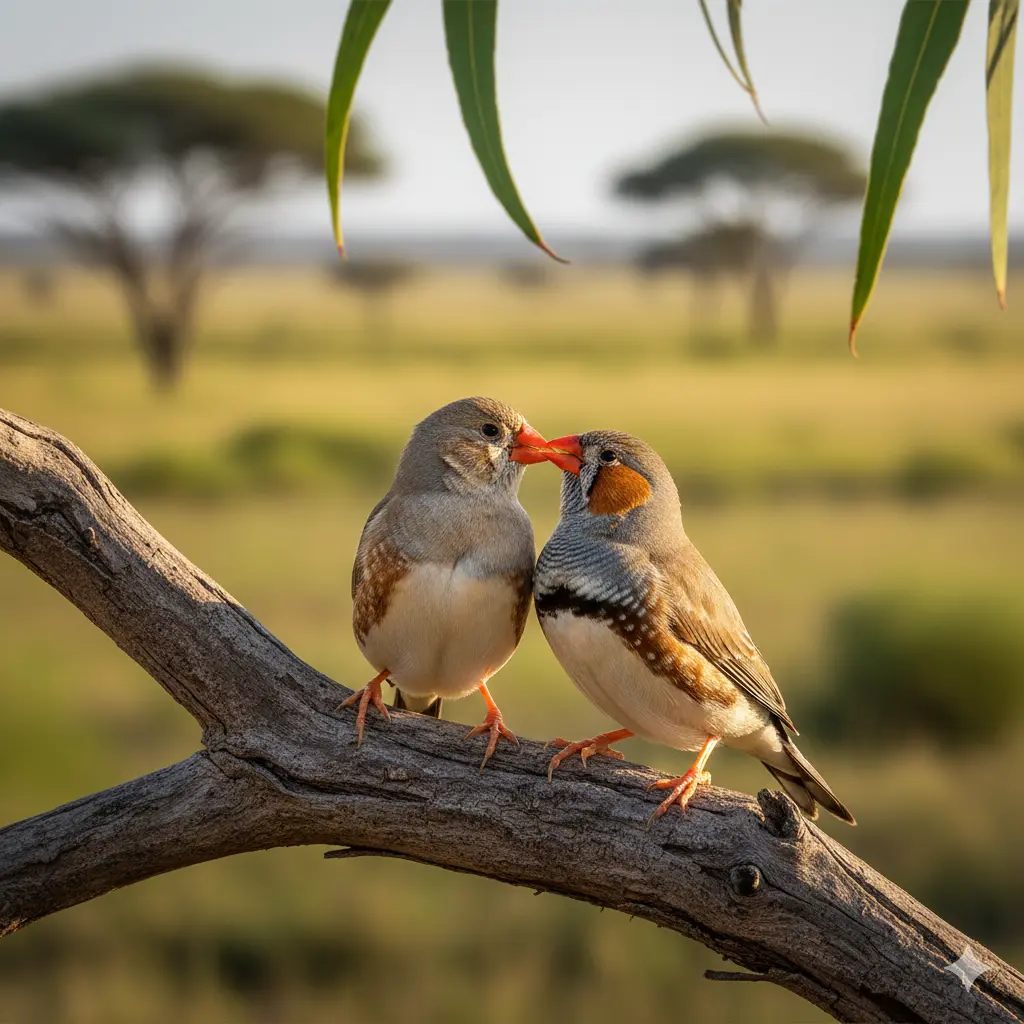
I often receive messages from owners saying, "My finch is doing just fine; he sings to me every morning." But is he really "fine"? In this post, we’re diving deep into the psyche of these birds. We won’t spend time on basics like seeds and equipment today—you can find those technical details in our Zebra Finch Pet Guide. Instead, we are talking about what happens inside them—their need for touch, conversation, and the security only another bird can provide.
Evolution Did Not Design Solitude
To understand why solitude is a "death sentence" for a Zebra Finch, we must look at the wild Australian outback. There, Zebra Finches don't just live in pairs; they live in flocks of hundreds, sometimes thousands. Evolution designed them to rely on "safety in numbers."
In the world of a finch, being alone means being a target. If there isn't another bird to keep watch while one drinks water, that bird stays in a constant state of high adrenaline. When you bring them into your home and put them alone in a cage, that instinct doesn't vanish. Your living room remains a potential "danger zone," and they have no one to confirm that everything is okay. Chronic stress is the silent killer no one talks about.
Why Do Finches Die Suddenly?
Owners frequently encounter situations where a bird that "looked healthy" suddenly passes away. The question "why do my finches die?" dominates forums, and the answer is rarely as simple as "bad food."
Let's look at what stress does to a Zebra Finch's body. When a bird is lonely, its cortisol (stress hormone) levels are constantly elevated. This leads to:
- Energy Depletion: A tiny bird burns massive amounts of energy just staying alert and aware of its surroundings.
- Heart Strain: Their heart rate is already incredibly fast; under stress, it reaches critical points.
- Immune System Collapse: This is key. Most finches don't die "of a broken heart" directly, but from harmless bacteria that a healthy, paired bird would easily defeat. In a lonely bird, the immune system is virtually non-existent.
This is why, when asked why a finch died, my first question is always: "Did it have a partner?"
The Phenomenon of "Allopreening" – The Touch of Life
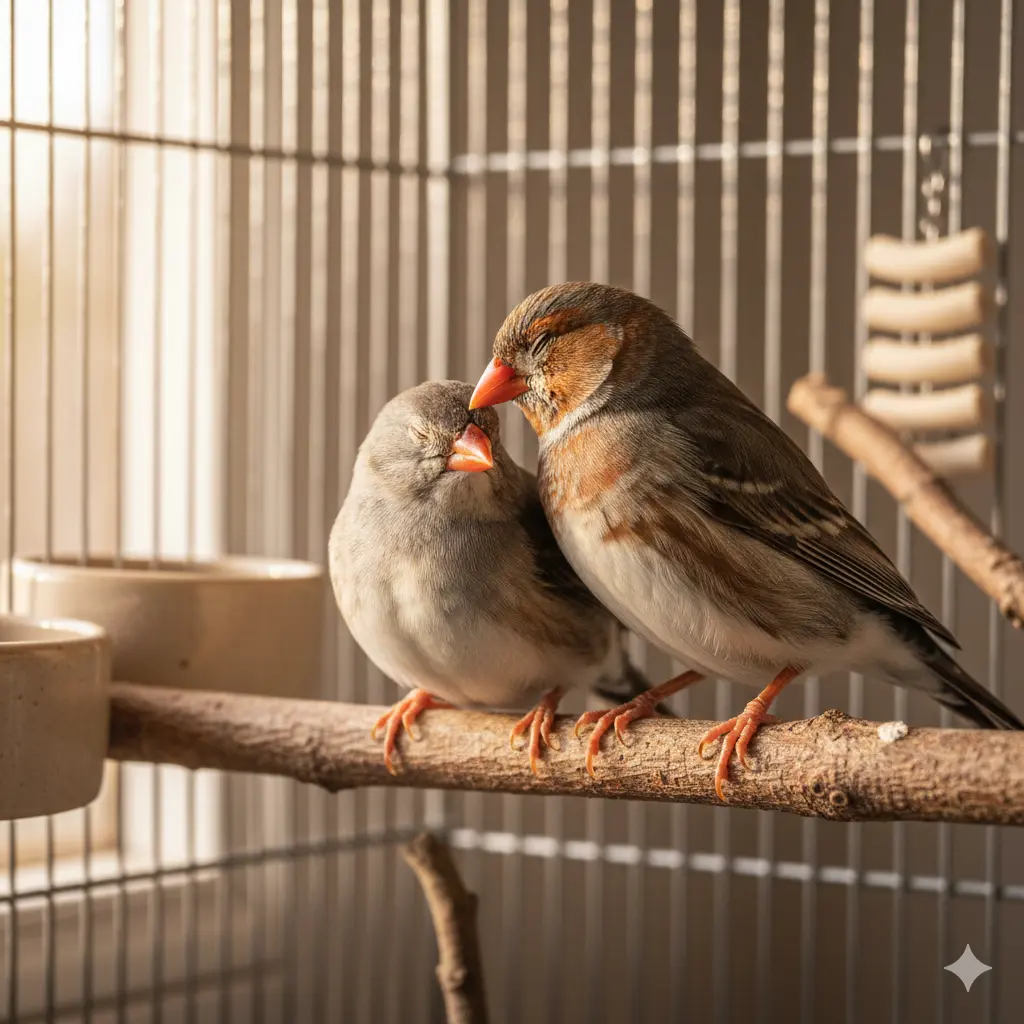
If you’ve ever watched a pair of Zebra Finches, you’ve seen them sit side-by-side for hours, gently nibbling the feathers on each other's heads and necks. This is called allopreening. It’s not just about hygiene; it’s social glue.
Finches have spots on their bodies they cannot reach with their own beaks. When a partner cleans those spots, oxytocin—the hormone of bonding and peace—is released. A lonely finch never experiences this. They have a constant "itch" they can't scratch, both physically and emotionally. Imagine a life where you are never touched. That is the reality for a solitary finch.
The Great Owner Delusion
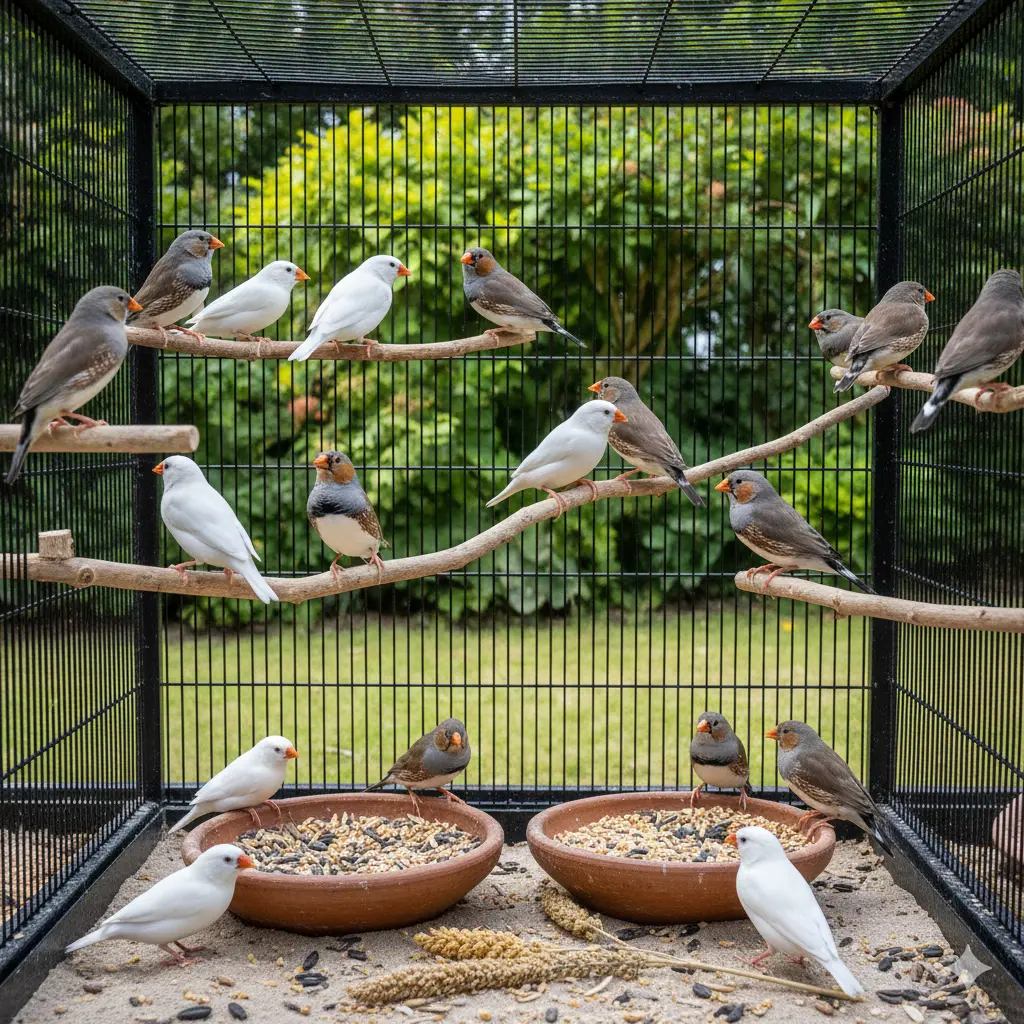
"But I spend 5 hours a day with my bird!" This is a phrase owners often use to soothe their conscience. While your love is real, you are not a bird.
Zebra Finches communicate at frequencies the human ear can barely register. They have specific sounds for "food is here," "danger is near," "I love you," and "goodnight." Even if you learn to whistle like them, you cannot provide the feedback they expect. You don't sleep in the cage. You don't fly branch-to-branch with them. The moment you turn off the light and leave the room, your finch is left in absolute, terrifying darkness—alone.
How to Properly Introduce Two Finches
If you've realized your bird needs a companion, don't just toss a new bird into the cage and hope for a miracle. While generally peaceful, Zebra Finches are territorial.
1. Quarantine
The new bird should spend at least two weeks in a separate cage. This ensures they are healthy before meeting your current pet.
2. Visual Introduction
Place the cages side-by-side. Watch their reactions. If they start "beeping" at each other and trying to get close through the bars, it’s an excellent sign.
3. The First Meeting on Neutral Ground
Let both birds out to fly in a bird-safe room (close all windows!). If they meet on a neutral spot, like the top of a cage, they will likely become inseparable immediately.
4. Moving In
When they finally share a cage, provide two food bowls and two waterers. Even best friends can bicker over resources at first.
What if They Don't Get Along?
While rare, sometimes two birds just don't "click." This is usually the result of a cage that is too small. If the space is cramped, birds cannot escape each other’s personal space, which creates tension. Bullying can lead to the same stress-related health issues mentioned earlier, so observe them closely for the first few days.
Debunking the Mirror Myth
Please, remove mirrors from your bird's cage. Many owners think a mirror "tricks" the bird into thinking it has company. The truth is much harsher. A Zebra Finch sees its reflection and thinks it’s another bird. It tries to communicate, tries to feed the reflection, and waits for a response.
When that response never comes (because a reflection cannot preen back), the bird becomes frustrated and stressed. Mirrors often lead to obsessive or aggressive behavior. Real feathers are the only substitute for real feathers.
Lifespan and Happiness
The statistics are clear: Zebra Finches living in pairs or flocks live 2 to 4 years longer on average than those kept alone. Given that they live about 7–9 years in captivity, solitude effectively steals nearly half of their life.
When you're debating whether to get a second bird, remember: you aren't just buying "another pet." You are buying an insurance policy for the health and longevity of the bird you already have.
Conclusion: The Responsibility is Yours
Being a bird owner is a privilege and a responsibility. Zebra Finches cannot tell us they are suffering; they suffer in silence, calling out into a void hoping for an answer.
Solitude for a Zebra Finch isn't just sad—it’s dangerous. Don't wait until you're asking why your finch died to realize the importance of companionship.
FAQ
Do two males get along better than a male/female pair?
Two males are a fantastic combination! They are often very active and less territorial than two females. This is an ideal option if you want to avoid the responsibility of nests and eggs.
My finch is old; can I introduce a young partner?
Absolutely! Older finches often "rejuvenate" when a young, energetic roommate arrives. Just be patient during the initial introduction phase.
How many finches are "too many"?
This depends entirely on your cage size. Always follow the rule: the more birds you have, the larger the flight cage or aviary must be. A small flock of 6-9 birds is beautiful to watch but requires significant space to stay healthy.
Why is my finch plucking feathers from the other bird?
This can be a sign of a mineral deficiency or high stress due to a small cage. Ensure they have a cuttlebone and provide a larger living area.
