Masked Lovebird Guide: Personality and Diet
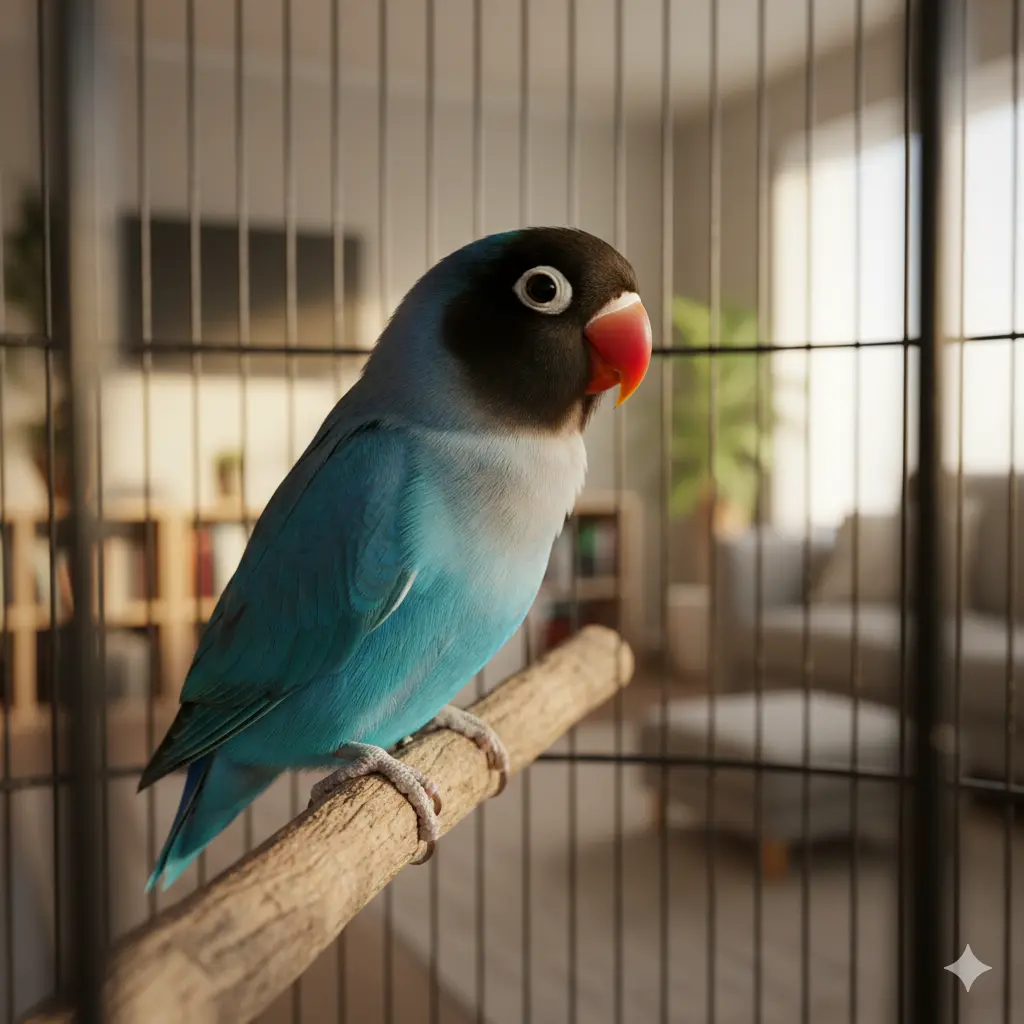
The Masked Lovebird (Agapornis personatus) looks like it’s ready for a masquerade ball. With their iconic black heads and stark white eye-rings, they are the aristocrats of the small parrot world. While they share the "Lovebird" title with the popular Peach-faced Lovebird, Masked Lovebirds bring a completely different energy to a home. They are often slightly calmer but just as intelligent and demanding when it comes to socialization. Don't let that "calmness" fool you, though—when a Masked Lovebird decides to speak up, their call is powerful and piercing.
Masked Lovebird Quick Facts
- Scientific Name: Agapornis personatus
- Size: 5.5–6 inches (14–15 cm)
- Weight: 40–55 g
- Lifespan: 12–20 years
- Noise Level: Medium to High
- Experience Level: Intermediate (requires patience)
- Key Feature: Black facial mask with a prominent white eye-ring
Understanding Personality: Masked vs. Peach-faced Lovebirds
A common misconception is that all lovebirds are the same. This isn't true.
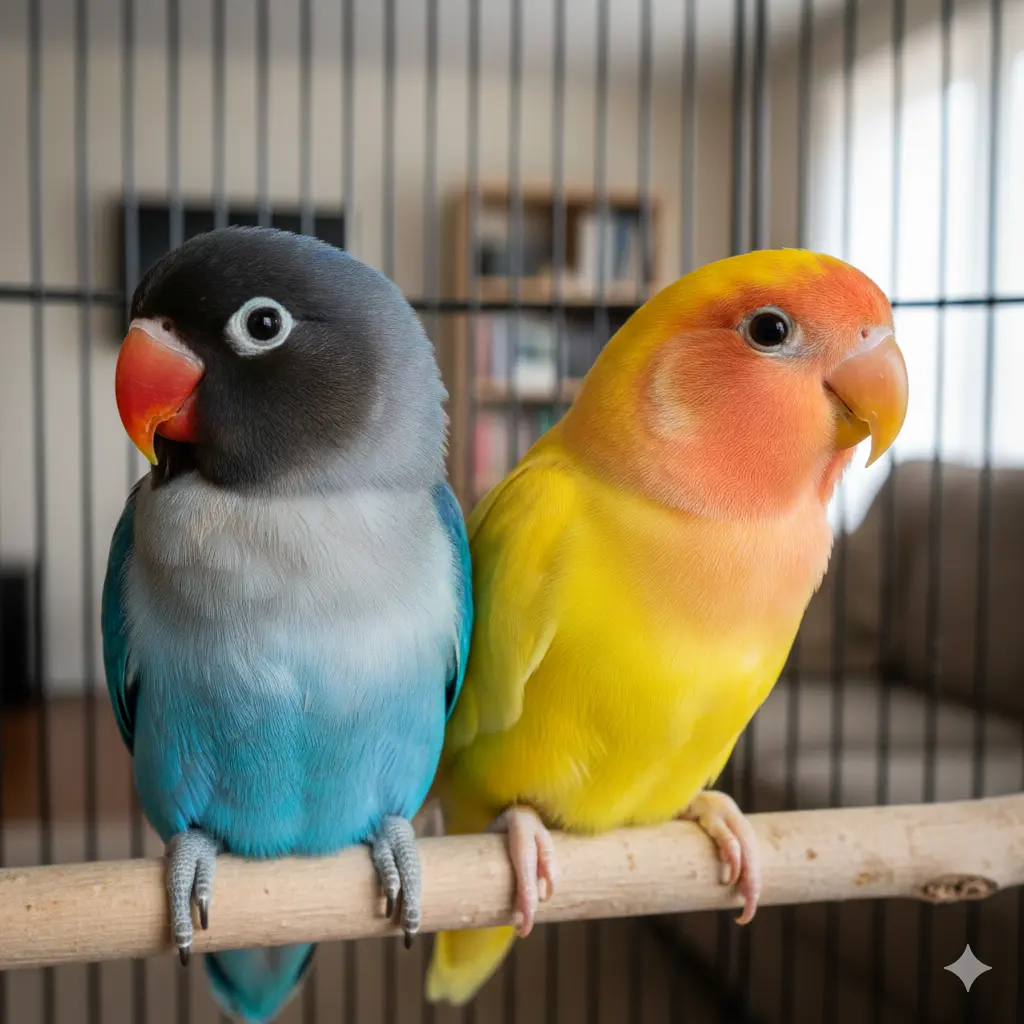
- The Eye-Ring Group: Masked Lovebirds belong to the "eye-ring" group, featuring a distinct white circle around the eye. Peach-faced lovebirds lack this feature.
- Temperament: While Peach-faced lovebirds are often described as "feisty," Masked Lovebirds tend to be more cautious. They will spend more time analyzing your hand before approaching, but once you earn their trust, their loyalty is absolute.
In your home, a Masked Lovebird is an explorer. They love taking things apart—from the buttons on your shirt to complex wooden foraging toys.
Patience with Your "Masked" Friend
When a Masked Lovebird enters a new environment, their first reaction is often to "freeze" or retreat to the farthest corner of the cage.
Avoid physical interaction for the first few days. These birds are visual learners and need to "scan" every movement in the room first. Just like in our guide for Peach-faced Lovebirds, your tone of voice is key. They respond best to high-pitched, gentle tones. Raising your voice will be interpreted as a predator alarm.
Nutrition Guide: Beyond the Seed Mix
Proper nutrition isn't just about filling a bowl. For your bird to reach that 20-year milestone, their diet must follow their biological needs.
Seasonal Diet Cycles
- Spring & Summer (Activity & Abundance): During these months, lovebirds are hyperactive. Focus on hydration and vitamins. Increase fresh vegetables like bell peppers (with seeds), cucumber, and zucchini.
- Winter (Rest & Energy): Even indoors, birds use more energy to maintain body heat in winter. Slightly increase energy-dense grains like oats, but watch the sunflower seed intake to prevent obesity.
Diet for Specific Life Stages
- Molting Period: This is physically exhausting. Growing new feathers requires massive amounts of protein. Add hard-boiled eggs (once a week) and calcium sources like cuttlebone.
- Hormonal Peaks: Even without a mate, hormones can flare up. During these times, reduce high-calorie foods and sugary fruits to help stabilize their behavior.
Common Feeding Mistakes
- Seed-Only Diets: An all-seed diet slowly damages a parrot's liver. Seeds should only be a small part of the pyramid.
- Fruit as a Main Meal: Fruit is high in sugar! It should be a treat, while vegetables and leafy greens should be the daily staple.
- Giving Up on Variety: If they refuse broccoli today, try again tomorrow. Birds are naturally suspicious of new foods (neophobia).
Housing and Enrichment
A Masked Lovebird is active; the cage is their base, not a prison.
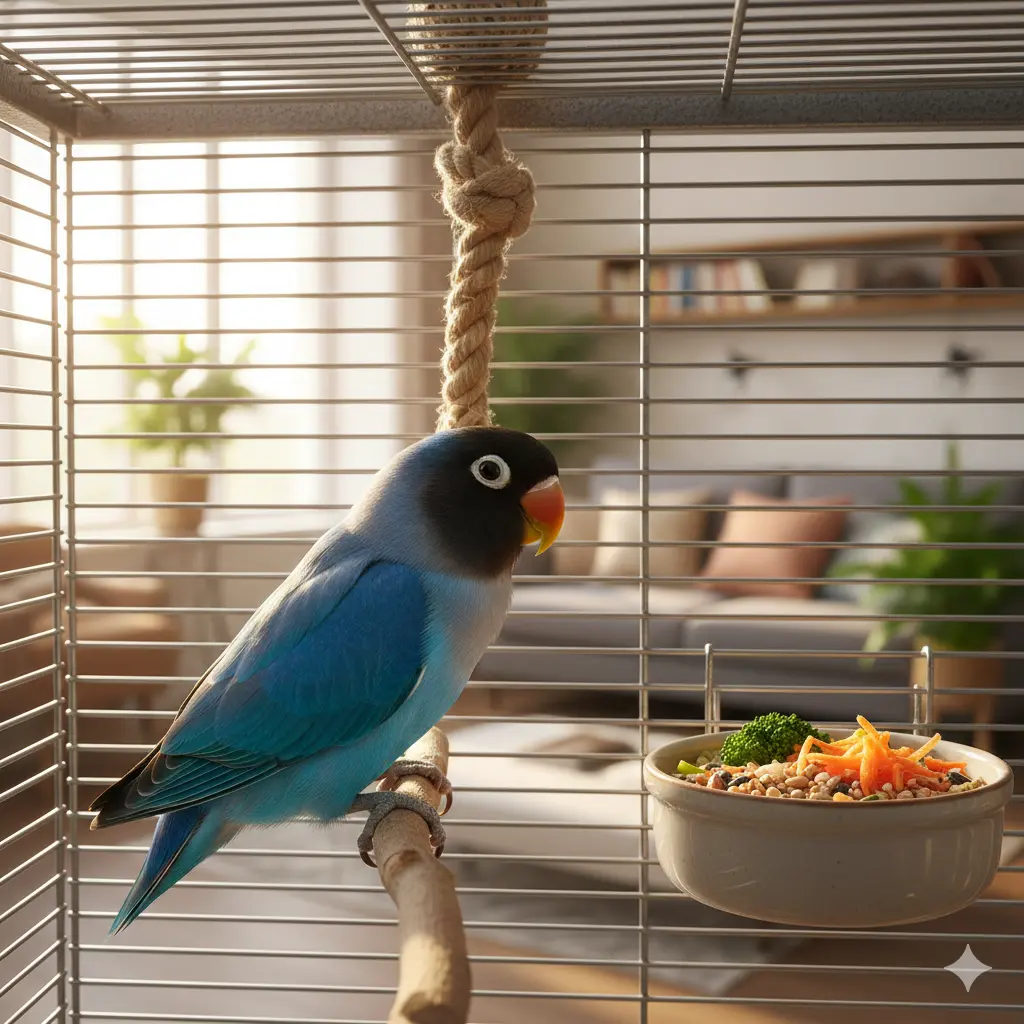
- Cage Size: Minimum dimensions should be 24x16x20 inches. Horizontal bars are preferred as they love to climb using their beak as a "third foot."
- Toys: Without toys, they can become lethargic or aggressive. Provide toys made of natural wood, coconut fiber, or shreddable paper.
- Hygiene: Remove wet food (fruits/veggies) daily to prevent mold, which can be fatal.
Earning Their Trust
Masked Lovebirds can be "bribed," but they demand consistency.
- The Millet Method: This is the golden rule. Offer spray millet from your hand through the cage bars first. Once they eat while you hold it, move to offering it inside the cage.
- Body Language: Never approach from above. This mimics a bird of prey. Always keep your hand at chest level or lower.
Health Warning Signs
Lovebirds are masters at hiding illness. In the wild, showing weakness makes them a target. By the time they look sick, the situation is usually critical.
Early Symptoms of Illness:
- Fluffed Feathers: Sitting "puffed up" for most of the day, even in a warm room.
- Unusual Silence: A sudden stop in vocalization or lack of reaction to your presence.
- Dropping Changes: Any change in color, texture, or a drastic increase in liquid.
- Sleeping on Two Feet: A healthy parrot almost always sleeps on one foot. Using two feet may indicate they are too weak to maintain balance.
Frequently Asked Questions
Can Masked Lovebirds learn to talk?
They are intelligent but not known as great talkers. They might learn a few words, but they are masters of tricks. They quickly learn to fetch items or spin on command using clicker training.
Why is my lovebird biting the cage bars aggressively?
This is usually a mix of high energy and the need to trim their beak. Their beaks grow continuously. If they are overly aggressive toward the bars, the cage might be too small, or they may need more "shreddable" toys like willow branches.
How do I tell males from females?
There is no visual difference (no sexual dimorphism). The only 100% sure way is a DNA test via a feather or blood drop.
Is a quiet room better for them?
Yes and no. They are sensitive to loud noise, but absolute silence in nature often means a predator is near. Soft music or a radio playing at a low volume provides a sense of security while you are away.
Conclusion: An Investment in Friendship
A Masked Lovebird isn't just a pet; it's a family member with a personality that will surprise you daily. They can be stubborn, and their calls might test your patience, but the moment this "masked" gentleman lands on your shoulder, you’ll know you've earned the trust of a very selective friend.
