
Peach-faced Lovebird Care: Diet and Building Trust
Peach-faced Lovebirds aren't just named for their beauty, but for their fascinating, almost obsessive devotion to their partners. However, when a lovebird enters your home as a single bird, you become their "flock."
These small parrots are famous for their bold personalities, territorial instincts, and intelligence that often far exceeds their size. In this guide, we’ll explore how to transform a wary, frightened bird hiding in the corner of its cage into a companion that naps on your shoulder and follows your every move.
The advice in this guide is based on the experiences of long-time lovebird owners and breeders, following standard avian best practices.
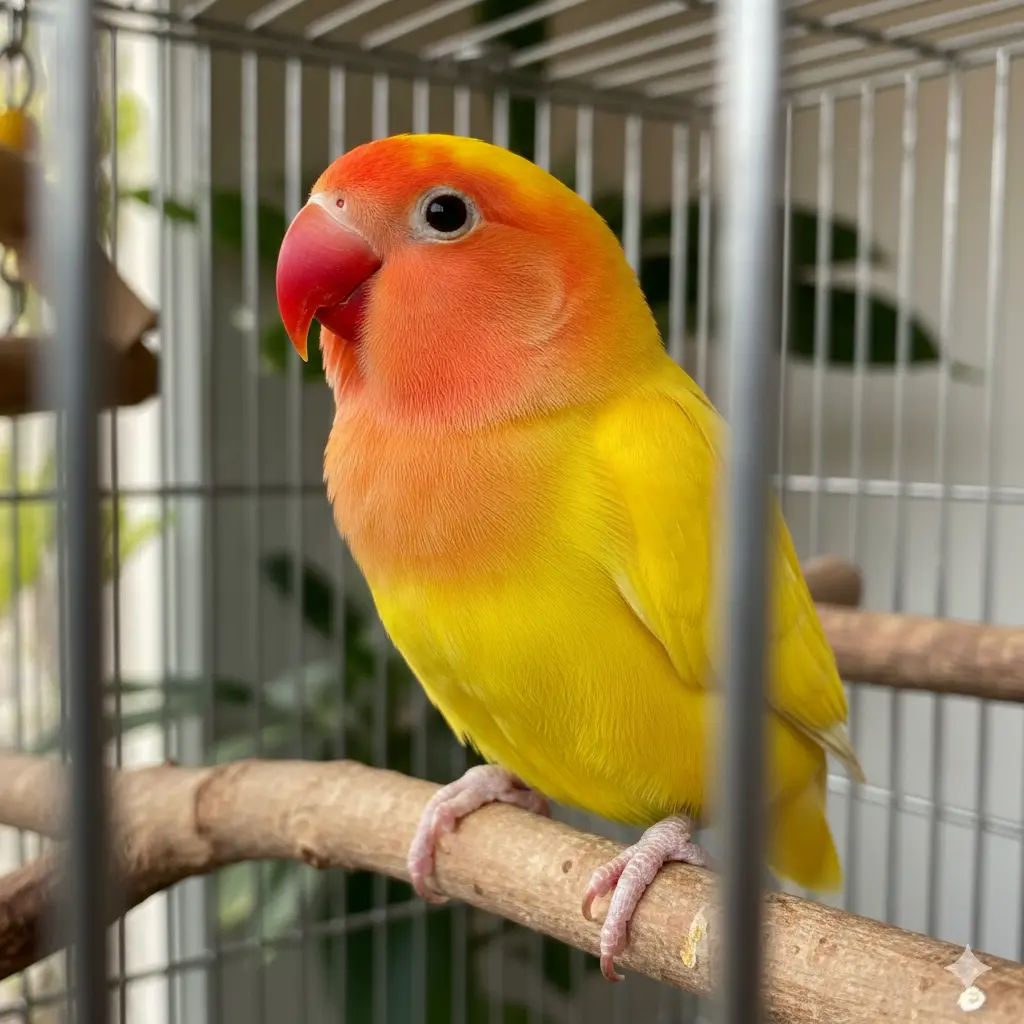
Understanding Personality: Small Parrot, Big Ego
The first thing every future lovebird owner must understand: these birds are brave, curious, and sometimes quite stubborn. In the wild, they are fighters that defend their nests against much larger intruders.
In your home, that instinct translates to territoriality. If a lovebird tries to nip you when you reach into the cage, they don’t hate you—they are defending their fortress. The key to trust is convincing them that your hand isn't a threat, but a source of something positive.
Adaptation and "Quiet Presence"
When you first bring a lovebird home, the first 3 to 7 days are critical. The bird is stressed by the change in environment.
- Place the cage in a quiet part of the room where they can still see you.
- Do not try to touch them yet. Just sit near the cage and talk softly. Lovebirds are very sensitive to vocal tones. Your goal is for them to associate your voice with safety.
Diet: The Way to a Lovebird's Heart
Lovebirds are foodies with fast metabolisms, but their intelligence makes them stubborn eaters. If allowed, they will eat only sunflower seeds—the avian equivalent of fast food. This leads to fatty liver disease, irritability, and a shortened lifespan.
The Ideal Menu:
A healthy balance for a Peach-faced Lovebird is 60-70% high-quality pellets or seed mix, with the rest being fresh vegetables, fruits, and herbs.
- Base Mix: Choose mixes for medium parrots containing millet, canary seed, oats, and limited sunflower seeds. Switching to high-quality pellets is highly recommended by US avian vets.
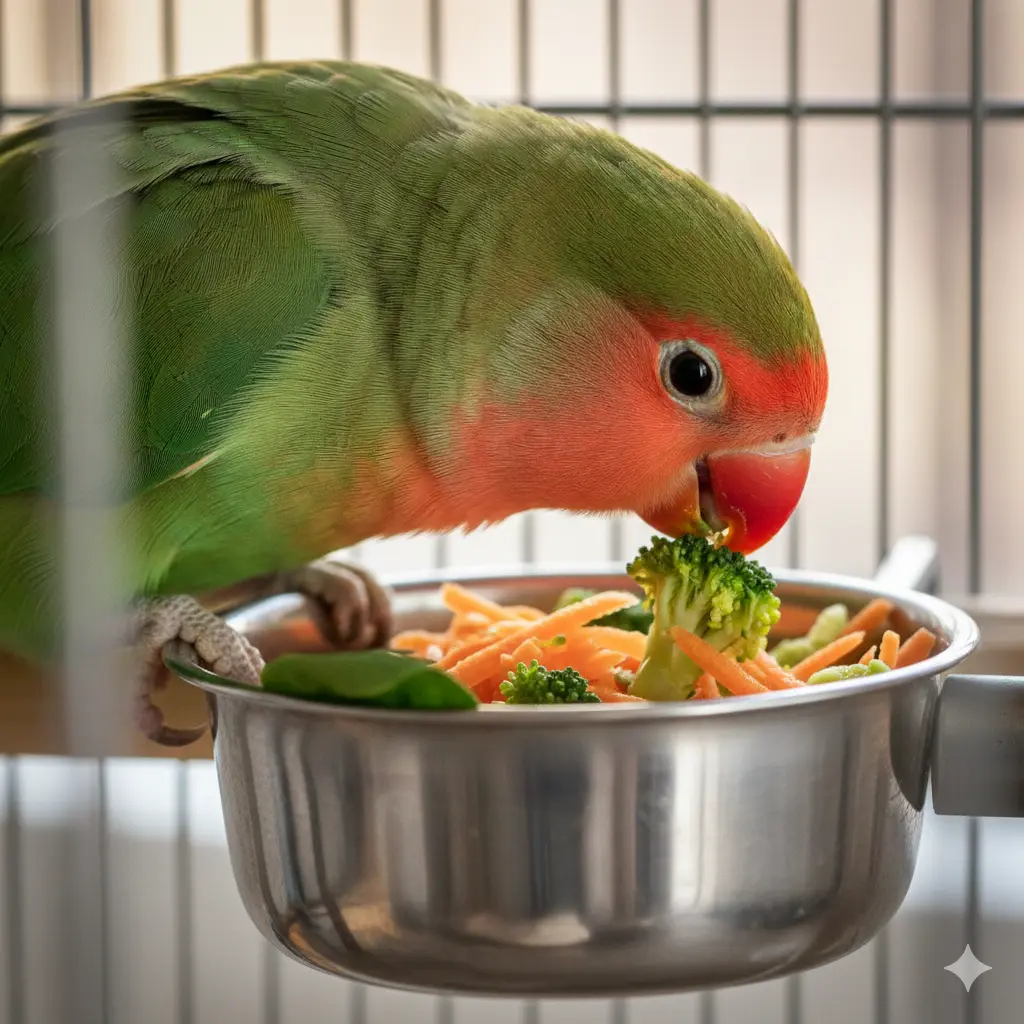
- Vegetables (Daily): Carrots (grated or chunks), broccoli (rich in calcium), spinach, kale, bell peppers (they love the seeds!), and zucchini.
- Fruit (2-3 times a week): Apples (seeds must be removed as they are toxic!), pears, bananas, and strawberries.
- Water: Must be changed daily. Lovebirds often "make soup" by dropping food into their water, so change it twice a day in summer to prevent bacteria.
What should a Lovebird NEVER eat?
These foods can cause immediate poisoning or long-term organ damage:
- Avocado: Contains persin, a deadly cardiac toxin for parrots.
- Chocolate and Caffeine: Cause hyperactivity, seizures, and cardiac arrest.
- Onions and Garlic: Destroy red blood cells and cause anemia.
- Fruit Pits: Apple, peach, and plum seeds contain traces of cyanide.
- Processed Human Food: Salt, sugar, and oil are the primary enemies of a parrot's kidneys.
Pro Tip: If your bird is a "seed addict," try the "Chop" method. Finely mince carrots and broccoli and mix them with a small amount of their favorite seeds. As they forage for the seeds, they will inevitably taste the veggies and realize they are delicious.
Housing and Environment
To keep your lovebird healthy and social, the cage must be a "safe zone" that meets strict biological criteria.
- Cage Dimensions: For one lovebird, the minimum size is 24x16x20 inches. They have a large wingspan for their size and are very active. Always choose a cage that is wider than it is tall to allow for horizontal flight.
- Bar Spacing: Must be between 1/2" and 1/2.5" (1 cm to 1.3 cm). Wider spacing allows them to get their heads stuck, which can be fatal.
- Positioning: Place the cage at eye level in a corner where the family gathers, but away from drafts and direct heat sources (radiators or AC vents). One side should be against a wall for security.
- Safety Warning: Avoid keeping birds in the kitchen. Fumes from non-stick (Teflon) pans are instantly lethal to parrots.
- Light Cycle: Lovebirds need 10-12 hours of total darkness and quiet for sleep. Use a breathable blackout cover if the room stays bright late at night.
- Perches: Replace plastic or smooth dowels with natural fruit-tree branches of varying thicknesses. This prevents arthritis and naturally trims their claws.
How to Win Your Parrot's Trust
This process can take weeks, but the results last a lifetime.
Bribery Through the Bars
Hold a piece of spray millet and offer it through the bars. Once the bird approaches and takes a bite, you’ve won the first round.
Hands-In Training
Place your hand in the cage but keep it still. Hold a treat on your palm. Let the lovebird decide when to approach. Never chase the bird around the cage! This destroys the trust you’ve spent days building.
Note: Be mindful of your body language. Avoid direct, prolonged eye contact initially, as birds may perceive this as predator behavior. For deeper psychological tricks, see our guide on Taming Your Parrot.
Common Challenges: Biting and Screaming
- Biting: If they nip you, do not scream or pull your hand away abruptly. To a lovebird, a loud reaction is fun! Instead, calmly end the interaction for a few minutes.
- Destructive Chewing: Lovebirds must chew. Provide wooden toys, willow branches, or bird-safe balsa wood to keep them away from your furniture.
Frequently Asked Questions
Can Peach-faced Lovebirds learn to talk?
While intelligent, they aren't famous for clear speech like African Greys. Most never say a human word, but they are world-class mimics of sounds—expect them to perfectly imitate your phone's ringtone, a car alarm, or whistling.
Why does my lovebird scream when I leave the room?
This is a "contact call." In the wild, being alone means being vulnerable. They are checking to see if you are still nearby.
- Solution: Don't run back into the room while they are screaming. Instead, whistle back or talk from the other room so they know you’re there without rewarding the screaming.
Are they aggressive toward other pets?
Lovebirds are "big birds in small bodies." They are fearless and will often try to "boss around" dogs or cats, which can be extremely dangerous. Always supervise their out-of-cage time.
How long do they live?
With a proper diet (not just seeds!) and good hygiene, they live between 12 and 15 years on average, with some reaching 20+ years. They are a long-term commitment.
Conclusion: An Investment in Friendship
A Peach-faced Lovebird isn't a pet for those who want instant results. They are individuals. They will test you, ignore you, and then—one day—they will decide to land on your shoulder and share your snack. That moment of earned trust is what makes them one of the best pets in the world.
