
How to Earn Your Cockatiel's Trust
You’ve brought home a beautiful bird, set up the cage in the perfect spot, and now... silence. You might have had a vision of your bird immediately landing on your shoulder while you drink your coffee, but reality looks a bit different. Your new pet retreats to the far corner, hisses at your every move, or worse—panics and flaps against the bars the moment you walk into the room.
Before you think your bird "hates" you or is "wild," stop for a moment and see the world from their perspective. In the wild Australian outback, cockatiels are prey animals. To them, anything large that moves fast and has forward-facing eyes is a potential predator. Earning a cockatiel's trust isn't just training—it’s the process of convincing a tiny creature that you are part of "the flock" and not a threat.
This journey requires patience measured in weeks, sometimes months, but the reward—the moment your bird lowers its head for a scratch—is worth every second.
Mastering Cockatiel Body Language
To build trust, you must become an expert observer. Cockatiels communicate with their entire bodies. If you learn to "read" them, you’ll know exactly when to take a step forward and when to back off.
The Mystery of the Crest
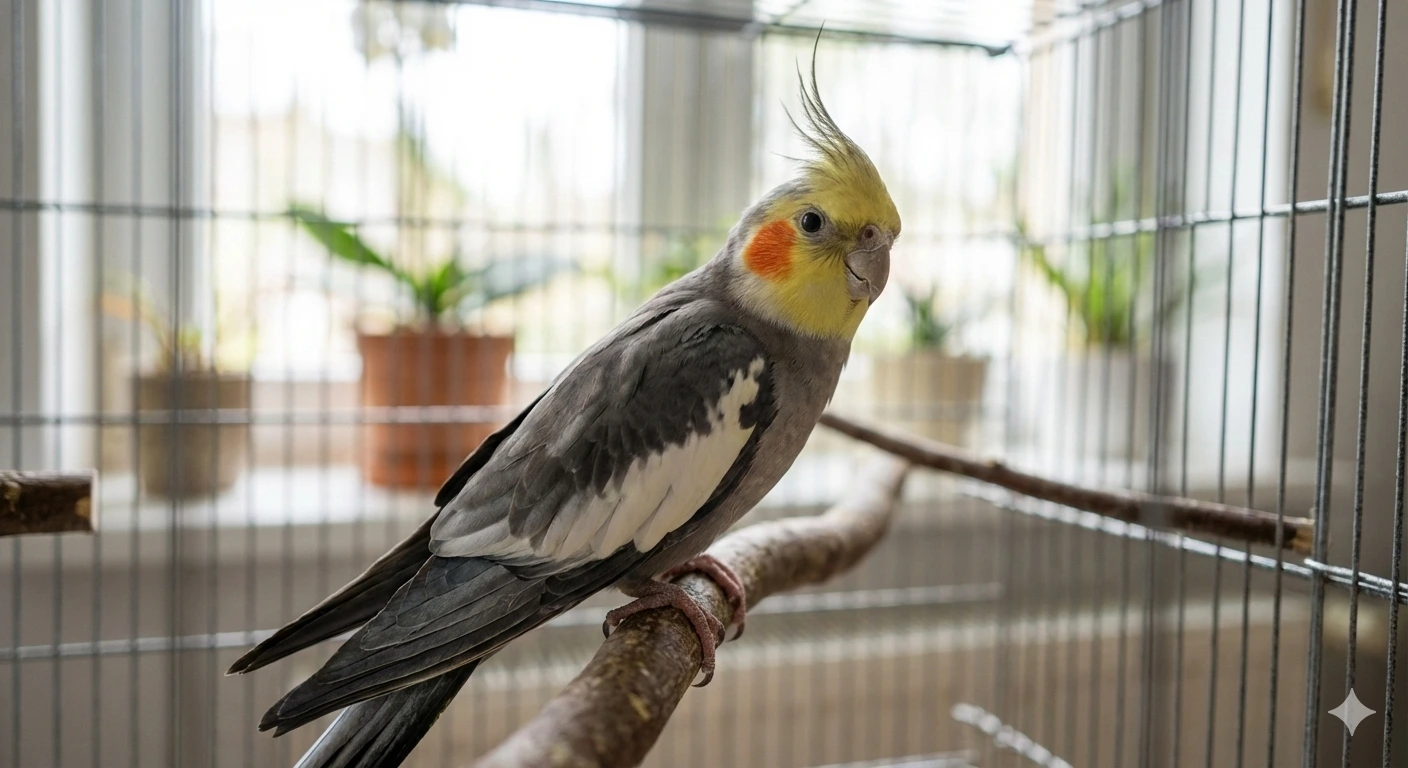
The crest is the ultimate mood indicator.
- Vertical (Straight Up): Your bird is alert or startled. Something caught their attention. If combined with slightly flared wings, they might be scared.
- Relaxed (Slightly Angled Back): This is the "sweet spot." Your bird feels safe and comfortable.
- Flat Against the Head: A clear sign of aggression or extreme fear. If you try to touch them now, you’ll likely get bitten. This is their way of saying, "Back off!"
Watch the Eyes and Tail
- Eye Pinning: When a cockatiel’s pupils rapidly dilate and shrink, they are either extremely excited or agitated. In the context of bonding, it usually shows intense focus.
- Tail Wagging: Much like a dog, a quick side-to-side wag often acts as a "reset" button after preening or finishing a task.
- Beak Grinding: That soft, crunchy sound you hear before bed is the best music for an owner’s ears. It means the bird feels completely secure and is ready for sleep.
Phase 1: The "Invisible" Friend (First 7-10 Days)
The biggest mistake you can make is trying to force the bird out of the cage or "chasing" them with your hand.
- The Safe Zone: Ensure the cage is at eye level. If it's too low, the bird feels vulnerable. Place it in a room where you spend time, but avoid high-traffic areas or loud noises.
- Passive Socialization: Just sit near the cage. Don't stare directly at the bird (predators fixate on prey!). Read a book aloud or talk on the phone. Let them get used to your voice and presence without feeling threatened.
Food: The Universal Language of Trust
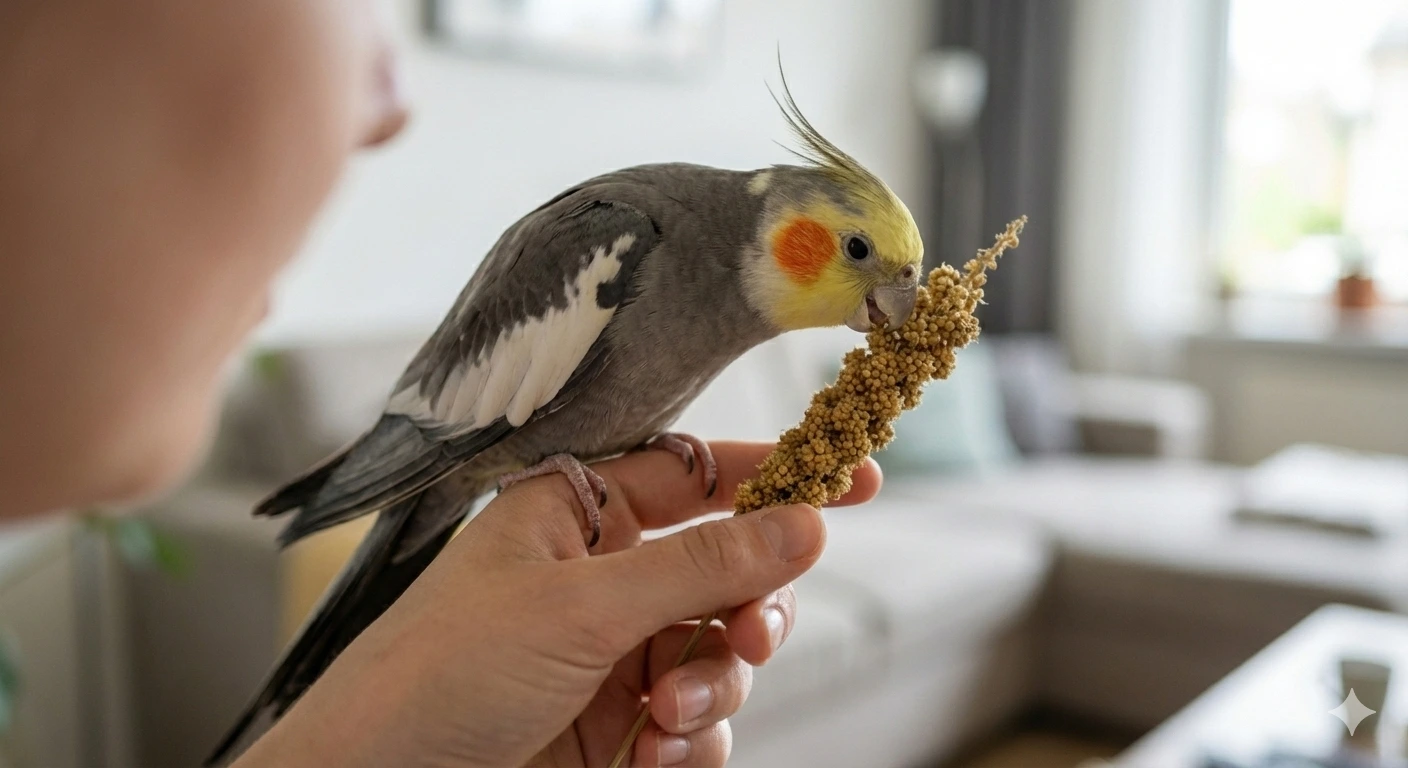
The fastest way to a cockatiel's heart is through its stomach. The Millet Trick: Spray millet is the "magic wand" of bird taming. Because the stalks are long, they allow you to offer a treat while keeping your fingers at a safe distance.
- Start by offering millet through the cage bars. Keep your hand perfectly still.
- As the bird gets comfortable, slowly shorten the stalk over several days so their head gets closer to your fingers.
- The "boss level" is holding the millet in your palm, encouraging them to put one foot on your hand to reach the treat.
Phase 2: Entering Their Space
Once your bird stops hissing when you approach, it’s time to enter their "fortress."
- The "Still Hand" Technique: Slowly place your hand inside the cage, but don't move toward the bird. Let it rest in the lower part of the cage for 5-10 minutes. Do this several times a day.
- Avoid Eye Contact: Remember, a fixed stare is a threat. Slow-blinking, however, is a sign of friendship and trust in the bird world.
Your First Physical Contact: The "Step-Up"
The "Step-Up" is the most important command. It means the bird voluntarily steps onto your finger.
- How to do it: Bring your finger toward the bird’s lower chest, just above its legs.
- The Gentle Nudge: Press very lightly against the lower chest. This gently unbalances the bird, and they will instinctively step up.
- The Cue: Say "Step up" clearly the moment they move. Follow up with a treat and high-pitched praise!
Important Note: A cockatiel will almost always "test" your finger with its beak first. This isn't a bite! They are just checking if your finger is a stable "branch." If you flinch, you’ll scare them and set your progress back. Stay steady.
What If You Get Bitten?
Bites happen, even with the sweetest birds. Your reaction is everything.
- Don't Scream: Birds love drama! If you yell, they might think it’s a fun game.
- Don't Punish: Birds don't understand punishment. Hitting or shaking the cage will permanently shatter the trust you’ve built.
- Zero Reaction: If bitten, try not to react at all. Quietly remove your hand and end the interaction for a few minutes. They learn that biting leads to a loss of company.
The Trust-Building Environment
- Sleep is Critical: Cockatiels need 10-12 hours of uninterrupted sleep in a dark room. An overtired bird is a grumpy, aggressive bird.
- Ditch the Mirrors: While they seem fun, mirrors can be a barrier to bonding. A bird may "fall in love" with its reflection and become aggressive toward you to protect its "mate."
- Scent Safety: Trust is lost if the bird is sick. Avoid scented candles, air fresheners, and Teflon pans—these are toxic to their lungs.
The Ultimate Goal: Scritches
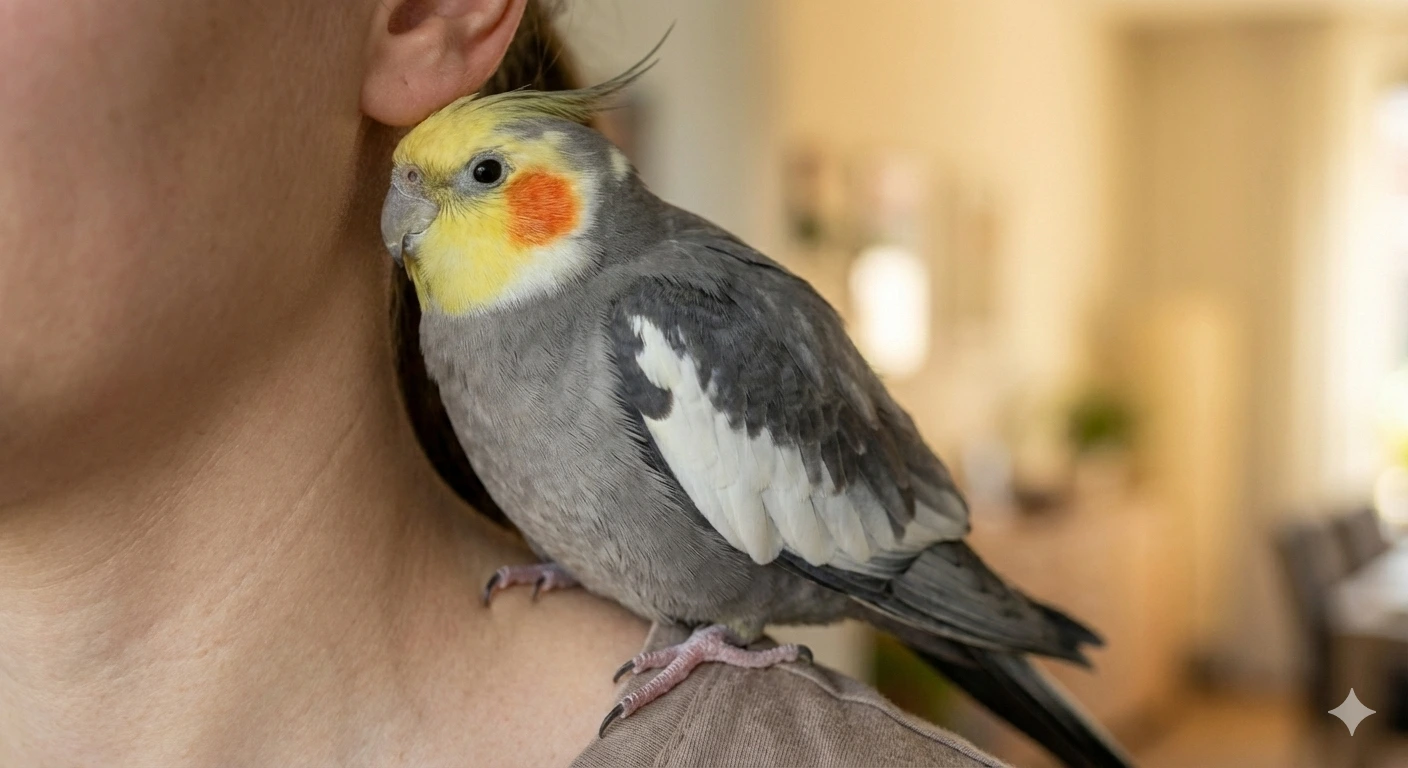
When your bird bows its head, fluffs its cheek feathers, and closes its eyes—congratulations, you are officially part of the flock! Cockatiels love "scritches" around the ears and under the crest—the places they can't reach themselves.
Frequently Asked Questions
How long does it take to tame a cockatiel?
Usually several weeks to months, depending on age, prior handling, and your consistency.
Should I punish a cockatiel for biting?
No. Punishment destroys trust. Calmly end the interaction and try again later.
How do I know a cockatiel is starting to trust me?
It will allow approach, ask for head scritches, step up calmly, and stop fleeing from your hand.
Does a mirror help bonding?
Often not. Mirrors can reduce interaction with you by creating attachment to the reflection.
How much daily time should I spend with my cockatiel?
Short, regular sessions of 20–30 minutes work better than occasional long sessions.
Conclusion
Gaining a cockatiel's trust is a marathon, not a sprint. There will be days of progress and days where they act like they've never seen you before. Consistency is key. If you respect their boundaries and offer plenty of millet and love, you’ll have a feathered best friend for decades.
