
Can a Lovebird Live Alone? The Truth About Single Peach-faced Lovebirds
Over years of talking with bird owners and observing avian behavior, I’ve realized that the biggest confusion doesn't come from the bird's nature, but from human expectations. Many assume that having a second bird is the only way to ensure a happy life, while in practice, the key is actually the quality of daily interaction.
In the world of exotic birds, few species carry a name as romantic as the Peach-faced Lovebird. Often simply called "Lovebirds" or "Inseparables," these parrots have been victims of a persistent pet industry myth: the belief that a lovebird will literally die of a broken heart if it lives without a mate or stays single from the start.
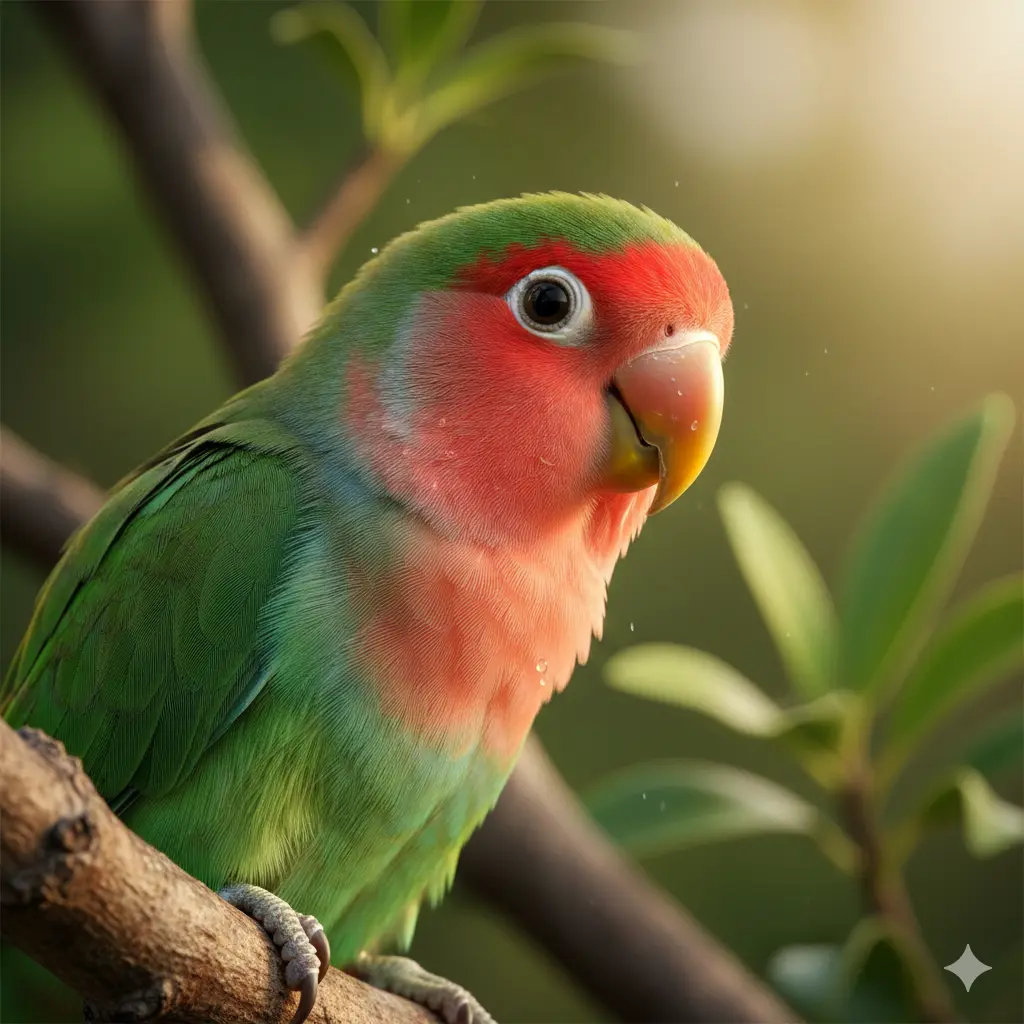
As a proud owner, you’re likely asking: Is it cruel to keep a single lovebird? The answer isn't a simple "yes" or "no." It requires a deep dive into their social structure, intelligence, and your specific lifestyle. Before we dive into their psyche, if you are just planning to get one, check out our detailed guide on Peach-faced Lovebirds to learn about their basic needs.
Can a Lovebird Live Alone?
Yes, a Peach-faced Lovebird can live alone, but only if they receive intense, daily interaction from their owner. As highly social birds, they can develop stress and behavioral issues without enough attention. If an owner spends a lot of time away from home, keeping a pair is a much healthier and more stable solution.
The Root of the "Inseparable" Myth
The myth that lovebirds cannot survive alone stems from their natural need for intense social bonds. In the wild, these birds form strong, monogamous pairs that last a lifetime. They spend hours allopreening (cleaning each other's feathers), feeding together, and communicating through a complex system of sounds.
However, biology is clear: a lovebird doesn't die of a "broken heart" in the literal sense. They suffer from isolation-induced stress. For these highly intelligent beings, solitude is an unnatural state that leads to psychological and physical decline.
Keeping a Single Lovebird in an Apartment
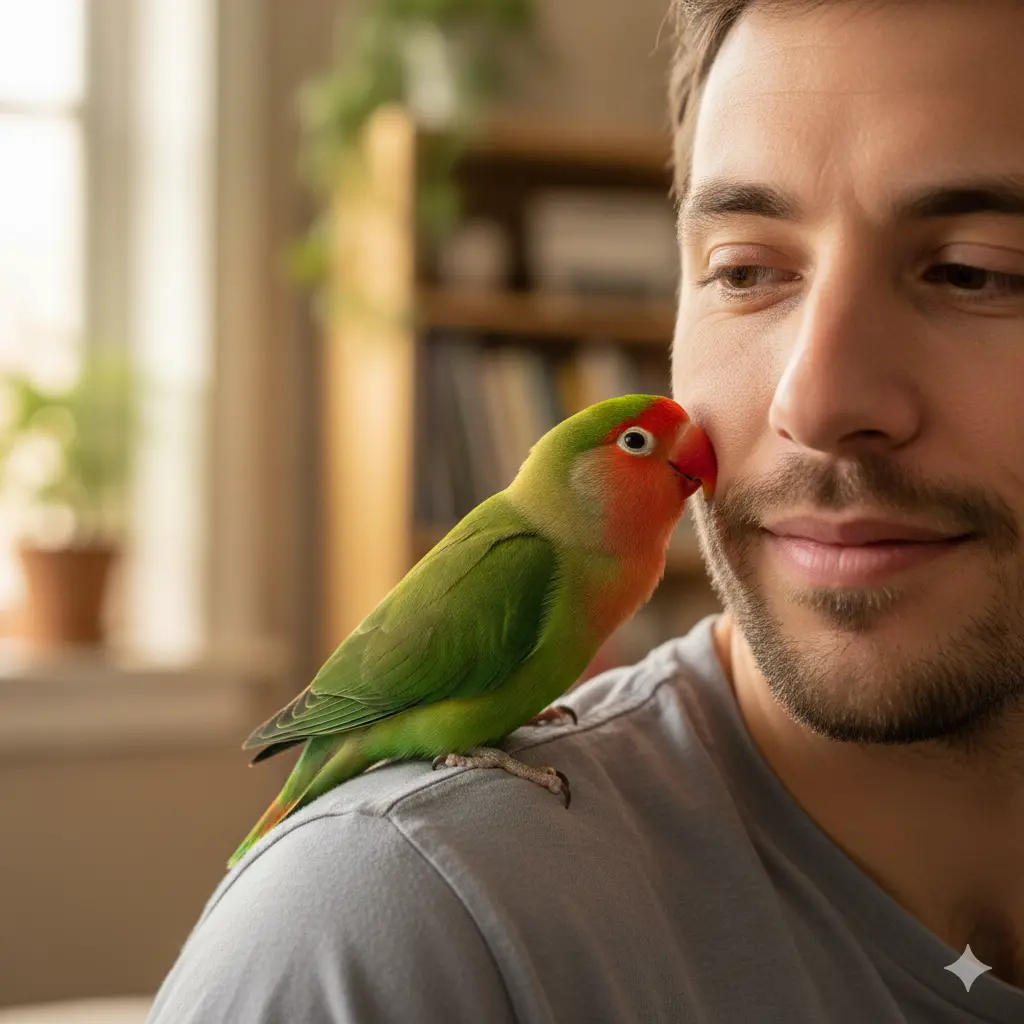
The short answer is: Yes, but only if YOU become their partner.
If you choose to keep a single lovebird, you must step into the role of the "other bird." This means:
- Minimum of 3–4 hours of direct interaction daily: This isn't just sitting in the same room; it means active play, scritches, and training.
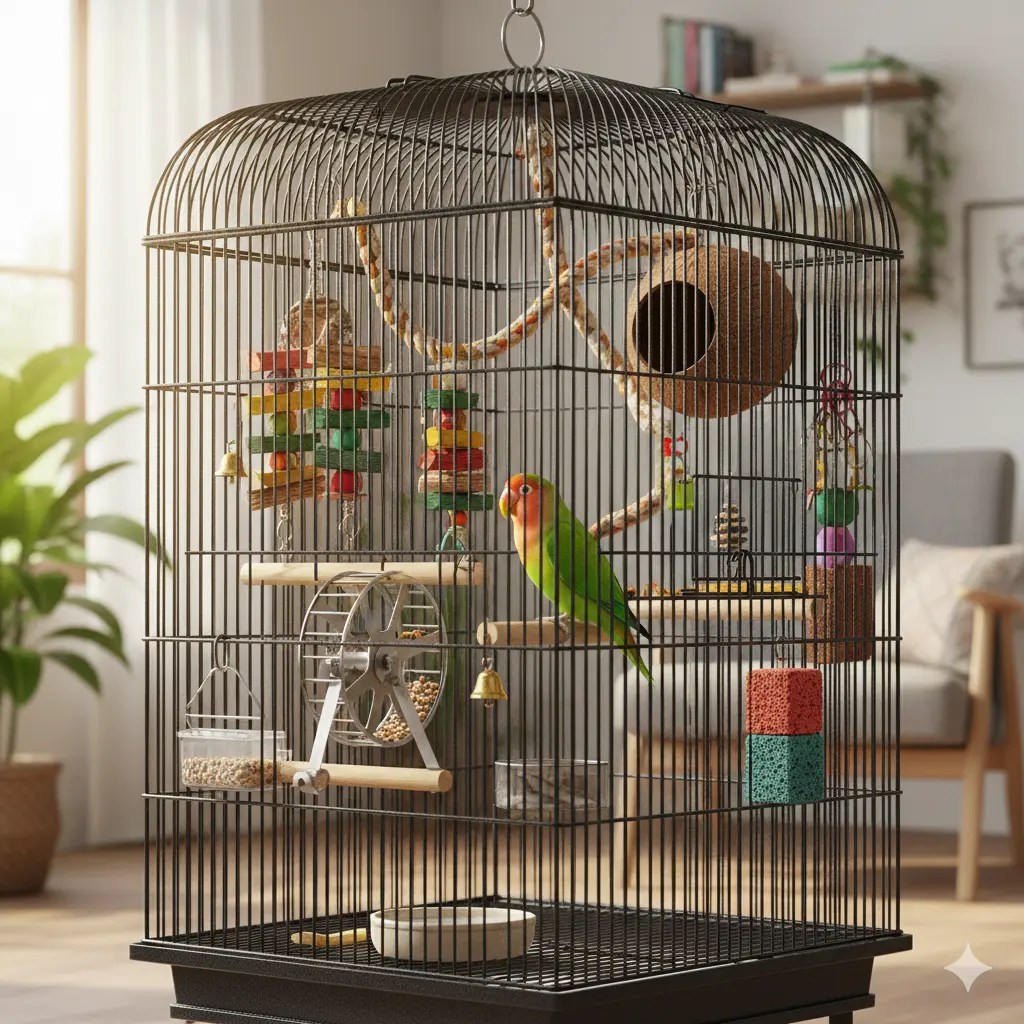
- Mental Stimulation: Without a mate, the cage must become an "amusement park" filled with toys, puzzles, and various textures to keep them busy while you are at work.
- Flight Time: A cage alone is a prison for a solitary bird. They need hours of out-of-cage flight time to burn off energy.
Pros and Cons of a Single Lovebird
Many owners prefer a single lovebird because they bond much faster and more deeply with humans. When they have a bird partner, they will naturally choose their own species for communication, often making the owner feel like a "third wheel."
Pros of a Single Lovebird
- Easier Training: The bird is focused on you, making it easier to teach tricks or mimicry.
- Deep Emotional Bond: You become the center of their universe.
- Less Noise: Pairs often chatter constantly to each other, while single birds are slightly quieter (though still very loud!).
Cons of a Single Lovebird
- Dependency: The bird can become overly dependent, leading to severe separation anxiety.
- Destructive Behavior: If ignored for even a day, they may start plucking feathers or destroying furniture out of boredom.
- Jealousy: Single birds can become territorial and jealous of other family members or pets.
The Biggest Mistake Owners Make
The most common error is believing that simply letting the bird out of the cage is enough for happiness. Lovebirds don't just want freedom of movement—they crave active interaction. Talking, training, and shared routines are far more valuable than just passive time spent outside the bars.
Recognizing "Bird Depression"
If a lovebird lives alone and lacks attention, they can quickly fall into apathy or depression. Watch for:
- Feather Plucking: Out of frustration or lack of stimulation, the bird may begin biting their own feathers, sometimes down to the skin.
- Excessive Sleeping: If a bird spends most of the day fluffed up with their head tucked under a wing (outside of normal nap times), it’s an alarm bell.
- Loss of Appetite: Refusing favorite treats or regular food.
- Stereotypical Movements: Constant head-bobbing or pacing the exact same line on the cage floor.
Single vs. Pair: Which is Better?
For people who work a 9-to-5 job and are away most of the day, keeping a single lovebird is unacceptable and cruel. In this case, a pair is the only ethical solution. They will entertain each other while you enjoy watching their fascinating social dynamics.
On the other hand, if you work from home or are a dedicated hobbyist who can spend hours with the bird, a single lovebird can be a wonderful, interactive companion that follows you everywhere.
How to Help a Single Lovebird Thrive
- Radio or TV: Leave a radio on at a low volume when you’re out. The sound of human voices provides a sense of security.
- Mirrors (Use Caution!): While some think mirrors help, they often cause hormonal imbalances or aggression because the bird thinks the "other bird" is ignoring them. Use interactive foraging toys instead.
- Toy Rotation: Change the cage layout every week to keep their environment "fresh" and engaging.
- Bathing: Lovebirds love water! Regular baths release endorphins and significantly reduce stress.
Do They Have to be a "Mated" Pair?
Another myth is that lovebirds must be a male/female pair. Two males or even two females often work perfectly as "roommates," provided they have enough space. If you decide to get a partner for a bird that has been single for years, be careful—they are territorial. The introduction must be slow, using separate cages side-by-side.
Conclusion: Love is More Than Just a Name
The name "Lovebird" reminds us of their immense need for connection. Whether their partner is another parrot or you, a lovebird should never be just "decoration" in a room. They are social geniuses trapped in a tiny body, ready to offer incredible loyalty if you give them the chance.
So, can a lovebird live alone? Yes—but only if you aren't just their owner, but their flock.
FAQ
Will my lovebird die if its mate passes away? Not immediately, but they will grieve. It’s vital to provide extra attention during this time or eventually consider a new companion.
Which gender is better for a single pet? Males are often slightly more stable and less aggressive during hormonal shifts. Females can be territorial and may lay eggs even without a mate (which depletes calcium), but they are also incredibly smart and affectionate.
How long can a single lovebird stay home alone? Ideally, no more than 4–6 hours, assuming they have plenty of toys and get quality time once you return. Anything longer often leads to behavioral issues.
Do lovebirds get along with other parrot species? Generally, no. Lovebirds are known as the "terriers" of the parrot world—bold, feisty, and often aggressive toward other species, even those much larger than themselves.
