Indian Ringneck Sleep and Diet: The Secret to a Calm Character
The Indian Ringneck (IRN) is more than just a parrot—it’s a personality in feathers, an aristocrat among birds, and one of the most intelligent companions a human can have. Their striking looks and piercing gaze have fascinated people for centuries, but behind that exotic beauty lies a complex being with very specific needs. Unlike some other species, the Ringneck is extremely sensitive to the rhythms of nature. The two most important pillars of their health and temperament are sleep and diet.
As a proud owner, you aren't just a provider; you are the "guardian of their biorhythm." Understanding why your pet needs 12 hours of total darkness and why sunflower seeds aren't enough is the difference between a bird that merely survives and one that truly thrives. In this guide, we’ll explore how to ensure your Ringneck lives a vibrant life for 30 years or more.
The Magic of 12 Hours of Total Darkness
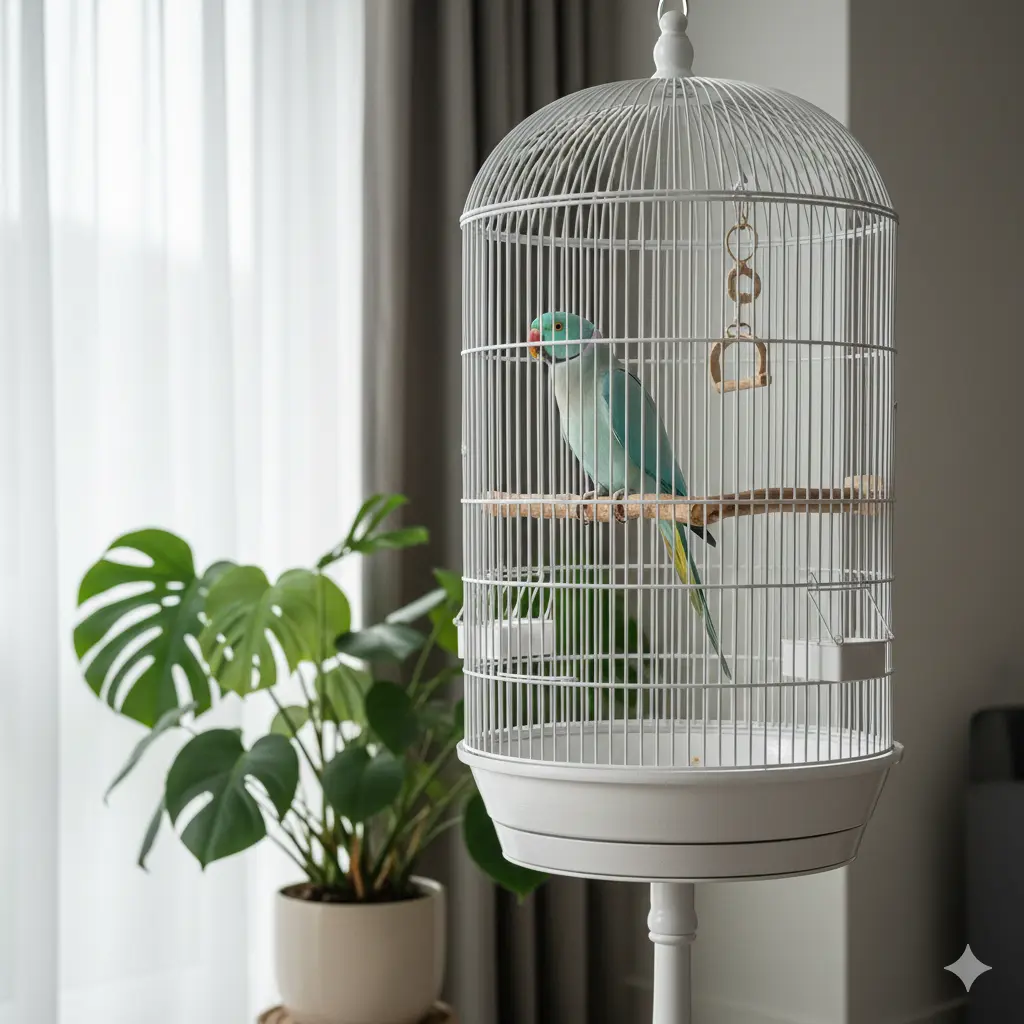
In their natural habitats, stretching from the tropical forests of Africa to the urban gardens of India, Indian Ringnecks live in perfect sync with the sun. When the sun sets, absolute silence and darkness follow. Their brains are evolutionarily programmed to use this period to reset the nervous system and regulate hormones.
In a modern home, where lights stay on late and TVs emit blue light, this natural rhythm is harshly disrupted. Many owners wonder why their Ringneck suddenly becomes aggressive, screams incessantly, or begins feather plucking. The answer is often found in chronic sleep deprivation.
Why Darkness is Key to Hormonal Stability
For a parrot, the length of the "daylight" hours is a direct signal telling their body whether it’s time to rest or time to mate. When a bird regularly spends 14 to 16 hours under artificial light, its body receives the message that it’s "eternal summer"—the peak time for reproduction.
This leads to hormonal "overheating." The bird becomes territorial, aggressive toward the owner, and stays in a constant state of stress because it cannot fulfill its biological urges in a home environment. By providing 12 hours of solid darkness (e.g., 8:00 PM to 8:00 AM), you signal the bird's brain to calm down, directly reducing aggression and unwanted behaviors.
How to Organize Sleep in an Apartment
Simply turning off the lights isn't enough if there's noise in the hallway. Indian Ringnecks have incredibly sharp hearing and vision. To provide quality sleep, consider these steps:
- Quality Cage Cover: Use a dark, heavy cotton fabric that blocks light but allows for air circulation.
- Sound Isolation: If the main cage is in the living room, consider a smaller "sleep cage" in a quieter room.
- Consistency: Covering and uncovering the bird at the same time every day creates a sense of security. Eventually, your IRN will retreat to their favorite "sleep perch" the moment they see you approaching with the cover.
Indian Ringneck Diet: Food as Medicine
If you want your Ringneck to reach old age with bright eyes and strong wings, you must understand that nutrition is their best preventative medicine. In the wild, these parrots are opportunists—eating fruits, flowers, berries, grains, and even tree bark. At home, it’s up to us to replicate that variety in a bowl.
For a deep dive into their full menu, we recommend our Indian Ringneck Feeding Guide, but let's focus here on how diet impacts their mood and vital organs.
The "Sunflower Seed" Trap
The most common mistake owners make is buying cheap seed mixes based on sunflower seeds. For parrots, sunflower seeds are like "fast food"—tasty, fatty, and addictive. A long-term diet based solely on seeds leads to Hepatic Lipidosis (Fatty Liver Disease), a leading cause of premature death in Indian Ringnecks.
Vegetables: Why Carrots Matter More Than Toys
Vegetables should be the backbone of their diet (about 50%). The darker and more intense the color, the more nutrient-dense the vegetable.
- Orange Veggies (Carrots, Sweet Potatoes, Pumpkin): Rich in Vitamin A, vital for healthy mucous membranes, eyes, and respiratory tracts.
- Dark Leafy Greens (Chard, Kale, Broccoli): Excellent sources of calcium and iron.
- Legumes (Peas, Lentils, Cooked Beans): Great plant-based protein. Note: Beans must be thoroughly cooked, never raw!
Fruit: A Natural Treat in Moderation
Fruit is important for Vitamin C and hydration but should not dominate the bowl due to high sugar content. Apples, pears, pomegranates, and berries are great choices. IRNs especially love pomegranates because digging out the seeds provides mental stimulation.
Pro Tip: Always remove apple and cherry pits, as they contain trace amounts of cyanide.
Why is My Ringneck Losing Color?
Feather quality is the mirror of a bird's internal health.
- Protein During Molt: When molting, their protein needs spike. Offer a small amount of hard-boiled egg.
- Humidity and Baths: While diet helps from the inside, external care is vital. IRNs love "rain." Regular misting with lukewarm water helps new pin feathers open easily and prevents itchy, dry skin.
- Sunlight: If possible, allow access to natural, unfiltered sunlight. UV rays are crucial for synthesizing Vitamin D3, which allows for calcium absorption.
Warning: Never leave a bird in direct, intense sun without a way to retreat into deep shade. Half the cage should always be shaded, with fresh water available.
Reading the Signals: "Tired" vs. "Hungry"
- Daytime Fluffing: If a bird sits puffed up on two feet in the middle of the day, it’s a sign they are either sleep-deprived or unwell. A healthy resting bird usually tucks one foot into its feathers.
- Over-preening: If they are constantly "chewing" their feathers, it could be stress from poor diet (lack of Zinc or Vitamin A) or lack of sleep.
- Selective Eating: If they throw all the veggies on the floor and scream for seeds, you have a "picky eater." Resolve this by slowly introducing high-quality pellets and mixing finely chopped veggies with a few favorite seeds.
Common Myths to Avoid
- "They can eat whatever we eat." False. Chocolate, caffeine, alcohol, salt, sugar, and avocado are toxic. Even one salty chip can overwork a parrot's kidneys.
- "They sleep fine while I watch TV." Even with eyes closed, they aren't in deep REM sleep. Light and sound stimuli keep the brain from fully resting, leading to a "cranky" bird prone to biting.
- "Fruit is enough; they don't need veggies." Actually, veggies are more nutritionally complete. Think of fruit as dessert and vegetables as the main course.
Frequently Asked Questions
How many hours of sleep does an Indian Ringneck need?
About 10–12 hours of uninterrupted darkness and quiet each night.
Can my ringneck sleep while the TV is on?
Not truly. Light and noise prevent deep rest and can lead to irritability and behavioral issues.
What should make up most of an Indian Ringneck's diet?
High-quality pellets plus daily fresh vegetables, with fruit and seeds as limited treats.
Why is my ringneck puffed up during the day?
It may be sleep-deprived or unwell. Healthy resting birds often tuck one foot up rather than staying puffed on two feet.
Are human snacks safe for Indian Ringnecks?
No. Chocolate, caffeine, alcohol, salt, sugar, and avocado are toxic to parrots.
Conclusion: A Well-Rested Bird is a Happy Bird
The next time you look at your Indian Ringneck, remember that their happiness depends on the simple things you control. High-quality food gives them strength and beauty, and 12 hours of darkness provides peace and stability.
Listen to their voice, observe their feathers, and respect their need for rest. In the world of parrots, you are their whole flock.
